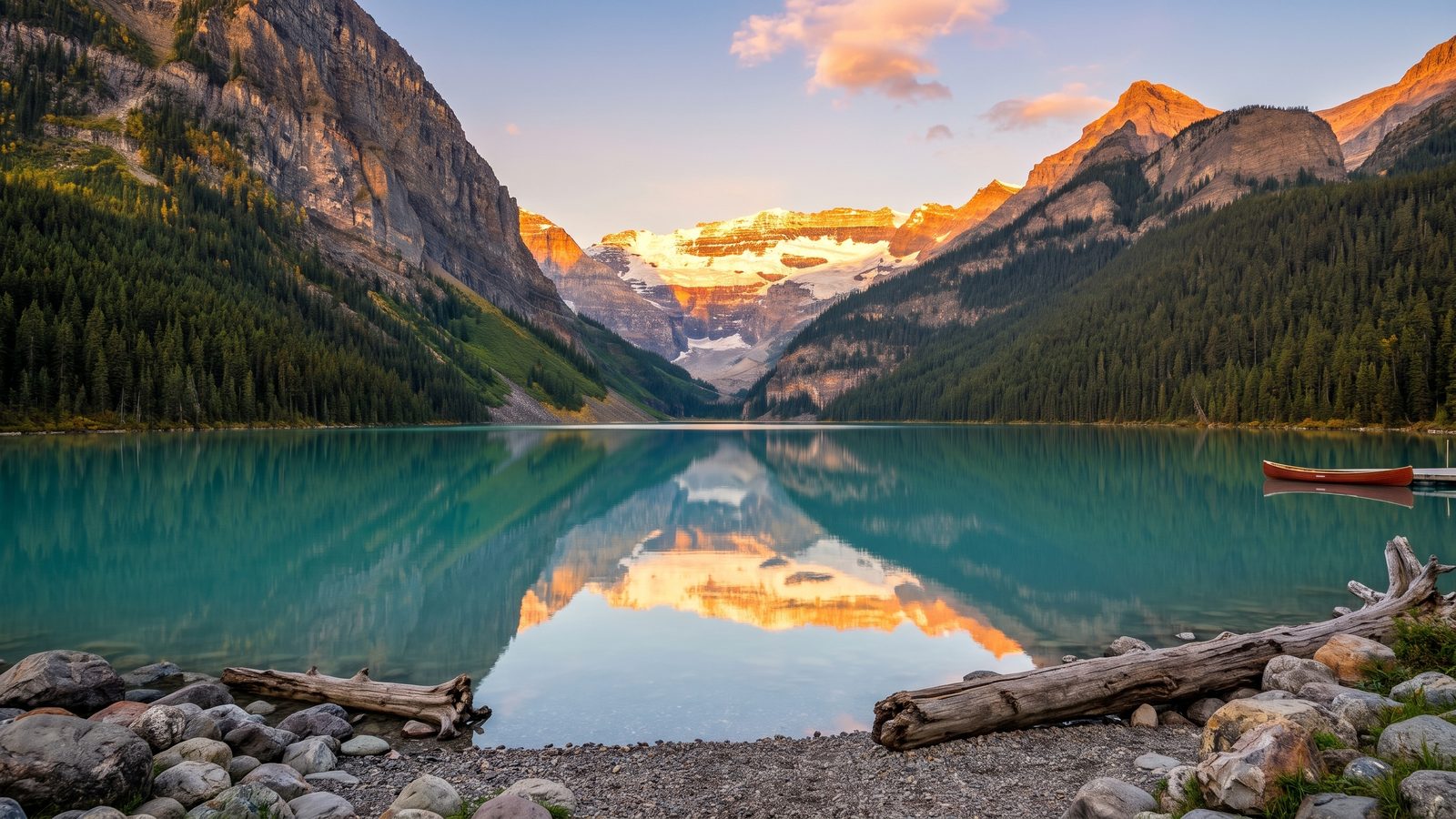
Welcome to Banff National Park, Canada's pioneer sanctuary nestled in the heart of the magnificent Canadian Rockies. Formed after railway workers discovered natural hot springs in 1883, this spectacular wilderness preserves soaring stone peaks, ancient glaciers, and crystal-clear turquoise waters. As you travel through dramatic valleys and alpine meadows, you will step into an extraordinary landscape continuously sculpted by ice, fire, and colossal tectonic forces over millions of years.
Whether you are hiking historic paths toward alpine teahouses, listening for chirping pikas on high scree slopes, or watching sunlight illuminate jagged ridges, this self-guided audio tour reveals Banff's natural history and scenic magic. Prepare to explore this wild sanctuary at your own pace.
Listen to a sample
The opening of this tour, exactly as AllTours narrates it on site.
What you'll hear on this tour
Stop 1. Historic Trails and Glacial Vistas
Step onto ancient pathways carved by ice and time as you explore Banff's iconic hiking trails. You climb the switchbacks of the Lake Agnes Teahouse trail, where sweeping views of Lake Louise unfold before reaching a historic teahouse serving travelers since 1901. Beyond, the Plain of Six Glaciers trail draws you deeper into raw glacial moraines beneath the distant, echoing rumbles of icefall from Victoria Glacier. Even along the gentle banks of the Bow River, vibrant turquoise waters flow past rocky slopes where bighorn sheep often tread. Each trail invites you to experience the enduring spirit of mountain exploration.
Stop 2. Birthplace of Canada's National Parks
You stand upon the historic ground that launched Canada's national park system. In 1883, Canadian Pacific Railway workers stumbled upon natural hot springs nestled in this remote wilderness. Just two years later, in 1885, the government established the Banff Hot Springs Reserve across ten square miles to preserve these geothermal wonders. Driven by the railway's ambitious westward expansion, this deliberate act of conservation transformed a wild frontier into an international destination. That tiny protected reserve served as the original seed from which all Canadian national parks grew, pioneering a visionary commitment to protecting nature's grandest landscapes for generations to come.
Stop 3. Titans Formed by Ice and Time
Look up at the towering titans of stone surrounding you, carved by colossal forces over millions of years. You stand at the foot of young, angular mountains pushed skyward by tectonic uplift, a slow process that continues to shape the Rockies today. As you examine their rugged faces, observe the distinct striations and scars left behind by ancient glaciers that once flowed through these valleys as massive rivers of ice. The sheer verticality of these peaks reflects their geological youth, untouched by heavy erosion. Feel the silent, immense scale of these giants as they endure an ongoing battle between uplift and weather.
Stop 4. Resilient Wildlife and High-Altitude Life
Breathe in the crisp mountain air as you ascend from dense valleys to high alpine terrain. Beneath resilient subalpine firs and Engelmann spruces, the landscape transitions into delicate meadows where vibrant indian paintbrush and alpine gentians push through rocky soil. Listen closely to the scree slopes for the sharp, echoing chirp of the pika, a small mammal perfectly adapted to this harsh environment. Above, agile bighorn sheep navigate sheer cliffs with astonishing balance, their powerful horns symbolizing mountain resilience. From ancient glacial currents to hardy high-altitude flora and fauna, this ecosystem thrives against fierce winds and cold weather.
Stop 5. Play of Light Across Jagged Summits
Pause to observe how shifting sunlight transforms the dramatic scale of the Canadian Rockies. As the sun moves across the sky, deep shadowed blues in the lower valleys give way to sun-kissed golds on high mountain ridges. You can trace the contrasting textures along the rock faces, where rough, weathered stone sits adjacent to smooth, polished surfaces scraped clean by historic glaciers. The fresh mountain air carries the scent of pine and glacial breezes, emphasizing your connection to an ancient landscape. Watching this constant interplay of light, shadow, and rock makes you feel small yet profoundly tied to nature's grandeur.
Stop 6. Secrets of the Ancient Evergreen Forest
Step into the shade of dense evergreen woods where lodgepole pines showcase remarkable ecological resilience. These deep green trees thrive in harsh climates, relying on the intense heat of forest fires to open their cones and release seeds for new growth. As you walk, notice the rich scent of pine resin filling the cool air while mosses cover fallen logs along the forest floor. Wildflowers push through delicate soil cover, forming miniature ecosystems beneath the canopy. Listen quietly for the rustle of foraging pikas gathering winter supplies and the distant calls of ravens guarding this ancient woodland.
Planning your visit
- Best time to go
- Summer to early autumn for clear trail conditions, blooming wildflowers, and vibrant lake colors.
- Approximate duration
- About 3 to 5 hours
- Where to start
- Lake Louise shoreline trailhead or the Banff townsite visitor area.
Access and conditions change seasonally — check the official site before you go.
Frequently asked questions
Is Banff National Park worth visiting?
Yes, Banff National Park is world-renowned for its dramatic Rocky Mountain peaks, vibrant turquoise glacial lakes, rich wildlife, and historic hiking trails leading to spots like the Lake Agnes Teahouse.
How long do you need at Banff National Park?
Most visitors spend 2 to 4 days exploring Banff National Park, allowing enough time to hike classic trails, view alpine lakes, visit historic sites, and spot local wildlife.
How was Banff National Park established?
Banff National Park began in 1883 when Canadian Pacific Railway workers discovered natural hot springs. In 1885, a 10-square-mile reserve was established around the springs, becoming Canada's first national park.
Keep exploring
Header image is an AI-generated illustration of Banff National Park. AllTours.ai is an AI audio tour guide — point your camera at any landmark and hear its story.