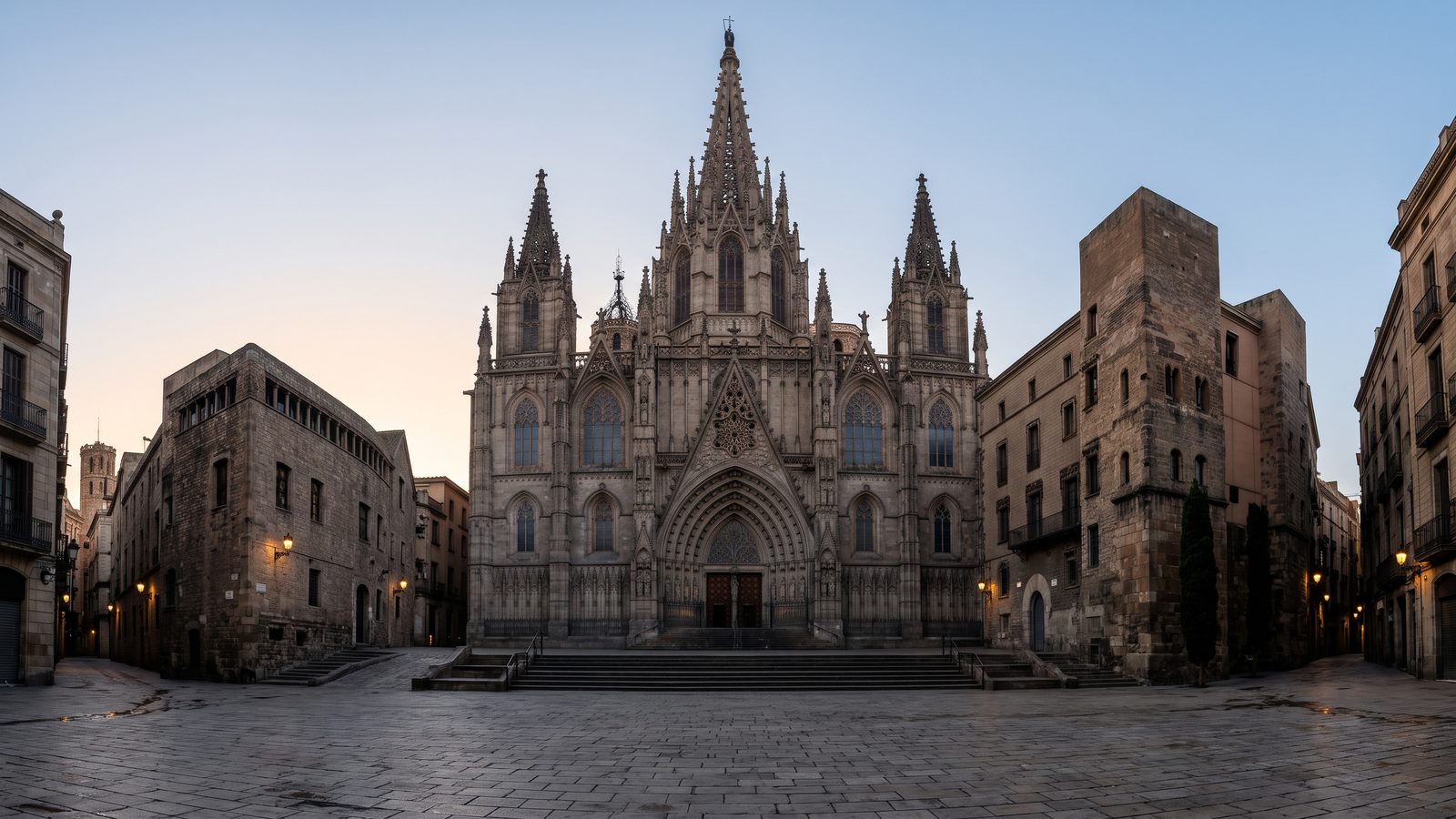
Welcome to Barcelona Cathedral, the spiritual and cultural heart of Catalonia located in the vibrant Gothic Quarter. Step into a sacred space where millennia of history unfold beneath soaring stone arches. From Roman roots to its magnificent Neo-Gothic facade, this cathedral stands as a living monument to medieval craftsmanship and local identity. Explore its tranquil cloisters, sacred crypts, and panoramic rooftop views with your self-guided audio tour guide.
Experience centuries of devotion as you walk through wide Gothic naves and serene courtyards home to thirteen white geese. Discover how Catalan architecture, ancient traditions, and engineering marvels weave together to tell the story of Barcelona’s enduring spirit, guiding your eyes heavenward through vibrant stained glass and soaring central spires.
Listen to a sample
The opening of this tour, exactly as AllTours narrates it on site.
What you'll hear on this tour
Stop 1. Rooftop Vistas Over the Gothic Quarter
As you ascend to the cathedral's rooftop, an extraordinary vista of Barcelona unfolds before you. You watch the winding medieval alleys of the Barri Gòtic weave between ancient stone buildings, opening into sun-drenched plazas invisible from the streets below. Looking outward, your eyes trace the skyline from the distant peaks of Montjuïc and Tibidabo all the way to the shimmering Mediterranean Sea. Up here, you stand at eye-level with soaring pinnacles, the 70-meter central spire, and intricate stone tracery. You also observe grotesque gargoyles keeping their quiet vigil over the city, where the organic pattern of the old town meets the structured grid of the Eixample.
Stop 2. Sacred Crypts and Living Traditions
You step into the deeply spiritual heart of the cathedral, feeling centuries of reverence surrounding you. As you descend into the quiet crypt, you encounter the alabaster sarcophagus of Saint Eulalia, who was martyred at age thirteen for her steadfast faith. In the peaceful cloister nearby, you meet thirteen white geese living in her honor, symbolizing her youth, purity, and ultimate sacrifice. Walking past the surrounding side chapels, you discover dynamic altarpieces portraying biblical salvation stories that have guided generations of local worshipers. Soaring Gothic arches reach overhead, lifting your gaze toward the divine while connecting you directly to the bedrock of Barcelona's spiritual identity and enduring cultural heritage.
Stop 3. The Living Pulse of Catalan Tradition
Inside these ancient stone walls, you experience the living pulse of Catalan culture and identity. During the celebration of Corpus Christi, you witness L'Ou com Balla, the whimsical dancing egg tradition where an empty eggshell precariously balances and twirls atop a fountain jet in the cloister, decorated with fresh flowers and seasonal fruits. You see how deep devotion to Saint Eulalia permeates every corner, from her sacred crypt to the beautifully carved choir stalls that record shared local history. These vibrant customs transform a quiet sanctuary into a lively community gathering, demonstrating how Barcelona seamlessly intertwines joyful celebration with deep spiritual reverence across the centuries.
Stop 4. Masterpiece of Catalan Gothic Design
You stand before a magnificent showcase of Catalan Gothic architecture, defined by its spacious proportions and communal warmth. Though the dramatic 70-meter central spire, soaring pinnacles, and intricate Neo-Gothic facade appear ancient, you are looking at meticulous craftsmanship added around the turn of the 20th century to complete medieval plans. Above the main entrance, a stunning rose window casts colorful, ethereal light across the wide central nave. Unlike the towering heights of northern European churches, this expansive interior emphasizes unified space and solid structural grace. Beneath robust ribbed vaults, you can appreciate how these balanced stone arches harmonize effortlessly with the tranquil, arcaded cloister.
Stop 5. Millennia of Sacred Foundations
You stand upon sacred ground that has witnessed thousands of years of human history. Beneath your feet rest the foundations of a 4th-century Paleo-Christian basilica from Roman Barcino, followed by Visigothic structures and remnants surviving the 8th-century Moorish conquest. You trace the evolution to a Romanesque cathedral consecrated in 1058, before King James II initiated the grand Gothic transformation in 1298. As you walk through the primary structure completed in the mid-15th century, you discover that the striking main facade and central spire were finished much later, between the late 19th and early 20th centuries, faithfully realizing medieval architectural visions to preserve this enduring monument.
Stop 6. Engineering Innovations in Luminous Stone
As you examine the cathedral's structural details, you discover the clever medieval engineering that makes these massive stone walls possible. Pointed arches efficiently channel weight downwards, while external flying buttresses support thin walls designed to house massive stained-glass windows. You watch filtered sunlight stream through these vivid glass panels, illuminating sacred narratives across the stone floor like a luminous visual storybook. High above your head, grotesque gargoyles serve both practical and symbolic roles, channeling rainwater away from the masonry while standing guard against evil spirits. Every stone demonstrates a deliberate upward vector, inviting your gaze heavenward in a powerful display of medieval engineering and spiritual devotion.
Planning your visit
- Best time to go
- Morning for lower crowd density and soft light filtering through the stained glass, or late afternoon for golden hour views on the rooftop.
- Approximate duration
- about 1 to 1.5 hours
- Where to start
- Pla de la Seu, directly facing the cathedral's main Neo-Gothic facade.
Access and conditions change seasonally — check the official site before you go.
Frequently asked questions
Is Barcelona Cathedral worth visiting?
Yes, Barcelona Cathedral is well worth visiting for its rich history spanning Roman to Gothic eras, its quiet cloister housing 13 white geese, detailed interior chapels, and sweeping rooftop views of the Gothic Quarter.
How long do you need at Barcelona Cathedral?
Most visitors spend between 1 and 1.5 hours exploring the nave, the crypt of Saint Eulalia, the cloister, and taking the elevator up to the rooftop.
When was Barcelona Cathedral built?
Construction on the main Gothic structure began in 1298 under King James II and was largely completed by the mid-15th century, though its Neo-Gothic facade and spire were added between the late 19th and early 20th centuries.
Keep exploring
Header image is an AI-generated illustration of Barcelona Cathedral. AllTours.ai is an AI audio tour guide — point your camera at any landmark and hear its story.