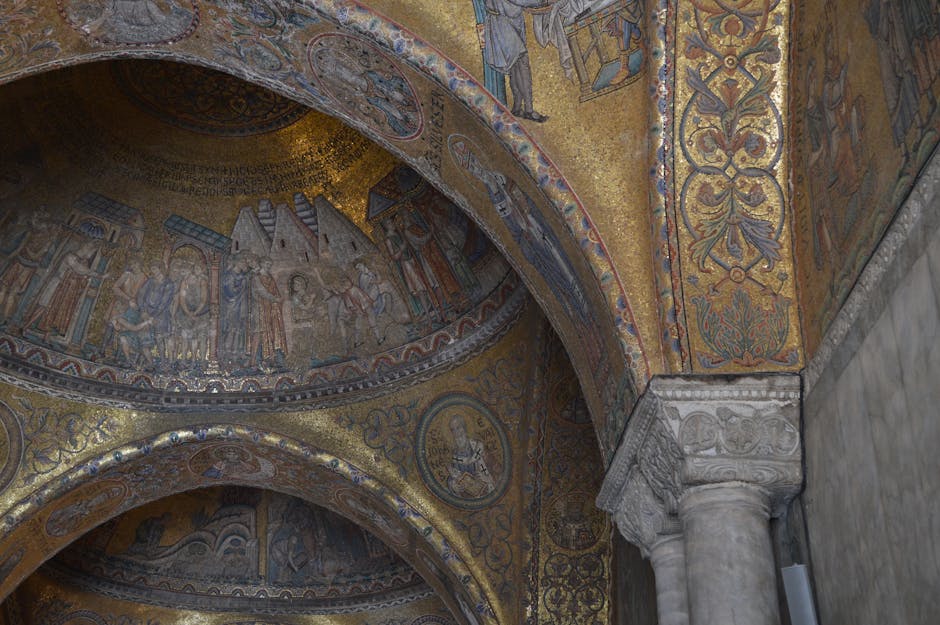
Welcome to the Basilica di Santa Prassede, a true hidden marvel nestled in the heart of Rome. Often overshadowed by its more famous neighbors, this ancient basilica offers a surprisingly tranquil escape and a journey back in time to the early medieval period. Prepare to step into a world where art, faith, and history intertwine, revealing stories etched in glittering gold and vibrant stone.
Our self-guided audio tour invites you to explore the profound beauty and spiritual significance of Santa Prassede. From its unassuming exterior to its richly decorated interiors, you'll uncover one of Rome's most exceptional collections of 9th-century Byzantine mosaics, rivaling those found in Ravenna. Let AllTours.ai illuminate the details and narratives that make this basilica an unforgettable experience.
What you'll hear on this tour
Stop 1. The Unassuming Facade
As you approach the Basilica di Santa Prassede, notice its modest exterior, a stark contrast to the treasures held within. This ancient structure, largely rebuilt in the 9th century by Pope Paschal I, stands on ground with roots stretching back to early Christian times. Its unassuming facade hints at the layers of history buried beneath, inviting you to step inside and peel back centuries of Roman heritage. Imagine pilgrims from across Europe arriving here, seeking solace and spiritual connection, long before the grand Baroque churches dominated the city's skyline. This entrance is your gateway to a forgotten Rome.
Stop 2. Nave and Apse Splendor
Upon entering the basilica, your gaze is immediately drawn to the shimmering mosaics of the apse. These stunning 9th-century creations depict Christ enthroned, flanked by Saints Peter and Paul introducing Praxedes and Pudentiana, along with Pope Paschal I. The vivid colors and intricate details are a testament to the artistic revival of the Carolingian era in Rome, directly inspired by Byzantine traditions. Notice the symbolic representations and the serene expressions of the figures, guiding worshippers towards a spiritual understanding. These mosaics set the stage for the basilica's deeper wonders, showcasing early medieval artistry at its finest.
Stop 3. Chapel of San Zeno: Paradise
Step into the Chapel of San Zeno, often called the 'Garden of Paradise,' and prepare to be dazzled. This small funerary chapel, built by Pope Paschal I for his mother, is a breathtaking masterpiece of 9th-century mosaic art. Every surface—walls, ceiling, and arches—is covered in glittering gold and vibrant glass tesserae, depicting Christ, the Virgin Mary, saints, and celestial symbols. The level of detail and the sheer luminosity of these mosaics rival those found in Ravenna. It's an unparalleled immersion into the spiritual and artistic world of early medieval Rome, designed to evoke a sense of divine glory and eternal life.
Stop 4. The Column of Flagellation
Within the basilica, you'll find a small, venerated column said to be the very one to which Jesus was bound during his flagellation. Brought to Rome from Jerusalem in 1223 by Cardinal Giovanni Colonna, this relic has been a focal point of devotion for centuries. While its authenticity is a matter of faith and historical debate, its presence here underscores the basilica's deep connection to Christian pilgrimage and relics. Take a moment to reflect on the profound stories and beliefs that surround such objects, and how they have shaped the spiritual landscape of Rome for countless generations.
Stop 5. Crypt and Saint Praxedes
Descend into the crypt below the main altar, the traditional resting place of Saint Praxedes, the basilica's namesake. According to legend, Praxedes and her sister Pudentiana were early Christian virgins who aided persecuted Christians in Rome, even collecting the blood of martyrs. The crypt offers a glimpse into the basilica's ancient foundations and its role as a sacred burial ground. Here, amidst the quiet reverence, you can contemplate the lives of the early saints and the enduring legacy of faith that has sustained this holy site for over a millennium. It's a powerful conclusion to your journey through Santa Prassede.
Planning your visit
- Best time to go
- Early morning or late afternoon, especially during weekdays, to avoid crowds and experience its quiet serenity.
- Approximate duration
- About 45-60 minutes
- Where to start
- Begin at the main entrance of the Basilica di Santa Prassede, located on Via di Santa Prassede. Look for its ancient, brick facade with a modest portico.
Access and conditions change seasonally — check the official site before you go.
Frequently asked questions
Is there an entrance fee for the Basilica di Santa Prassede?
Like many churches in Rome, entry to the Basilica di Santa Prassede is generally free, though donations are always appreciated to help with its upkeep. It's always a good idea to check the official website for any specific exhibition fees or updated information before your visit.
What is the dress code for visiting the basilica?
As a sacred place, visitors are expected to dress respectfully. This typically means covering your shoulders and knees. Hats should be removed upon entering. Modest attire ensures a comfortable and appropriate experience for everyone.
Are photos allowed inside the Basilica di Santa Prassede?
Photography is generally permitted for personal use, especially without flash, to preserve the delicate mosaics and maintain the solemn atmosphere. However, always be mindful of signage or specific restrictions, especially in certain chapels or during religious services. Be respectful of other visitors and the sacred space.
Keep exploring
Photography via Pexels. AllTours.ai is an AI audio tour guide — point your camera at any landmark and hear its story.