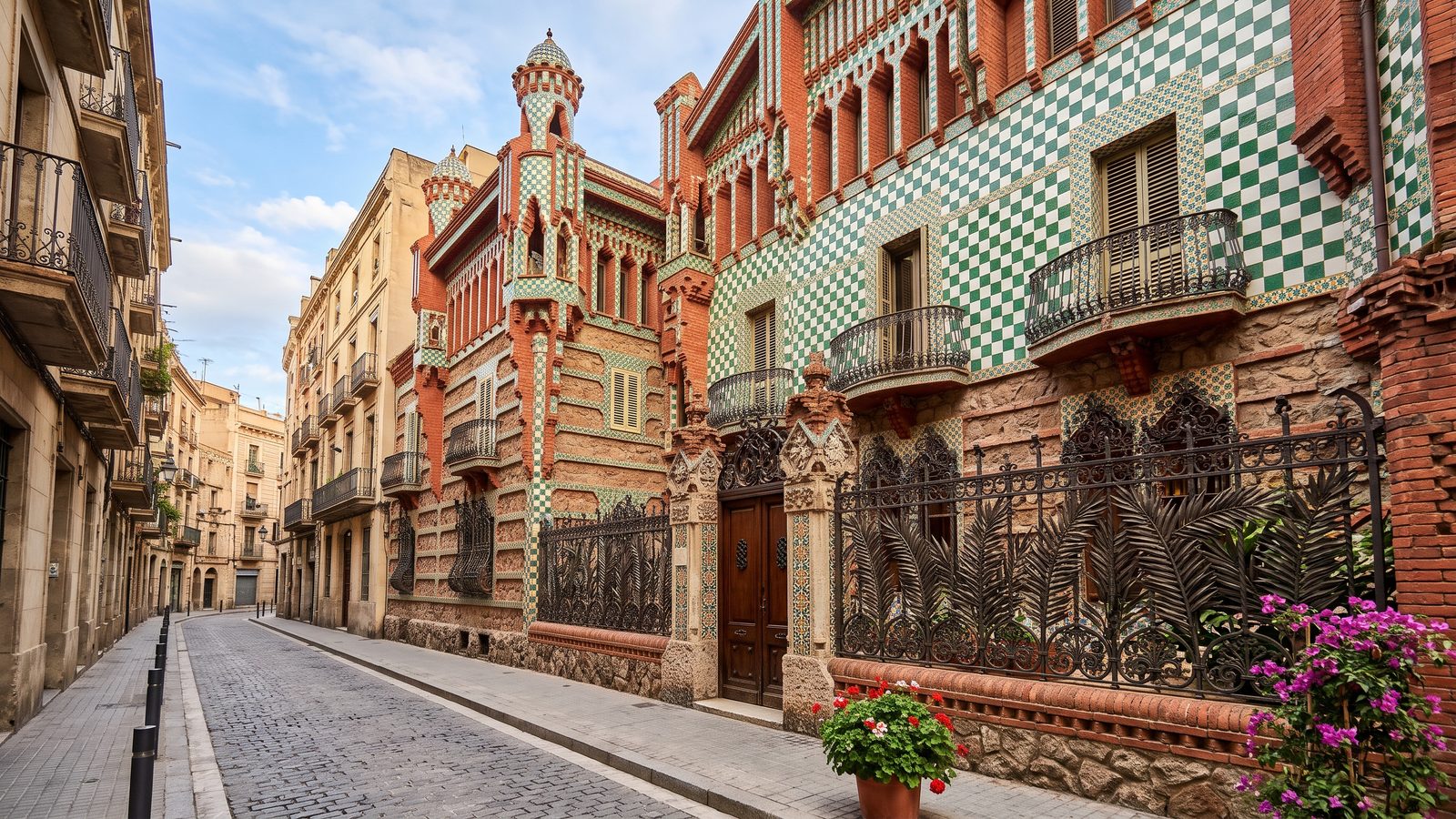
Welcome to Casa Vicens, the brilliant spark that ignited Antoni Gaudí’s legendary architectural career in Barcelona. Built between 1883 and 1885 for tile manufacturer Manuel Vicens i Montaner, this vibrant summer residence represents the bold birth of Catalan Modernisme. As you approach its expressive exterior, prepare to discover an oriental-inspired sanctuary where raw brick, intricate ceramic tilework, and wrought-iron nature motifs harmonize into an unforgettable declaration of artistic independence.
On this self-guided audio tour, you will uncover how a young architect fresh from school challenged every convention of his era. Explore rich historic rooms, immersive artistic spaces, and detailed museum displays, stepping inside the very place where Gaudí’s lifelong passion for organic forms and holistic design truly began.
Listen to a sample
The opening of this tour, exactly as AllTours narrates it on site.
What you'll hear on this tour
Stop 1. A Revolution of Brick, Tile, and Arches
As you stand before the facade of Casa Vicens, you are witnessing the birth of an architectural revolution. Notice how raw, exposed brickwork weaves effortlessly with striking green and white ceramic tiles in a bold checkerboard pattern. Antoni Gaudí draws deep inspiration from Mudejar and Orientalist styles, crafting horseshoe arches and whimsical small turrets that give the building an exotic, storybook quality. Look closely at the exterior to see nature blooming directly from the walls through ceramic marigolds and sculpted iron palm fronds. This dynamic asymmetry and play of varied volumes invites your gaze across surfaces that celebrated local craftsmanship and forever reshaped Catalan design.
Stop 2. Every Surface a Living Canvas
Step closer and observe how Gaudí treats every structural element as a vibrant canvas. Notice the sgraffito work along the upper exterior, where delicate floral friezes emerge through scratched plaster. As you move into the interior smoking room, look up to experience a mesmerizing artistic illusion. Here, painted palm fronds form a breathtaking trompe l'oeil canopy across the ceiling, blurring the boundaries between indoor comfort and external nature. From stained glass filtering soft, painterly light to the stylized ironwork fence sculpted into palm leaves, every detail reveals Gaudí's emerging mastery of integrated, total design where art and everyday life seamlessly unite.
Stop 3. The Spark of a Genius Visionary
You are exploring the very manifesto of a young Antoni Gaudí. Fresh from his architectural studies, he boldly rejects the rigid historicism of his day to orchestrate a symphony of raw brick, forged iron, and bright ceramics. Here, you see his early obsession with nature's hidden geometry, treating architecture not as rigid stone, but as a living, breathing organism. Gaudí pushes local artisans to their absolute limits, insisting on total artistic control across every joint and curve. As you examine the intricate motifs, you can feel his deep connection to the Catalan landscape, translating native flora into structural genius and setting the stage for all his legendary future masterpieces.
Stop 4. The Birth of Catalan Modernisme
Look up at the delicate wrought-iron balconies and patterned facades surrounding you. You are standing at the absolute genesis of Catalan Modernisme, a movement that discarded rigid academic rules to celebrate nature, light, and artisan craftsmanship. The striking green and white tiles are not mere geometric shapes; they serve as a direct, colorful tribute to the yellow marigolds that once bloomed abundantly across this garden plot. Every curve and textured surface around you reflects a holistic design philosophy. Gaudí uses light, shadow, and organic forms to create an immersive visual experience, declaring a vibrant new Catalan cultural identity through fearless architectural innovation.
Stop 5. From Summer Residence to World Heritage
You are retracing a story that began in 1883, when tile manufacturer Manuel Vicens i Montaner commissioned a young Gaudí to construct his summer home. Imagine this structure surrounded by expansive, lush gardens complete with a cascading waterfall and a grand fountain, features that lost ground to urban growth over time. For over a century, the residence remained a private family home, carefully modified while preserving Gaudí's visionary core. Following its acquisition by MoraBanc in 2014 and meticulous restoration, it opened to the public in 2017. Today, you can freely walk through these historical rooms, experiencing the foundational moment where modern residential architecture changed forever.
Stop 6. Inside the Archives of Genius
Step inside the dedicated museum rooms to explore the conceptual origins of Gaudí's masterpiece. Here, you discover original architectural sketches, detailed models, and rare archival photographs that reveal the building’s century-long evolution. Interpretive displays break down the intricate symbolic meaning behind the iconic marigold tiles and wrought-iron palm leaves. You can even read intimate personal letters from the Vicens family, bringing the daily lives of the original inhabitants vividly to life. These curated spaces offer a deeper understanding of how Manuel Vicens’ commission empowered Gaudí to experiment with materials, forever cementing Casa Vicens as a pioneering catalyst for the entire Modernisme movement.
Planning your visit
- Best time to go
- Morning right at opening or late afternoon for gentle sunlight on the tile facade and fewer crowds.
- Approximate duration
- About 1 to 1.5 hours
- Where to start
- Main visitor entrance of Casa Vicens on Carrer de les Carolines in Barcelona's Gràcia district.
Access and conditions change seasonally — check the official site before you go.
Frequently asked questions
Is Casa Vicens worth visiting?
Yes, Casa Vicens is well worth visiting as Antoni Gaudí's first major residential project. It offers a unique look at the genesis of Catalan Modernisme, showcasing vibrant ceramic tilework, Orientalist influences, and intimate museum displays.
How long do you need at Casa Vicens?
Most visitors need about 1 hour to 90 minutes to thoroughly explore the interior rooms, smoking room ceiling, historic exhibits, and exterior details.
Who built Casa Vicens and when was it constructed?
Casa Vicens was designed by Antoni Gaudí for tile manufacturer Manuel Vicens i Montaner and was constructed between 1883 and 1885.
Keep exploring
Header image is an AI-generated illustration of Casa Vicens. AllTours.ai is an AI audio tour guide — point your camera at any landmark and hear its story.