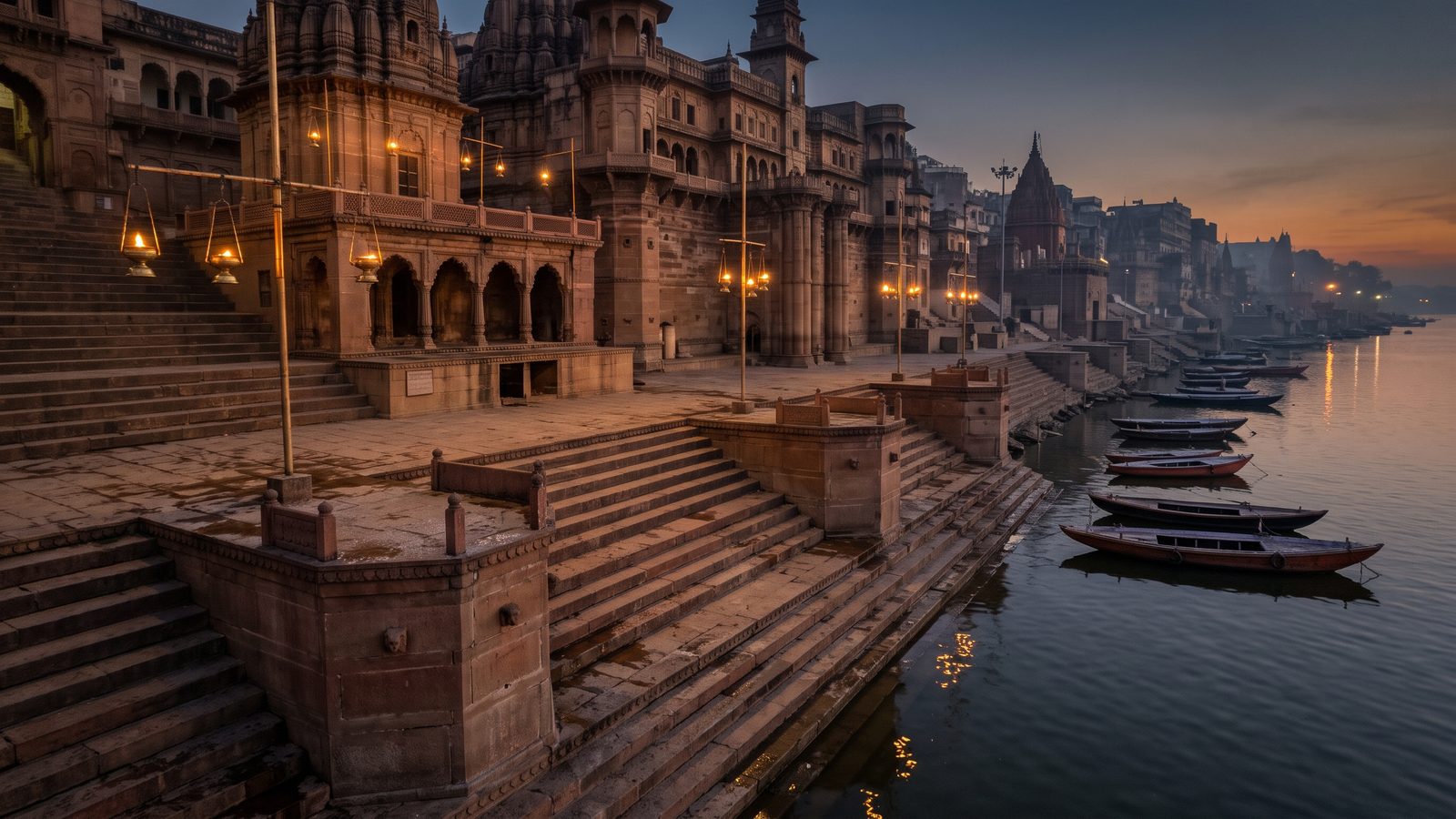
Welcome to Dashashwamedh Ghat, the vibrant, beating heart of Varanasi along the sacred Ganges River. Steeped in millennia of spiritual devotion, this famous riverbank is where ancient legends, monumental history, and living traditions seamlessly collide. As you step onto these storied stone stairs, prepare to immerse yourself in a sensory tapestry of chanting, incense, rhythmic cymbals, and flickering oil lamps that have captivated pilgrims for generations.
This self-guided audio tour leads you through the history, architecture, and sacred rituals defining the ghat. From Brahma’s legendary horse sacrifice to the mesmerizing evening Ganga Aarti ceremony, you will uncover why millions travel to these steps seeking purification, spiritual connection, and solace along the holy waters.
Listen to a sample
The opening of this tour, exactly as AllTours narrates it on site.
What you'll hear on this tour
Stop 1. Legend of the Ten Horses
You stand on Dashashwamedh Ghat, a place where history is etched directly into the flow of the Ganges. Imagine the ancient legends surrounding this sacred spot, said to be created by Lord Brahma himself over two millennia ago. He performed a sacred fire sacrifice—a yajna—offering ten horses, which gave the ghat its name, meaning 'ten-horse sacrifice.' This profound act consecrated the site, turning it into one of Varanasi's most potent pilgrimage destinations. As you look around, reflect on how centuries of kings, saints, and commoners have walked these steps, seeking purification while empires rose and fell around them.
Stop 2. The Rhythm of Ganga Aarti
Feel the palpable energy surrounding you at the heart of Varanasi’s spiritual life. You are witnessing a living tapestry of faith where daily life intertwines with the divine. As dusk approaches, priests perform the mesmerizing Ganga Aarti, a spectacular ceremony of light and sound dedicated to Mother Ganga. Observe their synchronized movements and the gentle flicker of raised oil lamps against the evening air. Fragrant incense smoke fills the atmosphere while rhythmic cymbals and chanting reverberate across the riverbank. This is not merely a public display; it is an ongoing narrative of devotion that grants pilgrims solace and a deep connection to the eternal.
Stop 3. Sacred Offerings and Rituals
Look closely at the elaborate puja ceremonies taking place across the steps around you. Devotees offer vibrant marigolds, red kumkum powder, and sweet-smelling camphor, each item carrying symbolic reverence for Mother Ganga. You may notice families gathered for a mundan, the traditional head-shaving ritual performed for infants to mark purification and a new beginning. Listen carefully to hear the soft repetition of ancient mantras whispered by priests to invoke protection and blessings. As you watch, remember these outward acts reflect an internal state of devotion, representing the quiet, heartfelt offering of oneself to a divine presence.
Stop 4. Stonework Carved for the River
Examine the heavy stone steps under your feet. You are looking at centuries of architectural adaptation, where different masonry styles reveal periods of repair and addition since the ghat’s construction in 1748. Notice the massive, practical design of the lower steps, engineered specifically to endure flooding from the Ganges while accommodating millions of pilgrims. As your eyes move upward, you can see deliberate platforms and alcoves integrated into the structure. These elevated areas were strategically built to give priests and devotees stable, safe ground during complex rituals, showing how functional utility and sacred purpose blend in this enduring stonework.
Stop 5. An Unbroken Chain of Faith
Sense the profound devotion radiating from the ancient stones beneath your feet. You stand in a sacred sanctuary where an unbroken tradition of faith stretches back through the centuries. Watch the meticulous preparations of the priests as they arrange sacred items with knowledge passed down through generations. Devotees enter the waters of the Ganges believing its sacred currents can purify both the physical body and spiritual karmic burdens. Every whispered prayer and floating lamp reinforces an intimate connection between humanity and the divine, demonstrating the enduring strength of faith that brings seekers from across the world to this holy shore.
Stop 6. Living Pilgrimage on the Ganges
Observe the constant stream of pilgrims gathered around you, drawn by an intense conviction in the divine power of the Ganges. Here, faith is actively lived through every ritual dip, whispered mantra, and respectful prostration. Ancient texts describe bathing in these waters on auspicious days as a way to earn immense spiritual merit. As you walk along the bustling riverbank, you see that personal prayers merge into a powerful collective atmosphere of seeking. You are not just visiting a famous riverfront; you are stepping directly into a living continuum of spiritual practice where generations find profound comfort and peace.
Planning your visit
- Best time to go
- Visit in the late afternoon to explore the steps before sunset, then stay to witness the evening Ganga Aarti ceremony at dusk.
- Approximate duration
- About 1 to 1.5 hours
- Where to start
- Begin at the top of the main stone steps leading down to Dashashwamedh Ghat from Godowlia Crossing.
Access and conditions change seasonally — check the official site before you go.
Frequently asked questions
Is Dashashwamedh Ghat worth visiting?
Yes, Dashashwamedh Ghat is considered the most vibrant and historically significant ghat in Varanasi. It offers visitors a powerful experience of living Hindu traditions, breathtaking stonework, and the world-famous evening Ganga Aarti ceremony.
How long do you need at Dashashwamedh Ghat?
Most visitors spend 1 to 2 hours exploring the ghat's stone architecture, observing daily rituals along the steps, and watching the spectacular Ganga Aarti ceremony at dusk.
What is the history behind Dashashwamedh Ghat?
According to Hindu legend, Lord Brahma created the ghat and performed a ten-horse sacrifice (Dashashwamedh) here over two thousand years ago. The current stone structure dates back to 1748 and has served as a central pilgrimage site for centuries.
Keep exploring
Header image is an AI-generated illustration of Dashashwamedh Ghat. AllTours.ai is an AI audio tour guide — point your camera at any landmark and hear its story.