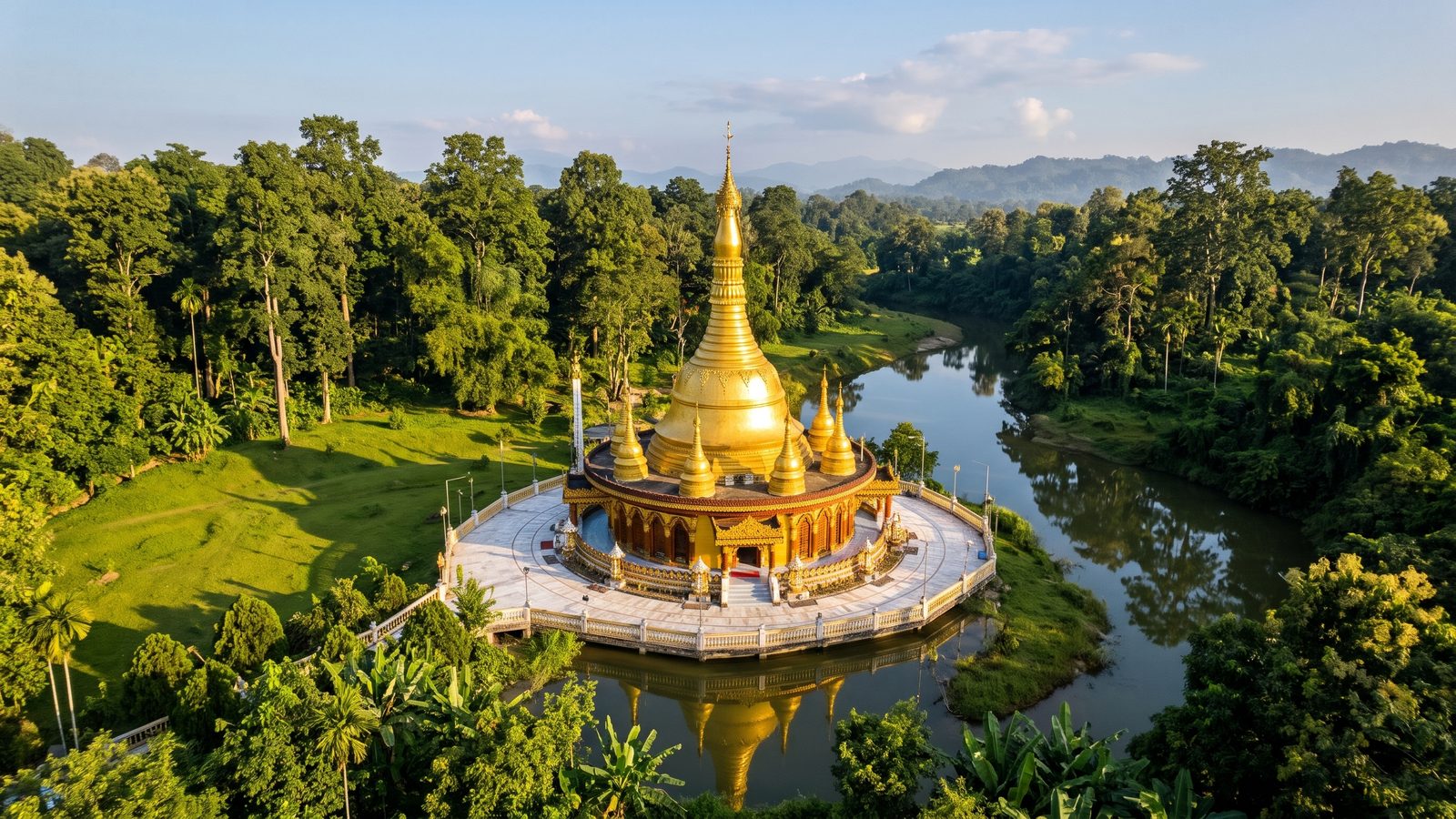
Welcome to the Golden Pagoda of Namsai, locally known as Kongmu Kham, a radiant jewel of Theravada Buddhism nestled in Arunachal Pradesh. Inaugurated in 2010, this sacred sanctuary reflects the deep devotion and rich heritage of the Tai-Khamti community. As you stand before its gleaming golden roofs and peaceful prayer halls, you enter a living haven of spiritual reflection, surrounded by lush riverine landscapes and ancient forest trees.
This audio tour guides you through the complex's architectural features, sacred shrines, and tranquil grounds. You learn how traditional Burmese and Tai-Khamti design merge, observe daily pilgrimage rituals, and absorb the profound tranquility that makes this site a central cultural heartland in Northeast India.
Listen to a sample
The opening of this tour, exactly as AllTours narrates it on site.
What you'll hear on this tour
Stop 1. Fusion of Burmese and Tai-Khamti Styles
As you gaze upon the Golden Pagoda, you witness a striking fusion of Burmese and Tai-Khamti architectural styles. A robust octagonal plinth anchors the central stupa, grounding the structure in traditional Tai-Khamti design. Rising gracefully above is the bell-shaped dome, or anda, coated in shimmering gold leaf that symbolizes purity and enlightenment. Higher still, the spire, known as the hti, features diminishing tiers of umbrellas that represent the journey toward nirvana. Intricate filigree and vibrant mosaic patterns depicting sacred symbols adorn the lower sections. Surrounding prayer halls echo this master craftsmanship with their pitched roofs and ornate wooden carvings, creating a harmonious setting built to inspire deep reverent contemplation.
Stop 2. Inside the Sacred Main Shrine
Step inside the main temple where a serene bronze Buddha idol captures your attention, radiating peace under soft light. Hand-carved wooden pillars surround you, featuring traditional Tai-Khamti motifs that reflect generations of devotion. Along the walls, vibrant murals depict scenes from the Jataka tales, illustrating the Buddha's previous lives. Feel the cool marble underfoot and smell the faint aroma of burning incense while monks chant daily prayers. Above you, a multi-tiered ceiling symbolizes the soul's ascent toward enlightenment. This hallowed sanctuary serves as the living cultural heart of the local community, preserving sacred heritage and offering visitors a quiet space for personal reflection.
Stop 3. The Living Heart of Theravada Faith
Standing before this radiant chedi, you enter the spiritual center of Theravada Buddhism, the oldest surviving branch of the faith. The structure embodies the mind of the Buddha and his enlightenment, enshrining sacred relics that offer a physical link to his presence. Golden leaf covering the pagoda signifies the precious nature of the Dharma. Inside, Buddha images display classic hand gestures like the Bhumisparsha and Dhyana mudras, representing key moments from his life. You watch monks of the Sangha preserve these ancient teachings while cultivating metta, or loving-kindness. As devotees circumambulate clockwise, they symbolically turn the Dharma wheel, reflecting deeply on the Four Noble Truths.
Stop 4. A Riverine Ecological Sanctuary
Expand your gaze beyond the golden spires to absorb the surrounding natural sanctuary. You stand in an ecological pocket filled with crisp air carrying the earthy fragrance of indigenous Hollong and Makai trees. Bamboo groves rustle gently nearby while the tranquil waters of the Chowkham River flow just a short distance away, reflecting the pagoda's golden silhouette. Carefully tended gardens showcase native flora, vibrant orchids, and medicinal plants that draw local birds and butterflies into the sacred space. Damp earth underfoot reminds you of the life-giving valley. Here, natural elements and spiritual architecture exist in complete harmony, creating a serene environment for contemplation.
Stop 5. Steps of Devotion and Circumambulation
Feel the vibrant atmosphere of devotion as pilgrims arrive from across the region to visit this holy site. You watch visitors perform pradakshina, the ritual clockwise circumambulation around the main stupa, offering silent prayers for spiritual purification and merit with every step. Many come to fulfill sacred vows or seek blessings for new beginnings. At the shrines, devotees arrange offerings of colorful flowers, flickering candles, and incense as expressions of faith in the Triple Gem. Families walk together to pass on their spiritual heritage, transforming the architectural complex into a active conduit of shared worship, personal reflection, and communal connection.
Stop 6. Sanctuary of Chants and Inner Peace
Step into the prayer hall where rhythmic chanting and flickering butter lamps create a meditative sanctuary. Monks in saffron robes guide practitioners through vipassana meditation, encouraging quiet self-awareness and inner calm. The relics enshrined in the central stupa serve as focal points for veneration, radiating energy believed to generate punya, or spiritual merit. As you observe pilgrims making offerings of dana and walking mindfully around the pagoda, you feel the release of worldly distractions. The soft scent of incense fills the space, offering you a rare moment to experience profound peace and connect with the timeless path toward liberation.
Planning your visit
- Best time to go
- October to March for pleasant winter weather; early morning or late afternoon light offers stunning views of the golden roofs.
- Approximate duration
- About 1 to 1.5 hours
- Where to start
- Begin at the main entrance gate facing the central stupa and prayer hall grounds.
Access and conditions change seasonally — check the official site before you go.
Frequently asked questions
Is Golden Pagoda of Namsai worth visiting?
Yes, the Golden Pagoda of Namsai (Kongmu Kham) is one of the premier Theravada Buddhist sites and architectural landmarks in Northeast India, famous for its magnificent golden stupa, serene riverside surroundings, and rich Tai-Khamti culture.
How long do you need at Golden Pagoda of Namsai?
Most visitors spend between 1 and 2 hours exploring the main stupa, viewing the Buddha shrine, walking through the gardens, and enjoying the peaceful atmosphere of the complex.
What is the history of the Golden Pagoda of Namsai?
Inaugurated in 2010, the Golden Pagoda (Kongmu Kham) was built as a symbol of faith and cultural pride by the Tai-Khamti community, blending Burmese and traditional Tai-Khamti architecture to serve as a Theravada Buddhist spiritual center.
Keep exploring
Header image is an AI-generated illustration of Golden Pagoda of Namsai. AllTours.ai is an AI audio tour guide — point your camera at any landmark and hear its story.