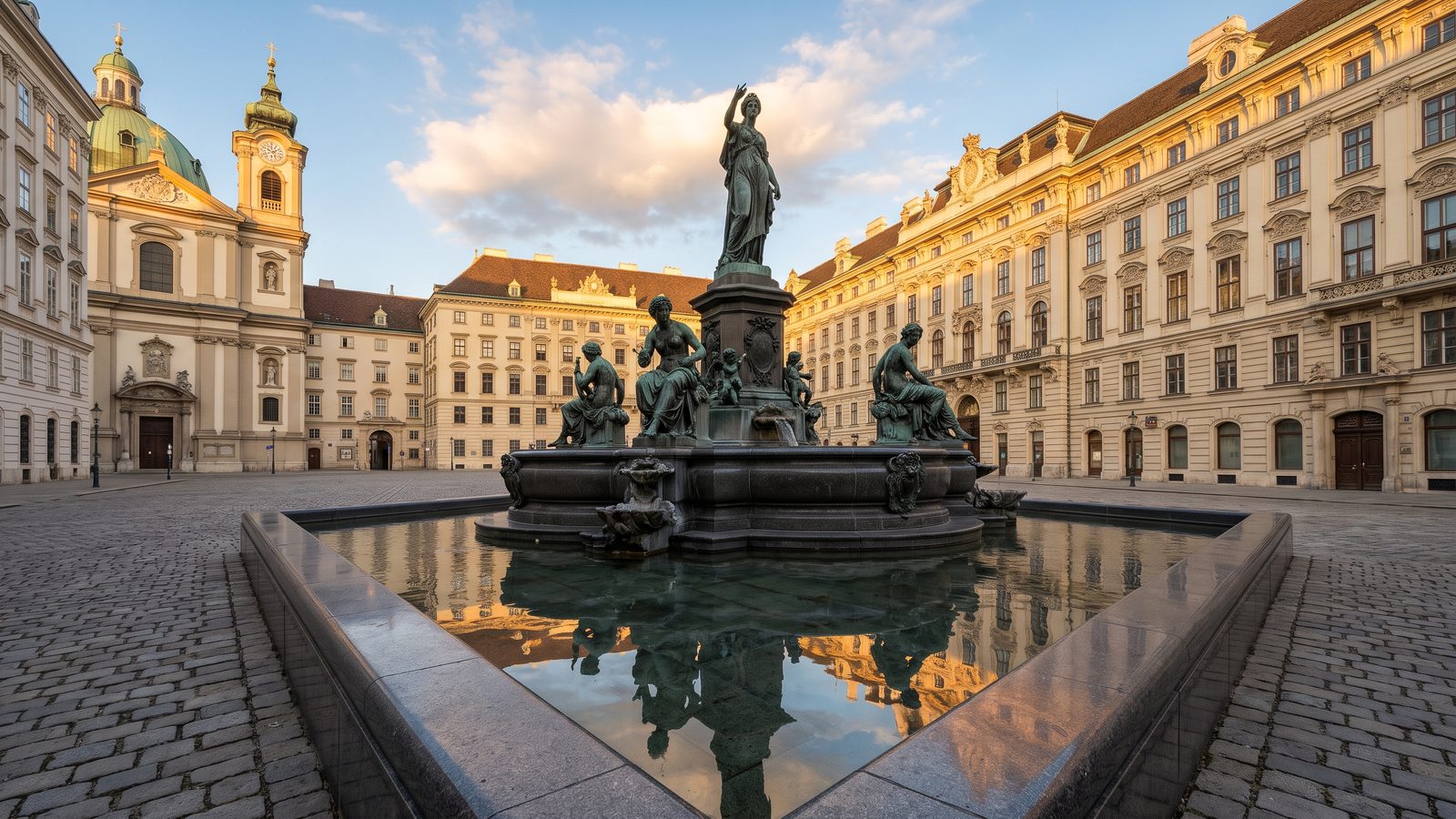
Welcome to Vienna's Neuer Markt, where the magnificent Donner Fountain stands as a masterpiece of 18th-century Baroque art. Unveiled in 1739 by legendary sculptor Georg Raphael Donner, this iconic landmark features the central figure of Providentia surrounded by vivid river allegories. As a beloved meeting point in the imperial heart of Austria, it offers visitors a captivating blend of dramatic sculpture, gentle flowing waters, and rich Viennese history.
This audio tour invites you to admire the intricate bronze figures, explore the allegorical symbolism of Austria's great rivers, and absorb the vibrant culture of surrounding Vienna. Take your time enjoying the elegant craftsmanship, ambient sounds, and historical context of one of the city's finest public monuments.
Listen to a sample
The opening of this tour, exactly as AllTours narrates it on site.
What you'll hear on this tour
Stop 1. Mastery of Form and Fluid Motion
As you gaze upon Georg Raphael Donner’s masterpiece, observe how the titan of Austrian Baroque sculpture breathes vitality into metal. Look up at Providence; her ethereal drapery swirls gracefully while her upward gaze conveys profound divine guidance. Below, your eyes meet four distinct allegorical river figures. Notice the raw, muscular power of the Enns, embodying untamed force, contrasting with the serene elegance of the Traun amidst fish and reeds. Donner seamlessly blends classical ideals with vibrant emotional realism, making these heavy forms appear light and dynamic. Every ripple of flowing water interacts with the sculpted forms, constantly shifting in the light.
Stop 2. Theatrical Drama and Dynamic Light
Immerse yourself in the intense Baroque spirit defining this monument. Notice how Georg Raphael Donner infuses every curve with theatrical drama, using the dynamic contrapposto pose of Providentia to create graceful movement and emotional intensity. Below her, animated river gods twist and turn, capturing the surging energy of their legendary waterways. You are standing before a grand artistic stage where natural light plays across deeply carved drapery, producing striking chiaroscuro contrast. Rendered originally in lead to allow fluid, intricate detailing before bronzing, this work transforms a public utility into an awe-inspiring spectacle designed to evoke pure wonder.
Stop 3. Reflective Water and Timeless Design
Look down at the fountain's circular basin, crafted from polished dark granite. As you stand by its edge, notice how the surface acts as a mirror, reflecting both the sky above and the dramatic bronze figures overhead. Water flows gently from calibrated jets hidden around the rim, creating a soothing murmur rather than a violent spray. This continuous circulating flow symbolizes the relentless passage of time and enduring memory. Built in a classical tripartite design reminiscent of ancient Roman public works, the fountain invites you to experience its cool mist on warm days, blending sensory delight with solemn reflection.
Stop 4. The Soul of Imperial Vienna
Step back and appreciate the surrounding atmosphere of Vienna, the glorious capital of the Habsburg Empire for over six centuries. As you explore this historic center, imagine the gilded salons where Empress Maria Theresia ruled and where musical masters like Haydn, Mozart, and Strauss created immortal works. You are walking through the birthplace of psychoanalysis under Freud and the revolutionary Art Nouveau Secession movement. Take a moment to visit legendary UNESCO-listed coffeehouses nearby, where intellectuals debated groundbreaking ideas over a warm Melange. Here, imperial grandeur seamlessly connects with centuries of artistic innovation and vibrant culture.
Stop 5. Echoes of Pioneer Resilience
Consider the historical echoes linked to the name Donner, evoking the famous 1846 pioneer trek through the Sierra Nevada. As you reflect at this monument, you encounter a solemn tribute conceived in the late nineteenth century to honor human resilience and the immense sacrifices of early Western pioneers. Descendants of early settlers helped drive its creation, focusing on the collective spirit of exploration rather than a single tragic tale. Standing here, you connect with an era marked by formidable landscapes, bold hopes, and enduring perseverance, remembering those who ventured into untamed frontiers.
Stop 6. Allegorical Rivers in Cast Bronze
Examine the detailed bronze work crafted by sculptor George J. Zolnay in 1906. At the center stands a female figure representing the Spirit of the Mississippi, radiating serene authority over the surrounding waters. Flanking her, two powerful male figures represent the confluence of the Missouri and Ohio Rivers, their muscular poses full of active energy. As you look closer, notice the intricate aquatic details cast into the base, including swimming fish, turtles, and swaying reeds. Water cascades over the metal forms from powerful jets, creating a living Beaux-Arts narrative in metal.
Planning your visit
- Best time to go
- Morning or late afternoon for ideal sunlight on the fountain sculptures and fewer crowds in Neuer Markt.
- Approximate duration
- about 30 minutes
- Where to start
- Neuer Markt square in central Vienna, standing directly in front of the fountain basin.
Access and conditions change seasonally — check the official site before you go.
Frequently asked questions
Is Donner Fountain worth visiting?
Yes, Donner Fountain (Donnerbrunnen) is one of Vienna's most celebrated Baroque landmarks, famous for Georg Raphael Donner's masterful river allegories and central figure of Providentia.
How long do you need at Donner Fountain?
A typical visit takes about 15 to 30 minutes, giving you enough time to examine the sculptures from all sides and listen to the narration.
Who built the Donner Fountain in Vienna?
The fountain was designed and sculpted by Austrian artist Georg Raphael Donner and unveiled in 1739.
Keep exploring
Header image is an AI-generated illustration of Donner Fountain. AllTours.ai is an AI audio tour guide — point your camera at any landmark and hear its story.