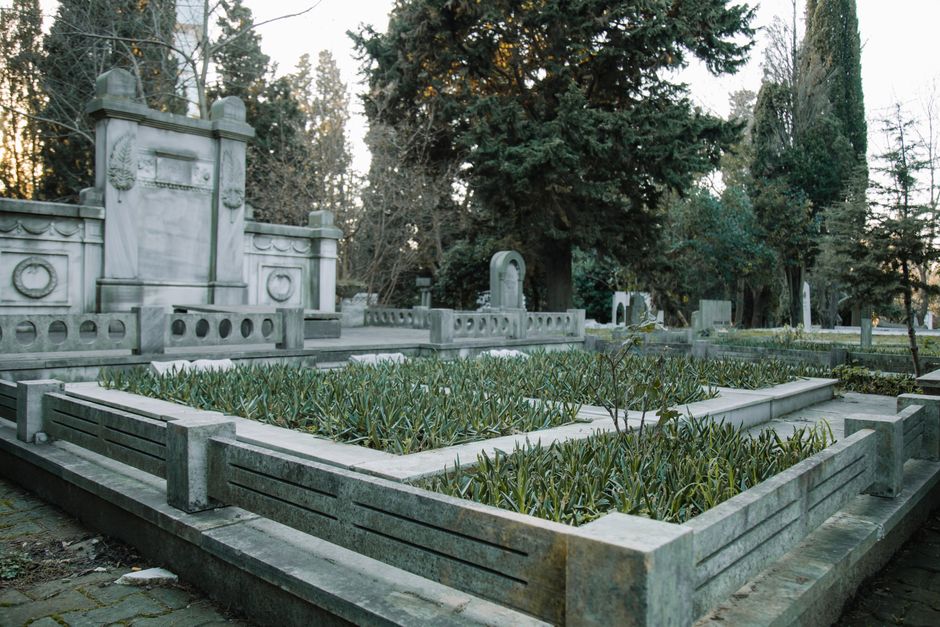
Welcome to a profound corner of Vienna's Zentralfriedhof: the Old Jewish Section (Tor 4). While the main cemetery hums with visitors, this area offers a strikingly different atmosphere. Here, nature has gently, yet powerfully, reclaimed ancient gravestones, creating a landscape of haunting beauty and quiet introspection.
This self-guided tour invites you to explore a poignant testament to a once-vibrant community. Wander amidst ivy-clad monuments and trees growing through family plots, experiencing the unique blend of history, decay, and the resilience of the natural world. Discover a truly unique and often overlooked chapter of Viennese history.
What you'll hear on this tour
Stop 1. Tor 4 Entrance
As you step through Gate 4, notice the immediate shift in atmosphere. Unlike the meticulously maintained main sections of Zentralfriedhof, this entrance hints at the wild beauty within. Here, the path might be less defined, and the sounds of the city begin to fade, replaced by the rustle of leaves and bird calls. This gate serves as a symbolic portal to a landscape where time and nature have intertwined, preparing you for a journey into a unique historical and natural sanctuary.
Stop 2. Nature's Embrace
Venture deeper along these winding, often overgrown paths. Observe how nature has taken hold: ivy creeps over crumbling stone, roots intertwine with foundations, and branches reach out, casting dappled shadows. This deliberate allowance for nature to reclaim the space creates a powerful sense of both loss and renewal. The paths themselves tell a story of abandonment and resilience, inviting quiet contemplation on the passage of time and the enduring power of the natural world.
Stop 3. Whispers of Generations
Amidst the foliage, look for larger, more elaborate family plots and monuments, often bearing names that were once prominent in Vienna's Jewish community. Though many are now difficult to read, their scale suggests wealth and influence. Imagine the lives these families led, their contributions to Viennese society, and the stories etched into these stones. These crumbling memorials stand as poignant reminders of individuals and generations tragically impacted by history, their legacy now intertwined with the very earth.
Stop 4. The Cycle of Life
Pause to truly observe the interplay of growth and decay around you. Trees sprout from within grave enclosures, their roots lifting and cracking the stone. This natural process is not one of destruction, but of transformation, symbolizing the continuous cycle of life, death, and rebirth. The resilience of the plants, pushing through the remnants of human endeavor, offers a powerful metaphor for enduring spirit and the way nature persistently reclaims and renews, even in places of profound sorrow.
Stop 5. A Place for Reflection
Find a quiet spot, perhaps near a particularly ancient or beautifully overgrown monument, to simply be present. This section of Zentralfriedhof is more than just a cemetery; it's a living memorial to a lost community and a testament to nature's profound capacity for renewal. Take a moment to reflect on the vibrant history that once thrived here, the lives remembered, and the unique, haunting beauty of this place where human memory and wild nature have merged into a truly unforgettable landscape.
Planning your visit
- Best time to go
- Spring or Autumn for foliage, early morning for quiet.
- Approximate duration
- about 60-90 minutes
- Where to start
- Tor 4 (Gate 4) of Zentralfriedhof, located on Simmeringer Hauptstraße. Look for the distinct gate structure and signage.
Access and conditions change seasonally — check the official site before you go.
Frequently asked questions
Is the Old Jewish Section (Tor 4) always accessible?
The Zentralfriedhof, including its Old Jewish Section, is generally open to the public during daylight hours. However, specific access to the overgrown paths within Tor 4 might vary with weather conditions. It's always a good idea to check the official Zentralfriedhof website for current visitor information before your visit.
Is this section suitable for all visitors, including those with limited mobility?
Due to the overgrown and uneven paths, and the natural terrain, this section may present challenges for visitors with limited mobility or those using wheelchairs. The ground can be rough and muddy, especially after rain. Please wear sturdy shoes and exercise caution.
What should I bring for my visit to the Old Jewish Section?
We recommend wearing comfortable, sturdy walking shoes suitable for uneven terrain. Bringing water, especially on warmer days, is advisable. Consider a camera to capture the unique atmosphere, but please be respectful and mindful of the solemnity of the location.
Keep exploring
Photography via Pexels. AllTours.ai is an AI audio tour guide — point your camera at any landmark and hear its story.