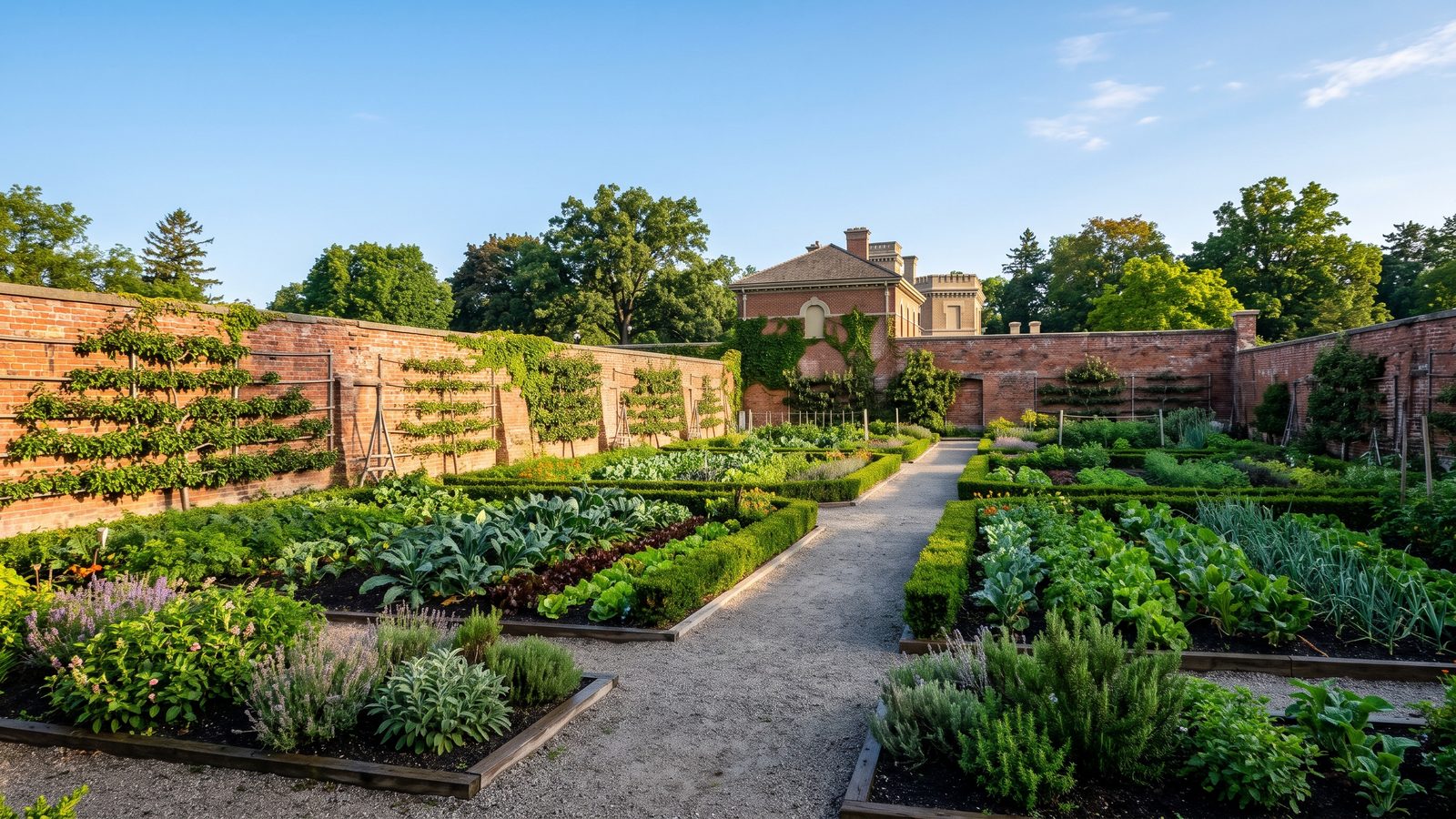
Step back into the mid-nineteenth century at the Dundurn Castle Walled Garden in Hamilton, Ontario. Designed as the agricultural engine for Premier Sir Allan MacNab’s grand estate, this historic kitchen garden combines Victorian formal symmetry with innovative growing techniques. As you explore, you will discover authentic heirloom crops, sheltered microclimates, and traditional horticultural methods that sustained one of early Canada’s most prominent political households.
This self-guided audio tour offers an immersive look into living history, from historic seed preservation to modern community harvest. Stroll through the gravel pathways and discover how 1850s agricultural science continues to thrive within these protective brick walls today.
What you'll hear on this tour
Stop 1. Living Seeds of the Victorian Era
You gaze upon a vibrant tapestry of plant life, meticulously divided into functional crops and ornamental beds. In the sunlit soil, you discover authentic 1850s heirloom vegetables like the high-yield 'Market Gardener' pea and the hardy 'Connecticut Field' pumpkin, which once sustained the estate through harsh winters. Turning toward the ornamental borders, you see cutting flowers like fragrant lavender and striking 'Love-Lies-Bleeding' amaranth, grown to adorn the mansion's lavish rooms. Each specimen represents preserved historical plant genetics, carefully selected in the mid-nineteenth century for yield, beauty, and resilience within this protected microclimate.
Stop 2. Microclimates and Grid Parterres
You stand before towering brick walls designed not just for shelter, but to capture heat and create a warm microclimate that extends the Canadian growing season. Looking across the space, you observe a formal grid system featuring large rectangular parterres dedicated to specific crops, demonstrating Victorian agricultural efficiency. Wide gravel pathways define the garden beds, offering clear visual lines that balance practical access with formal elegance. From the neatly edged borders to fruit trees espaliered against the brickwork, you see how every intelligent design choice balances utilitarian food production with visual harmony.
Stop 3. Uncovering 1850s Gardening Secrets
As you step along the paths, you walk over site grounds painstakingly researched through ground-penetrating radar and mid-nineteenth-century records. You discover how historical horticulturalists consulted Sir Allan MacNab’s expenditure ledgers and 1850s nursery catalogues to verify every heirloom crop. Notice the brick walls meticulously repaired with traditional lime mortar and the fruit trees trained using authentic period pruning methods. By applying Victorian composting techniques and avoiding modern chemical amendments, researchers keep this historic space functioning as a living, breathing nineteenth-century agricultural document.
Stop 4. The Engine of Gastronomic Independence
You imagine the rich culinary routine sustained by this working garden, which provided full self-sufficiency for the MacNab family. In the fertile soil, gardeners rotate crops daily to harvest crisp lettuce, plump carrots, and robust cabbages. As autumn arrives, you picture larders filled with bushels of apples, pears, and berries destined for winter preserves. Through early hotbeds, gardeners forced out-of-season rhubarb and asparagus to deliver fresh tastes of spring during freezing January dinners. Every crop cultivated here represented both essential household nutrition and a striking social statement of luxury and self-reliance.
Stop 5. A Sustainable Historical Gift
You experience a direct connection to nineteenth-century estate life through a living archive of Victorian self-sufficiency. This restored space preserves rare heirloom fruit and vegetable varieties alongside traditional methods like crop rotation and natural pest management. Today, the garden serves as an educational tool for contemporary sustainable agriculture while remaining true to its historic mission of nourishment. You see its enduring spirit in action as organic produce harvested directly from these beds is regularly donated to local Hamilton food banks, extending a centuries-old tradition of community service into the modern day.
Stop 6. The Grand Italianate Villa
Looking past the garden beds, you admire the striking facade of Dundurn Castle, a grand Italianate Villa built by Sir Allan MacNab. You view its imposing stuccoed exterior and classical grand portico, built as a powerful declaration of status by the Premier of the Province of Canada. Beyond its elegant windows lie over forty rooms where MacNab entertained political dignitaries and shaped national policy. As you take in the architectural detail, you sense the ambitious Victorian lifestyle and aristocratic aspirations that drove the creation of both this opulent residence and its productive walled garden.
Planning your visit
- Best time to go
- Late spring through early autumn offer the most vibrant garden blooms, full crop growth, and ideal weather for walking.
- Approximate duration
- About 45 minutes to 1 hour
- Where to start
- Begin near the main entrance gate of the Dundurn Castle Walled Garden, located on the grounds near York Boulevard.
Access and conditions change seasonally — check the official site before you go.
Frequently asked questions
Is Dundurn Castle Walled Garden worth visiting?
Yes, it is a fascinating destination for history buffs, gardeners, and travelers. The site offers a rare, restored look at authentic 1850s Victorian agricultural practices, heirloom crop varieties, and heritage estate design set against Dundurn Castle.
How long do you need at Dundurn Castle Walled Garden?
Most visitors spend between 45 minutes and 1 hour walking through the garden parterres and listening to the history. If you also plan to tour the main castle and grounds, plan for 2 to 3 hours total.
Who built Dundurn Castle Walled Garden and when?
The estate and garden were built in the 1830s for Sir Allan MacNab, a prominent lawyer and Premier of the Province of Canada, to demonstrate high Victorian social standing and ensure complete gastronomic self-sufficiency for his estate.
Keep exploring
Header image is an AI-generated illustration of Dundurn Castle Walled Garden. AllTours.ai is an AI audio tour guide — point your camera at any landmark and hear its story.