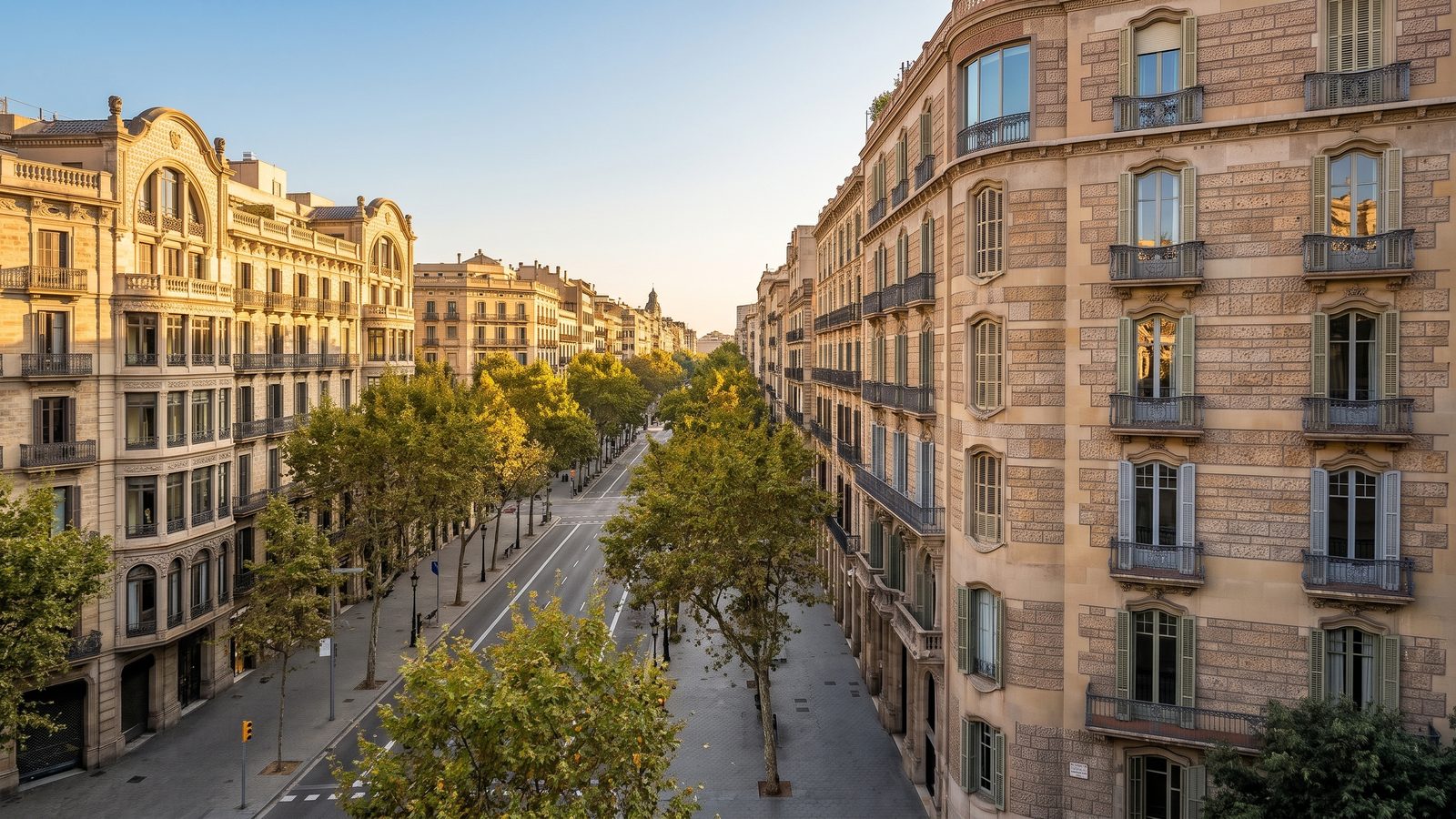
Stepping into Eixample means entering a grand 19th-century vision where visionary urban planning meets rebellious artistic brilliance. As Barcelona broke free from its medieval walls, engineer Ildefons Cerdà designed an innovative octagonal grid to maximize light, ventilation, and movement. Today, those rational avenues showcase the world's highest concentration of Catalan Modernisme, transforming functional residential blocks into an open-air architectural museum filled with vibrant history, culture, and culinary tradition.
Experience this iconic district at your own pace through an audio journey. From luxury shopping along Passeig de Gràcia to legendary bakeries and cozy bodegas, you will uncover the stories behind the undulating facades, famous chamfered corners, and rich cultural rituals that define modern Barcelona living.
What you'll hear on this tour
Stop 1. Symphonies in Stone and Glass
You step onto the wide avenues of Eixample and immediately notice how Ildefons Cerdà's rational grid transforms into a gallery of artistic expression. The iconic octagonal blocks and chamfered corners provide extra light and grand entrances, creating a stunning stage for Catalan Modernisme. As you look up, you admire undulating stone facades, colorful ceramic mosaics, and delicate wrought-iron balconies echoing natural forms. Master architects once competed across these streets to build elaborate residences for the city's elite. You are walking through an open-air museum where everyday apartment buildings double as audacious masterpieces, inviting you to discover intricate stained glass, sculpted doorways, and hidden details around every single corner.
Stop 2. The Blueprint of Modern Barcelona
Imagine Barcelona in the mid-1800s, bursting out of its cramped medieval walls to create a healthier future. You stand inside the bold expansion designed by civil engineer Ildefons Cerdà in 1859. Cerdà meticulously crafted these wide, regular blocks to ensure every citizen enjoyed proper ventilation, natural sunlight, and access to green spaces. Though his radical egalitarian plan faced initial political controversy, it established the framework for Barcelona’s modern era. As decades passed, wealthy families adopted these uniform streets as canvases for architectural innovation. You are walking through a revolutionary social experiment that successfully turned severe urban overcrowding into one of Europe's most harmonious and livable historic neighborhoods.
Stop 3. Intellectuals, Cafés, and Evening Strolls
You immerse yourself in the vibrant cultural heartbeat of Eixample, where artistic rebellion and refined living intertwine. This district served as the crucible for a revived Catalan identity, fueled by heated intellectual debates called tertulias in legendary spots like Els Quatre Gats. Here, visionaries like Antoni Gaudí and Pablo Picasso gathered to redefine art and society. As late afternoon turns to evening, you join locals in the traditional passeig, a leisurely stroll along broad, tree-lined boulevards. You absorb the sophisticated rhythm of daily life while passing art galleries, avant-garde theaters, and historic gathering spaces, feeling the enduring spirit of a neighborhood that deeply values intellect, community, and artistic freedom.
Stop 4. From Market Sandwiches to Michelin Stars
You experience the daily culinary rituals that define life in Eixample. Your morning begins on a sunny terraza with a rich café con leche and a toasted bikini sandwich, Barcelona's iconic ham and cheese classic. By mid-day, local workers fill neighborhood spots for the menu del día, enjoying multi-course meals crafted with fresh ingredients from spots like Mercat de la Concepció. As evening arrives, the neighborhood transforms into a vibrant gastronomic parade. You drop into historic bodegas where cured jamón ibérico hangs above counters filled with creative pintxos. Finally, you indulge your sweet tooth at iconic pastelerías like Escribà, tasting edible artworks that reflect Eixample's elegant palate.
Stop 5. Luxury Flagships and Artisanal Treasures
You stroll along the prestigious Passeig de Gràcia, where high fashion meets world-class architecture. Here, luxury flagships like Chanel, Louis Vuitton, Gucci, and Prada set up display windows right beside famous Modernista landmarks like Casa Batlló and La Pedrera. Yet, the retail magic extends beyond high-end fashion houses. As you step off the main avenue onto quieter side streets, you uncover charming independent boutiques, artisan leather workshops, bespoke jewelry studios, and gourmet food markets selling fine jamón ibérico and local cheeses. You experience a shopper's paradise that effortlessly balances international sophistication with authentic Catalan craftsmanship, ensuring every turn reveals a unique treasure.
Stop 6. The Art of the Mindful Flâneur
You adopt the slow, observant pace of a classic flâneur as you navigate Eixample's unusually wide sidewalks. Designed intentionally for comfortable walking, these grand pathways encourage you to look upward at whimsical sgraffito patterns and ornate ironwork decorating upper floors. The district's famous chamfered intersections soften every street corner, opening wide vistas and eliminating blind spots so you can pause safely to take in converging architectural styles. The rhythmic, predictable grid gives you the freedom to wander without getting lost, letting you peer into quiet residential courtyards and admire colorful tiled entrances. You feel the city's gentle hum unfold around you on this unhurried pilgrimage.
Planning your visit
- Best time to go
- Morning or late afternoon year-round; spring and autumn offer optimal walking weather and glorious daylight on the facades.
- Approximate duration
- About 2 to 3 hours
- Where to start
- Passeig de Gràcia near Plaça de Catalunya
Access and conditions change seasonally — check the official site before you go.
Frequently asked questions
Is Eixample worth visiting?
Yes, Eixample is essential when visiting Barcelona. It showcases the city's world-famous Modernista architecture—including Casa Batlló and La Pedrera—alongside elegant shopping avenues, excellent dining, and visionary 19th-century urban planning.
How long do you need at Eixample?
You need about 2 to 3 hours for a comprehensive walking tour of its main avenues and architectural landmarks, though you can easily spend half a day exploring its boutiques, cafés, and museums.
Why does Eixample have octagonal blocks?
Urban planner Ildefons Cerdà designed octagonal blocks with chamfered corners in 1859 to improve sunlight, air ventilation, and visibility for traffic at intersections, creating a healthier and more efficient city.
Keep exploring
Header image is an AI-generated illustration of Eixample. AllTours.ai is an AI audio tour guide — point your camera at any landmark and hear its story.