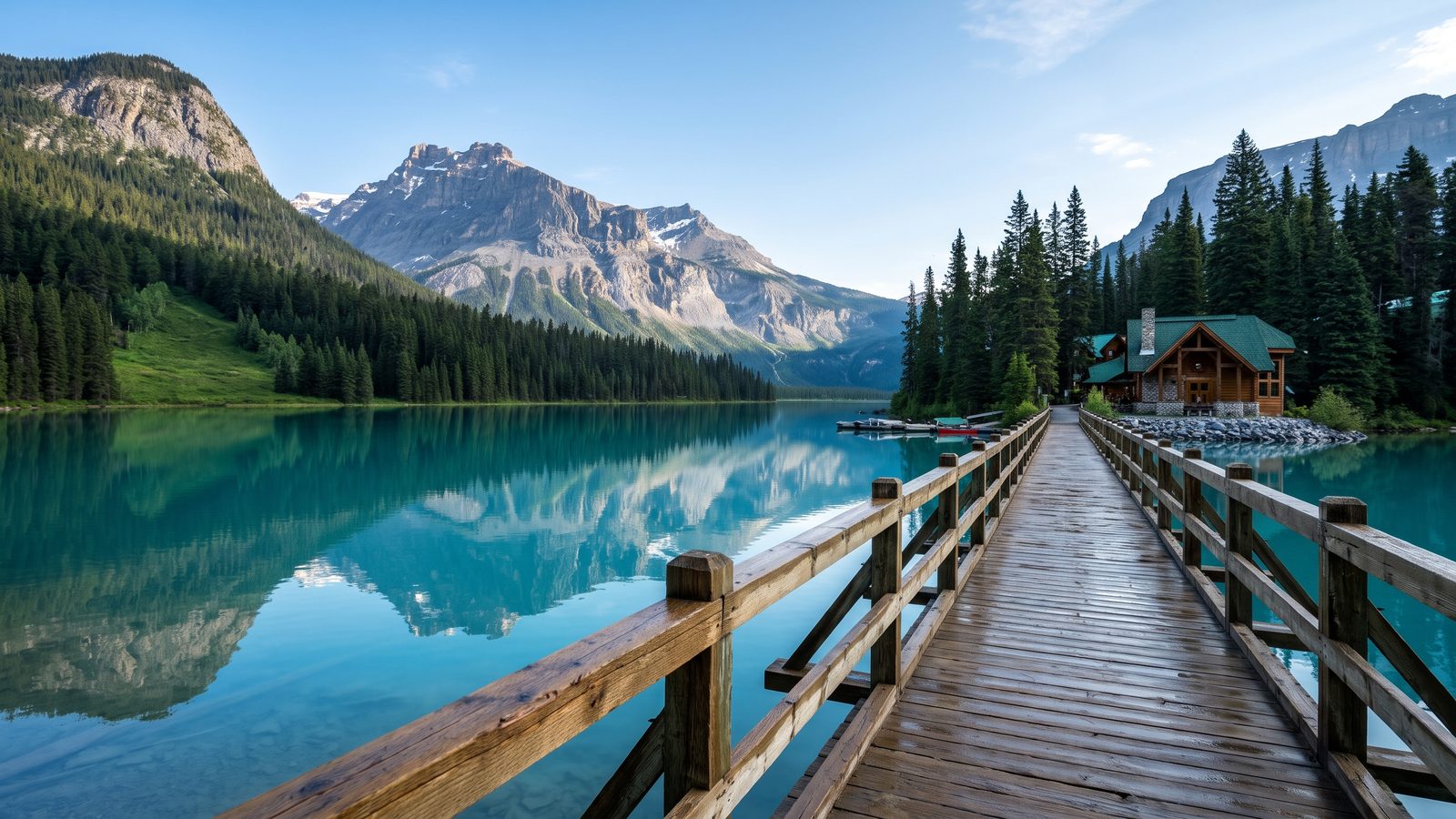
Nestled in Yoho National Park near Field, British Columbia, Emerald Lake captivates visitors with its vibrant, jewel-toned waters and dramatic mountain backdrop. As you stand at the shore, you encounter a pristine landscape sculpted by ancient glaciers and towering peaks. This self-guided audio tour leads you along scenic shoreline paths, revealing the rich ecological, geological, and human history that makes this alpine sanctuary an unforgettable Canadian Rockies destination.
Immerse yourself in the story of this natural wonder. From Indigenous trade routes and early railway expansion to iconic early 20th-century wilderness lodge architecture, you will discover how glacial silt creates impossible hues while ancient Engelmann spruce forests shelter a thriving mountain ecosystem.
Listen to a sample
The opening of this tour, exactly as AllTours narrates it on site.
What you'll hear on this tour
Stop 1. The Magic of Glacial Silt
Look around you and drink in the vibrant turquoise expanse of Emerald Lake. This electric hue comes from rock flour—glacial silt ground finer than dust by ancient ice sheets and suspended in the water. Sunlight refracts through these microscopic particles, scattering red and yellow wavelengths while reflecting vibrant blues and greens. Notice how the color shifts from pale aquamarine near the shore to deep jade at the center. Jagged, snow-dusted peaks mirror across the glassy surface, framed by cascading waterfalls and dense spruce and fir forests. You are witnessing a living testament to geological time and glacial artistry.
Stop 2. Rustic Grandeur of Emerald Lake Lodge
Turn your gaze toward Emerald Lake Lodge, a classic example of early 20th-century parkitecture built in 1902 by the Canadian Pacific Railway. Massive hand-hewn timbers, sourced directly from surrounding forests, form its rustic skeleton, allowing the building to harmonize with the natural landscape rather than dominate it. Notice how the sturdy stone foundations and deep eaves blend Swiss chalet elegance with a rugged Canadian frontier aesthetic. Cabins nestled among the trees offer cozy refuge while keeping your focus drawn outward to the breathtaking lake and surrounding peaks. Every intentional detail reflects a masterclass in wilderness architecture.
Stop 3. Gateway to Intrepid Alpine Exploration
You stand at the edge of a vast natural playground for the adventurous. Kayakers glide across the emerald water, enjoying quiet solitude against the mountain backdrop. If you feel drawn to explore further, step onto the Emerald Lake Trail that hugs the shoreline, following paths carved by generations of outdoor enthusiasts. For the truly daring, the ancient Burgess Shale fossil beds offer a journey back 500 million years, reached via boat shuttle and hike. Whether paddling, hiking, or imagining climbers scaling sheer granite peaks above, you are invited to immerse yourself in this raw, untamed wilderness.
Stop 4. Silent Sentinels of Engelmann Spruce
Step into a living tapestry of Engelmann spruce and subalpine fir trees that have stood watch over these valleys for generations. Breathe in the rich, damp scent of decaying needles underfoot, which constantly recycle nutrients to sustain mosses and fungi across the forest floor. Look closely at the rough bark of these ancient trees, reflecting resilience built through harsh alpine winters and forest fires that naturally renew the landscape. Long before park boundaries existed, Indigenous peoples gathered tree resins for medicine and timber for shelter, creating a profound, enduring connection between humans and this old-growth forest.
Stop 5. Crossroads of First Nations and Railways
You are standing on land that served as an essential mountain crossroads for millennia. Long before national park status arrived, the Stoney Nakoda and Ktunaxa First Nations traversed these valleys along game trails and waterways. By the late 19th century, surveyors and prospectors arrived searching for mineral wealth and transcontinental rail routes. Construction of the Canadian Pacific Railway opened access to this remote wilderness, ultimately revealing its extraordinary natural beauty to the wider world. This revelation shifted human ambition from resource extraction toward long-term preservation, transforming a wild frontier into a protected national sanctuary.
Planning your visit
- Best time to go
- Early morning or late afternoon during summer for calm reflections, bright water hues, and peaceful trail conditions.
- Approximate duration
- About 1 to 2 hours
- Where to start
- The lake shoreline near the Emerald Lake Lodge parking area in Field, British Columbia.
Access and conditions change seasonally — check the official site before you go.
Frequently asked questions
Is Emerald Lake worth visiting?
Yes, Emerald Lake is renowned for its intense turquoise waters, surrounding granite peaks, historic 1902 lodge, and accessible shoreline trails inside Yoho National Park.
How long do you need at Emerald Lake?
Most visitors spend 1 to 3 hours walking the shoreline loop trail, admiring the views, photographing the reflections, or exploring the historic lodge.
What is the history behind Emerald Lake and its lodge?
Historically traveled by Stoney Nakoda and Ktunaxa First Nations, the lake area was opened to tourism in 1902 when the Canadian Pacific Railway built Emerald Lake Lodge in the signature 'parkitecture' style.
Keep exploring
Header image is an AI-generated illustration of Emerald Lake. AllTours.ai is an AI audio tour guide — point your camera at any landmark and hear its story.