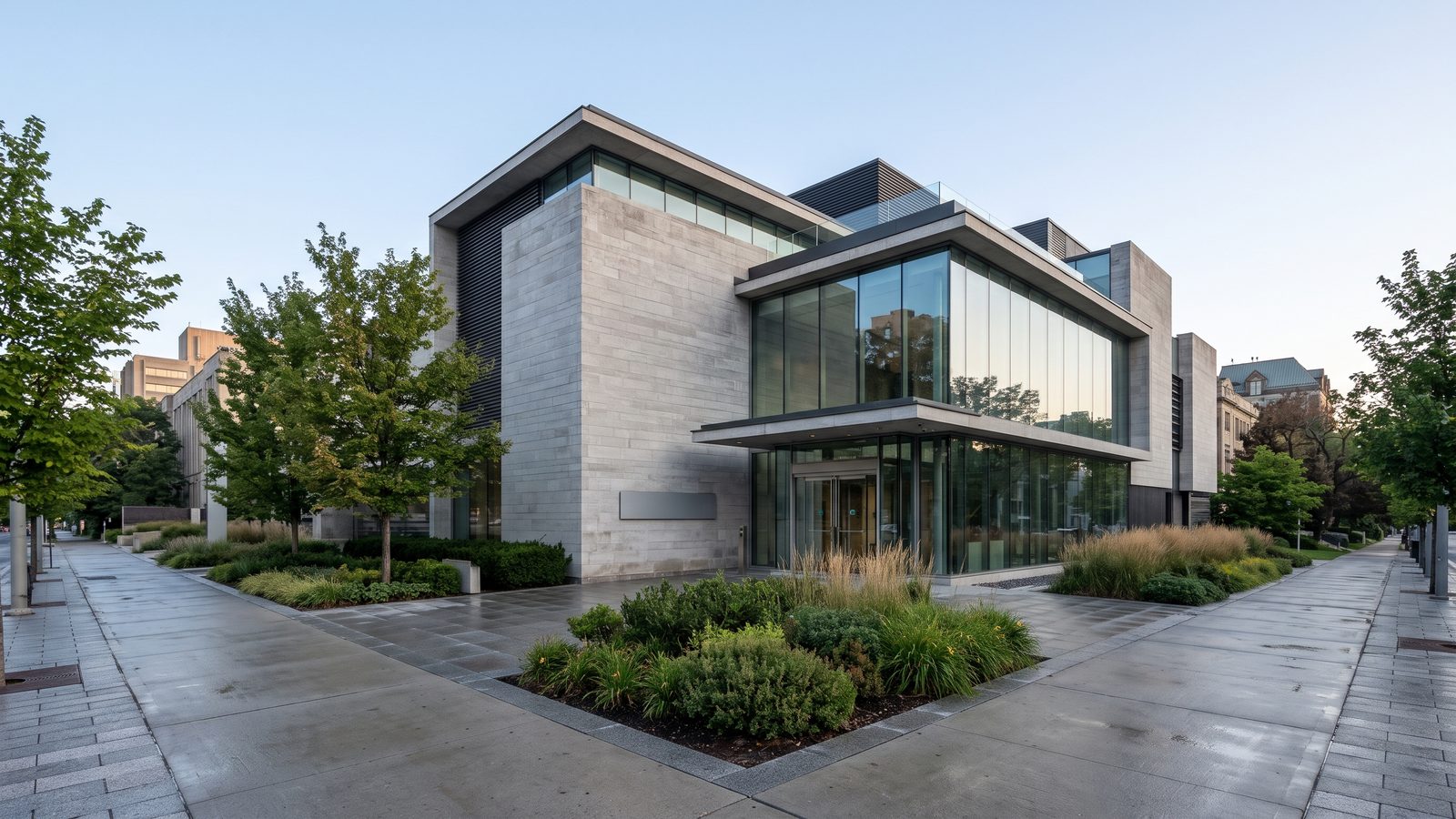
Welcome to the Gardiner Museum, Canada's premier institution dedicated exclusively to ceramic art. Situated on Toronto's bustling Bloor Street, this unique sanctuary invites you to explore humanity's deep relationship with clay across centuries and continents. Founded by George and Helen Gardiner, the museum transforms raw earth into captivating visual stories, ranging from ancient pre-Columbian artifacts to dazzling 18th-century European porcelain and groundbreaking contemporary sculptures that challenge traditional artistic boundaries.
As you journey through these luminous galleries, you will experience an intimate dialogue between fire, earth, and human creativity. Discover how master artisans perfected delicate glazes, guarded secret techniques, and sculpted expressive forms that capture historical narratives, sacred rituals, and courtly elegance from around the globe.
What you'll hear on this tour
Stop 1. Global Journeys Through Fire and Clay
As you delve into the permanent collection, you travel across continents and millennia. You observe profound narratives etched into ancient American ceramics, where a Moche stirrup-spout vessel from Peru vividly depicts mythological scenes and daily rituals, conveying a deep spiritual connection. Next, you transition to 18th-century Europe's pursuit of 'white gold.' Here, exquisite Meissen and Sèvres porcelain displays delicate gilding and vibrant enamels, transforming humble clay into symbols of courtly wealth. Moving further, you encounter the serene beauty of Japanese tea ceremony wares, where celebrated imperfections in Raku bowls invite meditative appreciation. Finally, contemporary exhibits challenge your perception, showcasing artists pushing clay into bold, modern sculptural statements.
Stop 2. Faces and Tales Sculpted in Earth
Turning your gaze to these remarkable ceramic sculptures, you witness clay transcend utility into artistic expression. You examine ancient Moche stirrup-spout vessels crafted as intricate portrait heads, capturing individual personalities with astonishing realism, including specific emotions and ailments from over a thousand years ago. You are looking directly into faces from the past, each telling a silent story preserved in fired clay. Nearby, you discover delicate European porcelain figurines that served as witty social commentaries. These miniature theatrical scenes capture the manners, fashions, and follies of aristocratic life, sometimes satirizing royalty. Every subtle gesture and tiny fold of drapery invites you to decipher hidden narratives etched in earth.
Stop 3. The Art of Earth and Fire
Stepping into the heart of the museum, you immediately connect with the transformative nature of clay. You marvel at early potters shaping raw earth into civilization's first art form. As you examine European porcelain, you admire its delicate translucence, a secret fiercely guarded for centuries to display intricate scenes of aristocratic life. Turning to pre-Columbian earthenware, you encounter vibrant, earthy glazes adorning sacred vessels built for ancient rituals, marked with zoomorphic spirits and geometric cosmic patterns. You appreciate how firing soft clay into enduring stone requires mastering elemental forces. You feel the focused intensity of artisans across millennia who perfected these fiery techniques, leaving behind a profound legacy.
Stop 4. Luminous Spaces on Bloor Street
You stand within a building re-envisioned by KPMB Architects in 2006, expanding Keith Wagland's original 1984 brick structure. Indiana limestone cladding now unifies the façade, giving the building a monumental yet welcoming presence on Bloor Street. Step inside to admire the three-story atrium, where glass and warm wood form a luminous vertical axis drawing your eye upward. You notice how carefully controlled daylighting and varied ceiling heights flatter each ceramic piece's texture and glaze without harsh glare. Large windows reveal glimpses of Queen's Park while maintaining a serene internal sanctuary. Around you, polished limestone, rich walnut, and expansive glass harmonize with a sculptural central staircase guiding your artistic journey.
Stop 5. A Passion Transformed into Legacy
You stand in the direct legacy of George and Helen Gardiner, whose artistic journey began in the 1970s. Their passion ignited when they discovered pre-Columbian ceramics, sparking a deep scholarly desire to understand the cultural contexts and human narratives behind ancient vessels. Rather than simply collecting beautiful objects, they sought to understand each maker's story. Their private quest matured into a philanthropic vision to build a public institution dedicated to elevating ceramic art to its rightful academic place. In 1983, they formally established this museum, transforming their personal collection into a permanent public trust. Today, you witness how their inquiry into clay preserves global ceramic traditions for generations to come.
Stop 6. A Sanctuary Purpose-Built for Clay
You experience an institution uniquely designed around a singular vision. Purpose-built by founders George and Helen Gardiner to elevate ceramic art, this space champions an often-underestimated medium. You observe how expansive windows and precise gallery lighting reveal the subtle glazes and intricate textures of every artifact, elevating humble earth into profound art. Beyond serving as a repository, the museum acts as a dynamic educational hub encouraging global cross-cultural dialogue. By presenting diverse ceramic traditions side-by-side, the curatorial design invites you to trace humanity's shared creative impulses across continents and millennia. Each gallery forms a carefully composed chapter celebrating the expressive power and enduring legacy of clay.
Planning your visit
- Best time to go
- Weekday mornings or early afternoons for a quiet experience with optimal natural light in the galleries.
- Approximate duration
- about 1 to 1.5 hours
- Where to start
- Begin at the ground-floor main lobby inside the Indiana limestone entrance on Bloor Street West.
Access and conditions change seasonally — check the official site before you go.
Frequently asked questions
Is Gardiner Museum worth visiting?
Yes, the Gardiner Museum is highly worth visiting as Canada's only national museum dedicated exclusively to ceramic art. Its collection spans ancient pre-Columbian vessels, delicate European porcelain, Japanese tea ceremony wares, and contemporary sculptures.
How long do you need at Gardiner Museum?
Most visitors spend between 1 and 1.5 hours exploring the permanent galleries, current exhibits, and enjoying the museum's light-filled architecture.
How was the Gardiner Museum established?
The museum was established in 1983 by collectors George and Helen Gardiner, who converted their private passion for pre-Columbian ceramics into a public trust dedicated to scholarly appreciation of ceramic art.
Keep exploring
Header image is an AI-generated illustration of Gardiner Museum. AllTours.ai is an AI audio tour guide — point your camera at any landmark and hear its story.