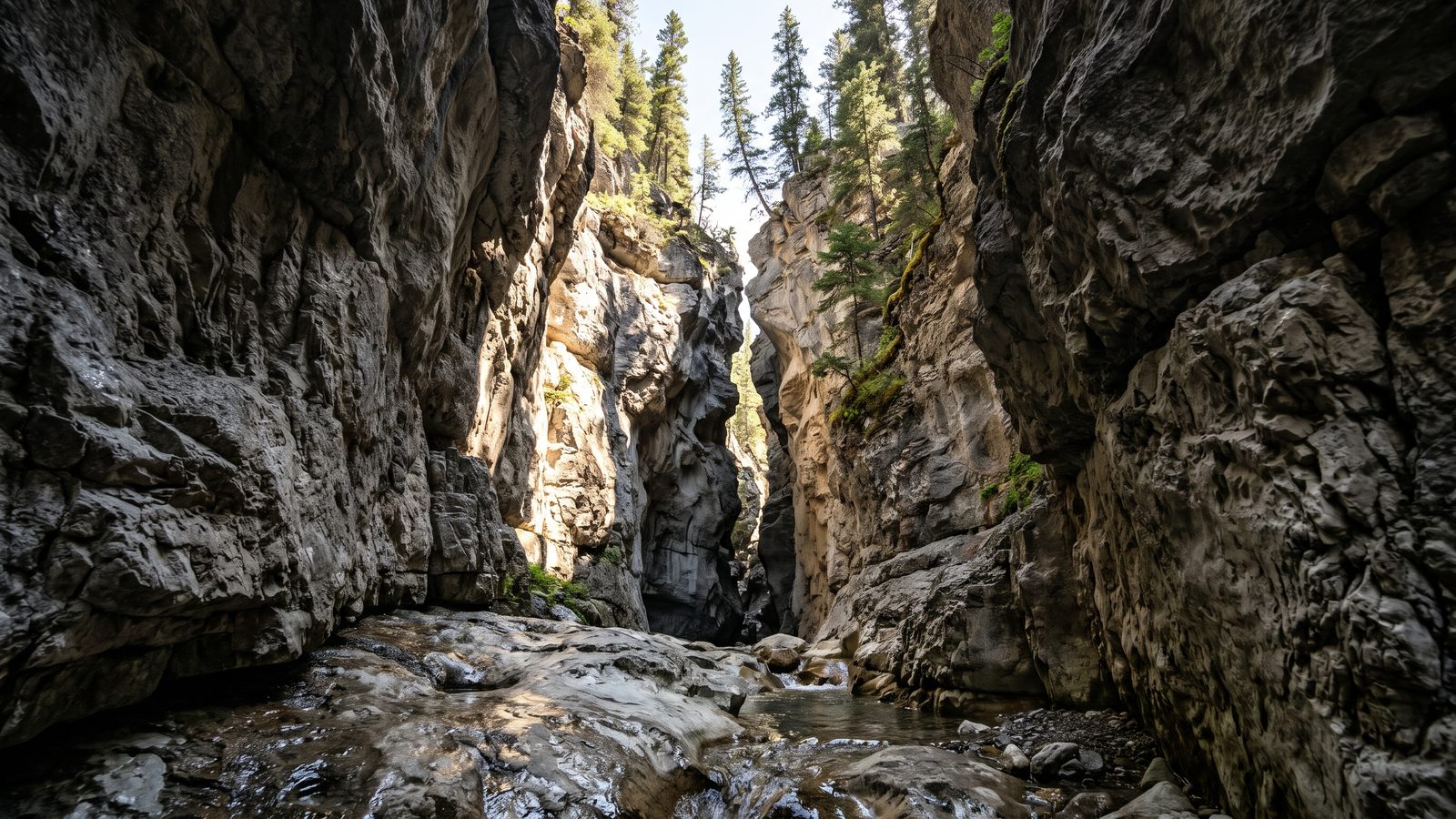
Welcome to Grotto Canyon, a breathtaking geological corridor carved through ancient seabed near Canmore, Alberta. As you walk between towering limestone walls sculpted over millions of years by water and ice, you trace the history of an ancient ocean bed embedded with fossils. Beyond its natural wonders, this canyon serves as a vital sacred space for the Stoney Nakoda people, holding centuries-old rock art painted directly onto the stone overhangs.
This self-guided audio tour reveals the rich geological forces and Indigenous heritage hidden within these narrow rock halls. You will discover ancient marine fossils, examine vibrant red ochre pictographs, marvel at natural architectural overhangs, and experience how nature and culture intertw inside this remarkable Rocky Mountain gorge.
What you'll hear on this tour
Stop 1. Ancient Sacred Red Ochre Paintings
You step up to the canyon’s sheltered stone walls to examine one of Alberta’s most significant Indigenous art sites. Painted over a thousand years ago by the Stoney Nakoda people, these sacred pictographs glow with a rich red ochre ground from iron-rich earth mixed with animal fats or water. As you look closely, you discern human-like figures adorned with elaborate headdresses alongside native bighorn sheep and deer. These images are not simple markers; they represent spiritual narratives and sacred communications left on the rock face. You feel a profound connection to the generations of ancestors who gathered here, using these stone walls as a timeless canvas for their history and beliefs.
Stop 2. A Sacred Passage of the Stoney Nakoda
Long before European settlers arrived, you walk along a path that served as a vital passage and sacred sanctuary for the Stoney Nakoda people. As you observe the sheltered rock faces, you discover indelible marks etched into the mountain's edge. Ancient elders and hunters passed through these narrow gaps, using geometric symbols and painted figures to record significant spiritual visions, convey vital communications, and teach younger generations. Standing in this peaceful gorge, you witness a fragile historical legacy. The quiet canyon walls surrounding you retain the enduring human spirit of the indigenous peoples who lived in harmony with this rugged landscape for hundreds of years.
Stop 3. Ancient Seabed and Winter Icefalls
Look around at the towering limestone walls looming over you; you are standing on an ancient seabed deposited over 300 million years ago when a warm ocean covered this land. If you touch the smooth grey stone, you can feel delicate ripple marks and find fossilized marine life embedded right in the bedrock. Millions of years of persistent water flow slowly ground through this solid rock, sculpting the gorge you travel today. Look up to see delicate ferns unfurling in shaded alcoves and tenacious Douglas firs clinging to precarious cliff ledges. In cold weather, ground water freezes into shimmering blue icefalls that cascade directly down these sheer cliffs.
Stop 4. Nature’s Grand Structural Engineering
As you navigate deeper, the canyon walls resemble colossal, unmortared masonry rising around you in a display of natural structural engineering. Horizontal rock strata line up like ancient lintels and cornices, creating clear levels within this grand design. You pass rounded buttresses carved by water and wind that anchor the vertical cliff faces. The path widens and narrows into natural chambers with unique acoustics and dynamic lighting, echoing organic spatial planning. Notice the dramatic rock overhangs extending above you like massive cantilevers, perfectly balancing structural loads. Beneath your feet, the smooth creek bed forms a natural, polished floor guiding your journey through Earth's own masterwork.
Stop 5. Shafts of Light and Polished Bedrock
You stand in the narrowest neck of the canyon, enveloped by towering cliffs of banded grey and white limestone. Beneath your boots, the ground transitions from polished river stones to exposed bedrock fluted and grooved by centuries of rushing water. Looking upward, you see the canyon rim frame the sky into a vibrant ribbon of blue. Shafts of sunlight pierce through the high opening, casting dancing light patterns across the cool rock faces. Resilient pine trees cling to micro-cracks along the high cliffs, adding splashes of vivid green against the pale stone. In winter, this whole corridor transforms into an ethereal ice palace.
Stop 6. Flavors of the Canadian Rockies
After completing your walk through the canyon, you explore the mountain culinary offerings in nearby Canmore. You discover a vibrant local dining scene centered on regional ingredients from the surrounding wilderness. You can savor hearty elk stew infused with wild huckleberries or juniper, enjoy locally raised Alberta beef and bison, or taste fresh trout caught in pristine alpine lakes. Local menus often feature traditional bannock flatbread alongside modern mountain fare, honoring early Indigenous and settler traditions. To complete your experience, you sip craft beer or spirits brewed locally using pure glacial water and wild botanicals, celebrating the rich heritage and natural bounty of the Canadian Rockies.
Planning your visit
- Best time to go
- Year-round; summer offers pleasant shade and visible rock art, while winter reveals dramatic frozen icefalls along the canyon walls.
- Approximate duration
- about 1.5 to 2 hours
- Where to start
- Grotto Canyon Trailhead parking area near Canmore, Alberta.
Access and conditions change seasonally — check the official site before you go.
Frequently asked questions
Is Grotto Canyon worth visiting?
Yes, Grotto Canyon is well worth visiting for its unique combination of ancient marine fossils, 1,000-year-old Indigenous red ochre pictographs, towering limestone cliffs, and winter icefalls near Canmore.
How long do you need at Grotto Canyon?
Most visitors spend about 1.5 to 2 hours exploring the canyon trail, viewing the rock art, and admiring the carved limestone walls and surrounding scenery.
Who painted the pictographs in Grotto Canyon?
The red ochre pictographs were created hundreds to over a thousand years ago by the Stoney Nakoda people as sacred markers, spiritual communications, and historic records.
Keep exploring
Header image is an AI-generated illustration of Grotto Canyon. AllTours.ai is an AI audio tour guide — point your camera at any landmark and hear its story.