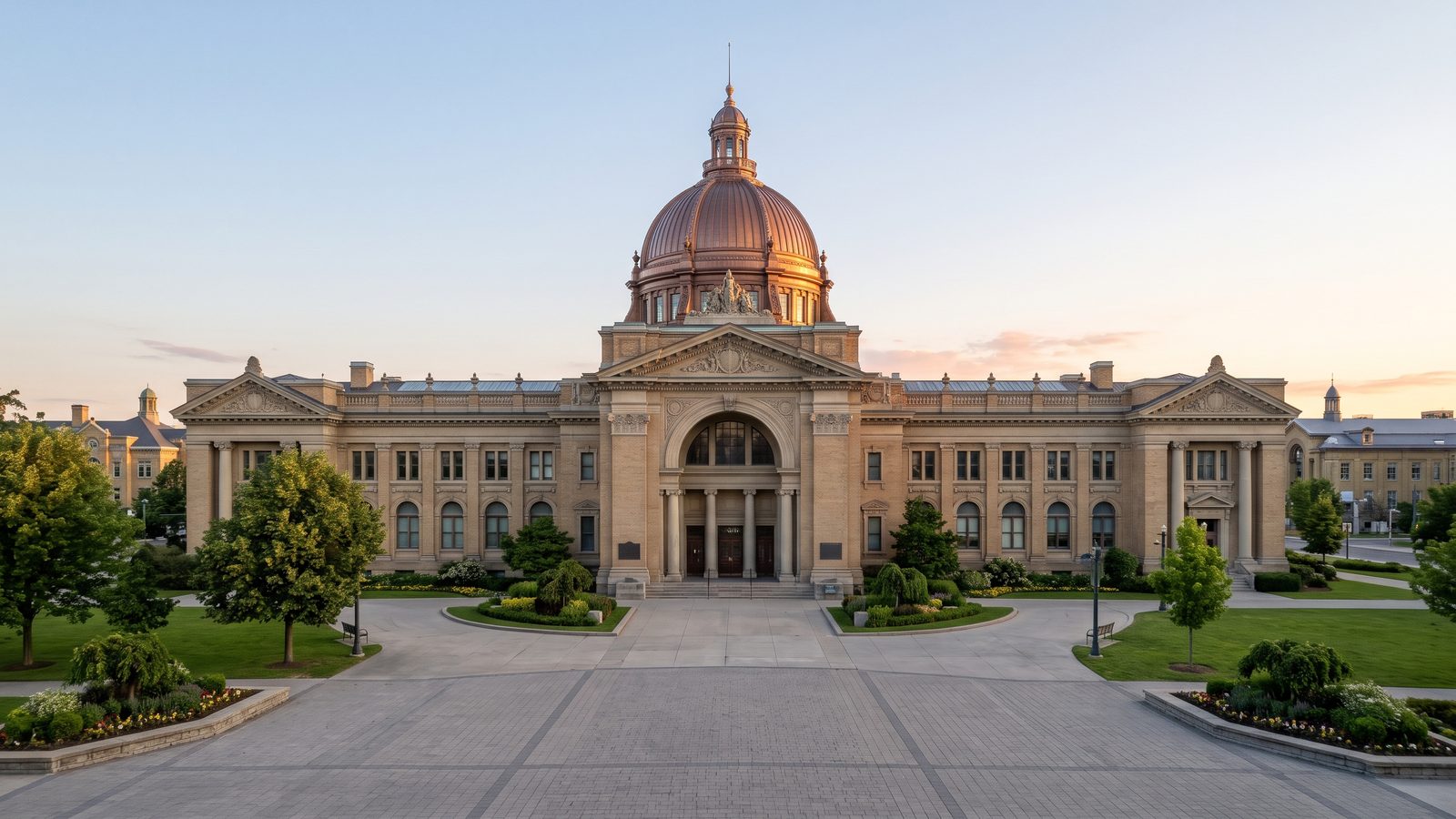
Welcome to the Horticultural Building, a Beaux-Arts masterpiece at Toronto's Exhibition Place. Constructed in 1907, this historic landmark stands as a living testament to the city's enduring connection with nature, culture, and community. As you approach its grand classical façade and imposing dome, you step into a site that once showcased Canada's finest floral displays, agricultural innovations, and vibrant public gatherings throughout the twentieth century.
This self-guided audio tour walks you through the building's striking architectural details, its wartime history, and its evolution into a dynamic venue for cultural celebrations. Prepare to explore how a hall built for flower shows became an enduring symbol of Toronto's civic pride and multicultural heritage.
Listen to a sample
The opening of this tour, exactly as AllTours narrates it on site.
What you'll hear on this tour
Stop 1. Beaux-Arts Elegance and Light
You stand before a masterclass in Beaux-Arts classicism designed to captivate everyone who approaches. Your eyes immediately trace the grand central pavilion flanked by symmetrical wings, framed by robust brickwork and intricate terra cotta friezes. As you look upward, you notice the expansive arched windows that stretch across the façade, engineered specifically to flood the interior hall with bright natural light. This sunlight was essential for showcasing delicate horticultural arrangements during early exhibitions. Every architectural element, from the commanding central dome to the detailed masonry, reflects the elevated craftsmanship of early twentieth-century Toronto and creates a lasting sense of classical grandeur.
Stop 2. Rising from Ashes to Serve
You trace the roots of this landmark back to 1907, when it rises from the ashes of an earlier exhibition hall destroyed by fire. Designed by architect George W. Gouinlock, the structure quickly becomes a grand new stage for agricultural marvels. As you walk around the grounds, you discover how the building adapts during both World Wars. In times of global crisis, the city transforms this exhibition space into vital military barracks to house soldiers before sending them overseas. Following each conflict, the hall faithfully returns to its original purpose, demonstrating a remarkable resilience and adaptability through changing decades.
Stop 3. Living Tapestries of Landscape Art
You step outside to explore the vibrant display gardens surrounding the building, where landscape art comes alive. Historically, these outdoor spaces serve as dynamic showcases for Canada's agricultural prowess and cutting-edge horticulture during the Canadian National Exhibition. As you wander along the paths, you envision the meticulous planning required to design themed floral tapestries woven with rare botanical species and intricate topiary. Millions of visitors once marveled at these living artworks. Each carefully cultivated bloom outside the grand hall reflects dedicated craftsmanship and celebrates Toronto's long-standing passion for public garden design and seasonal celebration.
Stop 4. Grand Floral Shows and Trade Halls
You imagine the energy filling these halls during the peak of the Canadian National Exhibition. In its earliest days, the interior overflows with prize-winning dahlias, towering gladioli, and vibrant floral arrangements that demonstrate the country's agricultural achievement. As time progresses, you see the space evolve to host diverse trade shows and contemporary art installations. The vast open pavilion seamlessly adapts to changing public tastes, continuously reinventing itself while retaining its civic importance. Walking through these spaces today, you feel the lingering excitement of generations of visitors who gathered here to witness innovation, art, and botanical beauty.
Stop 5. A Vibrant Canvas for Community
You discover how this majestic structure evolves beyond its original floral mandate to become a canvas for Toronto's multicultural identity. Over the decades, the hall transitions from traditional flower competitions into a bustling venue for art exhibitions, lively music performances, and international dance troupes performing during the CNE. You experience a space that brings diverse communities together through shared artistic expression and public celebration. The building acts as an enduring social hub, reflecting the spirit of a growing city and providing an atmospheric backdrop where Toronto's rich cultural tapestry continues to unfold and connect people from all walks of life.
Stop 6. Chandelier Galas and Bountiful Festivals
You experience the remarkable versatility of this hall as you imagine the wide array of events hosted beneath its high ceilings. Picture the atmosphere during a national flower show, where the rich perfume of thousands of rare blooms fills the air. Contrast that sensory experience with the energetic hum of major trade exhibitions, where innovation takes center stage along bustling aisles. You can also envision glamorous evening galas shimmering under grand chandeliers, or lively community cultural festivals packed with celebratory crowds. Every event held here leaves a distinct memory, cementing the hall's legacy as a versatile civic gathering place.
Planning your visit
- Best time to go
- Late spring through early autumn, especially during late summer during the Canadian National Exhibition.
- Approximate duration
- About 45 minutes
- Where to start
- In front of the main entrance beneath the central dome at Exhibition Place.
Access and conditions change seasonally — check the official site before you go.
Frequently asked questions
Is the Horticultural Building worth visiting?
Yes, it is a magnificent example of 1907 Beaux-Arts architecture located within Toronto's historic Exhibition Place, offering rich military, botanical, and cultural history.
How long do you need at the Horticultural Building?
A typical self-guided tour takes about 30 to 45 minutes to view the classical exterior architecture and explore the surrounding display gardens.
What is the history of the Horticultural Building in Toronto?
Designed by George W. Gouinlock and opened in 1907 to replace a hall destroyed by fire, it served as a venue for CNE floral displays, served as military barracks during both World Wars, and evolved into a diverse cultural event space.
Keep exploring
Header image is an AI-generated illustration of Horticultural Building. AllTours.ai is an AI audio tour guide — point your camera at any landmark and hear its story.