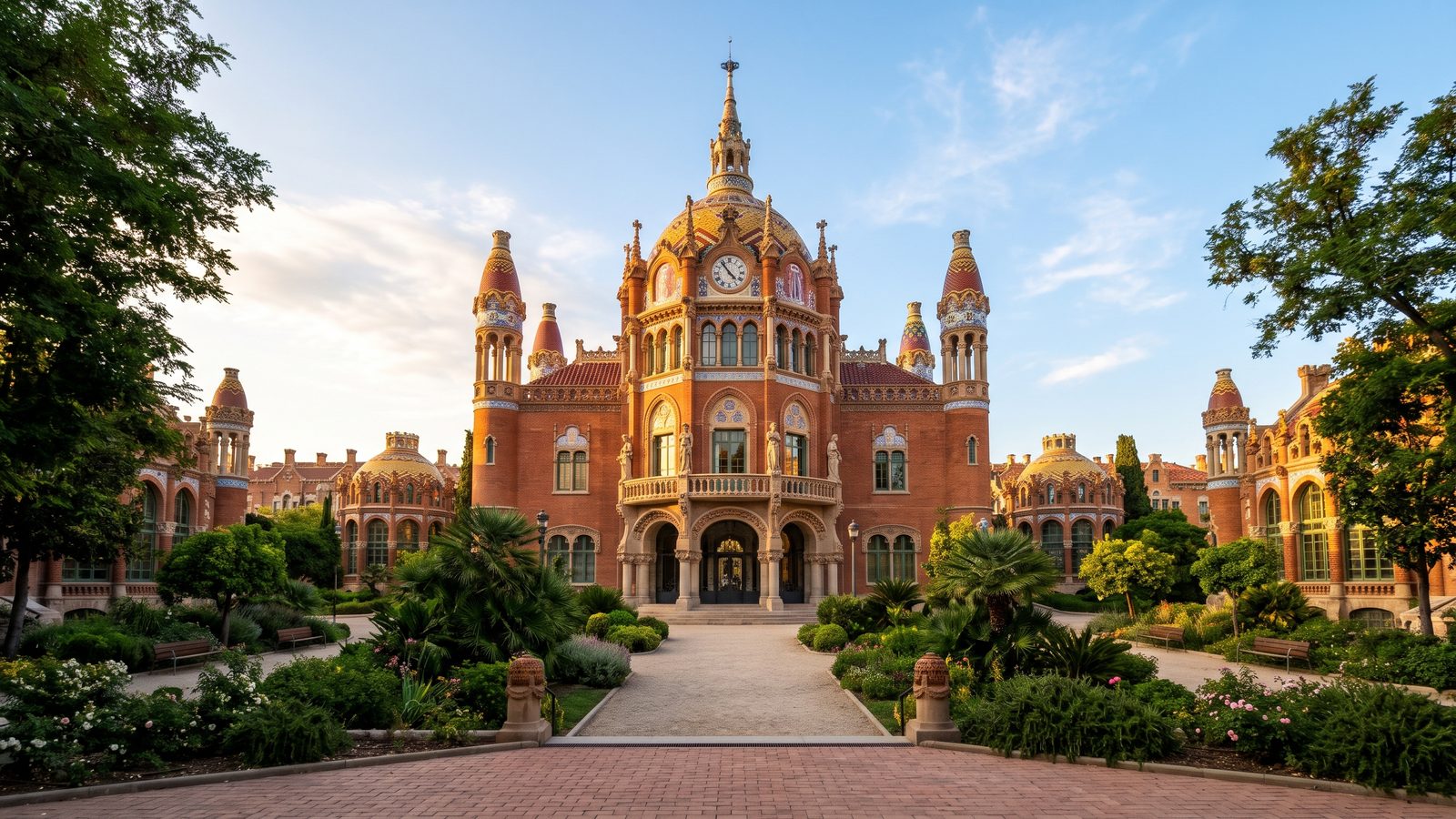
Step into the world's most beautiful hospital, an architectural masterpiece of Catalan Modernisme designed by Lluís Domènech i Montaner. Built between 1901 and 1930 as a visionary garden city for the sick, the Hospital de Sant Pau transformed healthcare by weaving beauty, light, and nature directly into the healing process. With this self-guided audio tour, you will explore colorful pavilion facades, vibrant trencadís mosaics, and peaceful underground tunnels at your own pace.
Immerse yourself in a UNESCO World Heritage site where art and medicine united. As you stroll through lush gardens and admire exquisite stained glass, you experience an inspiring testament to human compassion and architectural innovation in the heart of Barcelona.
Listen to a sample
The opening of this tour, exactly as AllTours narrates it on site.
What you'll hear on this tour
Stop 1. A Garden City Within Barcelona
As you gaze upon this masterpiece, you witness the zenith of Catalan Modernisme. Architect Lluís Domènech i Montaner conceives a city within a city, where each distinct pavilion maximizes natural light and fresh air to aid patient recovery. You observe delicate brickwork patterns dancing across facades, alongside vibrant ceramic tiles chosen for both their hygienic properties and uplifting colors. Look up at the majestic domes and spires crowned with whimsical sculptures and detailed mosaics. Even the underground tunnels connecting the pavilions blend seamless engineering with aesthetic elegance, creating an environment where every curve and material choice serves beauty as a therapeutic tool.
Stop 2. Canvas of Mosaics and Stained Glass
You stand inside a monumental canvas where every surface radiates artistic genius. Notice the vibrant trencadís mosaics shimmering across the domes and facades, crafted from broken ceramic tiles that catch the sunlight. As you step indoors, masterfully executed stained-glass windows bathe the corridors in a colorful, ethereal glow, depicting allegories of healing and compassion. Look closely at the delicate ironwork twisted into organic motifs and the intricate sculptures by Pau Gargallo and Eusebi Arnau. These figures personify virtues like Charity, Faith, and Hope, proving how Domènech i Montaner seamlessly intertwined artistic expression with human health.
Stop 3. Nature as an Active Healer
Step into these lush gardens and experience Domènech i Montaner's revolutionary philosophy firsthand. Designed as therapeutic green spaces, these pavilion gardens ensure you have direct access to fresh air, natural light, and soothing Mediterranean flora. Imagine the immense comfort these peaceful paths offered patients compared to the grim, crowded urban hospitals of the early twentieth century. As you walk beneath shaded pathways or view the greenery from pavilion windows, you see how nature was deliberately integrated into recovery. The thoughtful planting of native vegetation lifts the spirit with calming scents and vibrant colors, blurring the boundaries between indoors and outdoors.
Stop 4. Centuries of Public Health Pioneering
You trace the origins of this institution back to 1401, when six medieval hospitals merged to form the Hospital de la Santa Creu. As Barcelona expanded in the late nineteenth century, visionary architect Lluís Domènech i Montaner receives the commission in 1902 to build a modern replacement. You behold the culmination of nearly three decades of dedicated work, completed in 1930 long after the architect's passing. For almost eighty years, this innovative complex serves as a fully functioning hospital, demonstrating the enduring power of its design before earning UNESCO recognition and transforming into the cultural heritage site you explore today.
Stop 5. The Soul of Catalan Modernisme
You delve deep into the soul of Catalan Modernisme, where beauty serves as an essential therapeutic agent. Departing from the utilitarian designs of traditional hospitals, Domènech i Montaner infuses every column, window, and wrought-iron accent with vibrant natural motifs like flowers and mythical creatures. You observe shimmering trencadís mosaics that provide both artistic flair and durable, hygienic surfaces. The innovative pavilion system, interconnected by underground tunnels and flooded with sunlight, exemplifies Modernisme's commitment to functional, humanistic design. Here, you feel the progressive spirit of an architectural movement dedicated to uplifting human well-being through art and environmental harmony.
Stop 6. A Global Monument to Human Welfare
In 1997, UNESCO formally inscribes Sant Pau as a World Heritage Site, recognizing its exceptional value as a Modernist masterpiece. As you walk through this revolutionary urban complex, you experience a utopian vision where art, light, and nature unite for healthcare. UNESCO honors Domènech i Montaner's bold ambition to create a garden city for the sick where architectural brilliance directly enhances patient well-being. This prestigious designation ensures the meticulous preservation of every mosaic, sculpture, and stained-glass panel, allowing you to walk through a pioneering symbol of social welfare architecture exactly as its creator envisioned.
Planning your visit
- Best time to go
- Morning hours on a clear sunny day to experience sunlight streaming through the stained-glass windows and light up the outdoor gardens.
- Approximate duration
- About 1.5 to 2 hours
- Where to start
- Begin your visit at the main entrance facade on Carrer de Sant Antoni Maria Claret.
Access and conditions change seasonally — check the official site before you go.
Frequently asked questions
Is Hospital de Sant Pau worth visiting?
Yes, Hospital de Sant Pau is widely considered one of Barcelona's finest UNESCO World Heritage sites and a masterpiece of Catalan Modernisme. Its ornate pavilions, vibrant mosaics, and peaceful gardens offer a stunning, less crowded alternative to Sagrada Família.
How long do you need at Hospital de Sant Pau?
Most visitors spend between 1.5 and 2 hours exploring the main administration pavilion, underground tunnels, exhibition spaces, and garden grounds.
What is the history behind Hospital de Sant Pau?
The hospital's roots date back to 1401 with the consolidation of six medieval hospitals. Architect Lluís Domènech i Montaner designed the modern complex, built between 1901 and 1930, as a revolutionary garden city for healing that operated for nearly a century.
Keep exploring
Header image is an AI-generated illustration of Hospital de Sant Pau. AllTours.ai is an AI audio tour guide — point your camera at any landmark and hear its story.