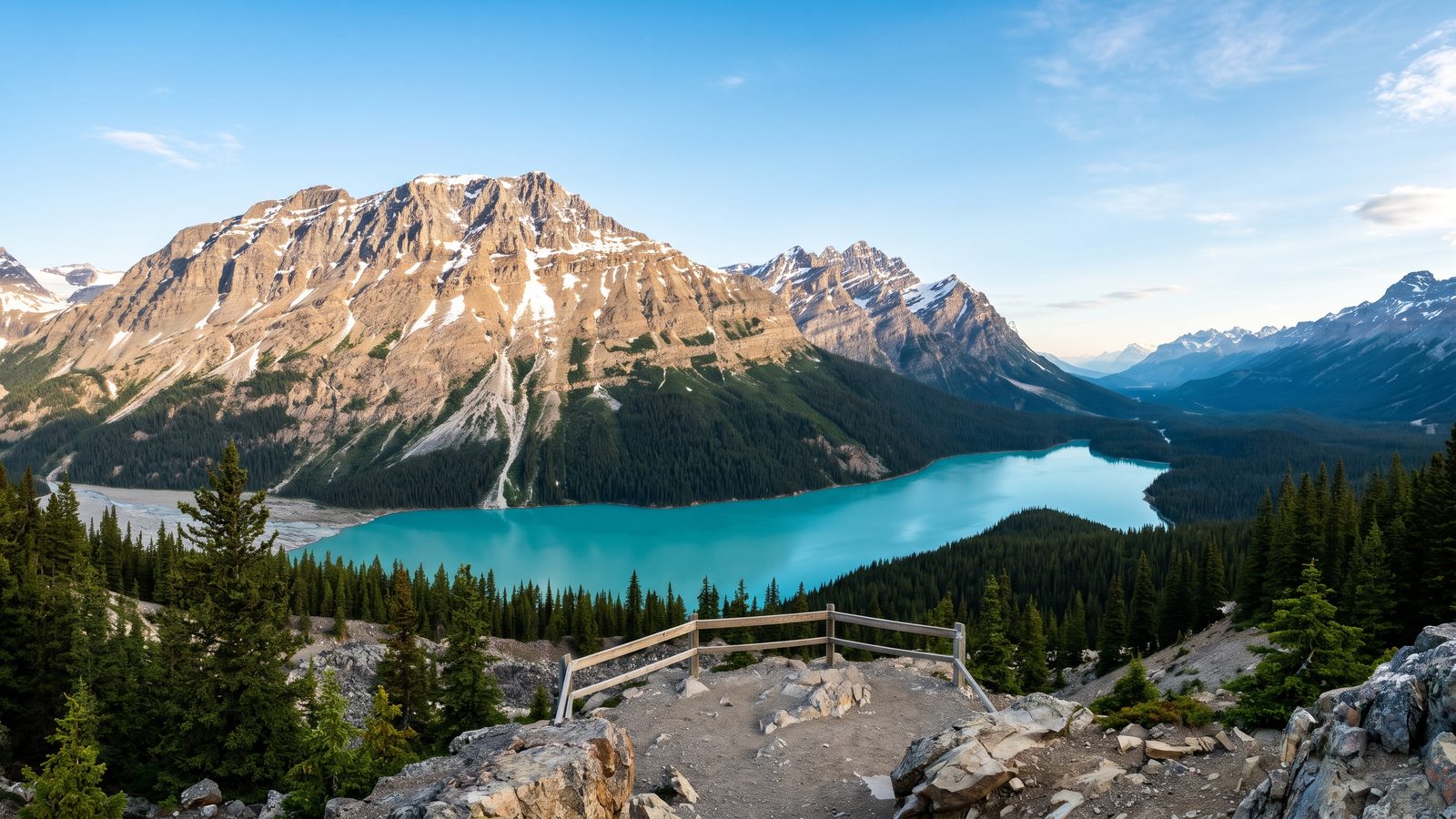
You are driving along Highway 93 North, traversing one of the world's most impressive alpine corridors between Banff and Jasper National Parks. As you wind through immense mountain valleys, towering sedimentary peaks and sprawling glaciers frame your view. This self-guided audio tour reveals the geological forces, historic Depression-era hand-carved roads, unique parkitecture, and resilient subalpine ecosystems that make this vast wilderness drive completely unforgettable.
Experience the Canadian Rockies at your own pace while listening to captivating stories of mountain formation, ancient Indigenous corridors, and wild residents like bighorn sheep and grizzly bears. Simply start your drive, let the landscape unfold around you, and connect deeply with the natural marvels of Jasper and Banff.
What you'll hear on this tour
Stop 1. Turquoise Lakes and Glacial Wonders
As you scan this magnificent canvas, you witness the raw artistry of geological time unfold before you. The towering mountain peaks display ancient, folded layers of sedimentary rock carved by millennia of ice. Look down at the vibrant, almost surreal turquoise waters of Bow and Peyto Lakes; this brilliant hue comes from fine rock flour suspended in glacial meltwater reflecting sunlight. Across high valleys, massive ice rivers cling to the rock, their deep crevasses demonstrating slow, unstoppable power. Meanwhile, lush subalpine forests hug the lower slopes, adding a vivid green texture that contrasts against the stark, untamed ice and stone.
Stop 2. Masters of the Alpine Wilderness
You are passing through a vibrant alpine ecosystem filled with fascinating mountain creatures. High on the rugged cliffs, elusive mountain goats use specialized cloven hooves to grip sheer rock walls. Further down, bighorn sheep display their massive curled horns, often clashing in thunderous head-butting contests during the autumn rut. In the lush valley bottoms, grazing elk fill the crisp air with haunting bugles. As you watch the meadows, keep an eye out for grizzly bears foraging for sweet berries, black bears lingering near the treeline, and tiny pikas gathering haystacks among the scree slopes for winter survival.
Stop 3. Colossal Peaks and Ancient Seabeds
You gaze up at colossal peaks forged by the ancient Laramide Orogeny, a monumental geological event that crumpled prehistoric seabeds into soaring mountain ranges. As you look closely at these massive rock faces, you see distinct horizontal striations revealing layers of marine fossils now lifted thousands of feet into the air. These immense spires cradle high snowpack that feeds massive glaciers below. For thousands of years, these formidable stone barriers have dictated human migration and animal movements. You feel the staggering scale of these natural giants as wind and ice continue to sculpt their tilted sedimentary layers into dramatic alpine spires.
Stop 4. Hand-Carved Through Solid Mountain Rock
Long before asphalt appeared, you stand in a vital Indigenous corridor used for millennia for hunting and trading across alpine passes. In the early 19th century, explorer David Thompson mapped these ranges using those ancient Indigenous routes. However, the modern parkway takes shape during the Great Depression of the 1930s. You imagine thousands of men from relief camps wielding basic picks, shovels, and dynamite to literally carve this road by hand through dense timber and solid granite. Born out of sheer grit and desperation for work, their relentless efforts transform an impenetrable wilderness into a vital link between two national parks.
Stop 5. Harmonious Parkitecture in the Wild
As you travel along this curving road, you notice how the highway gently follows the natural contours of the mountain valleys. This deliberate design philosophy, known as parkitecture, aims to seamlessly integrate human engineering into pristine wilderness. Look at the elegant bridges, culverts, and retaining walls crafted from hand-laid, dry-stacked local stone that seems to grow naturally out of the soil. Even the historic rustic cabins and picnic shelters feature heavy timber and rough stone, echoing the texture of surrounding spruce forests. Early architects designed every single man-made element to complement and respect nature rather than conquer it.
Stop 6. Guardians of the Subalpine Ecosystem
You are surrounded by a resilient subalpine forest dominated by Engelmann spruce and subalpine fir. Their conical shapes are perfectly engineered by nature to shed heavy winter snowpacks effortlessly. Take in the crisp, resinous scent of pine needles drifting through the high-altitude air. Ancient spruce trees show thick, furrowed bark built up over centuries of surviving harsh winters and brief summers. Nearby, opportunistic lodgepole pines sprout in areas cleared by old wildfires, their serotinous cones opening with extreme heat to begin a cycle of renewal. This breathing forest ecosystem stabilizes steep mountain slopes while sheltering creatures big and small.
Planning your visit
- Best time to go
- Summer through early autumn (June to September) for clear drives and accessible viewpoints, ideally early morning to avoid traffic.
- Approximate duration
- About 3 to 5 hours driving time, or a full day with scenic stops
- Where to start
- Lake Louise (Banff National Park) or Jasper townsite (Jasper National Park) along Highway 93 North.
Access and conditions change seasonally — check the official site before you go.
Frequently asked questions
Is Icefields Parkway worth visiting?
Yes, the Icefields Parkway is widely considered one of the most scenic drives in the world, featuring massive glaciers, vibrant turquoise lakes, jagged mountain peaks, and abundant wildlife along Highway 93.
How long do you need at Icefields Parkway?
You need at least 3 to 4 hours to drive the Parkway without stopping, but taking a full day (6 to 8 hours) allows plenty of time to enjoy scenic lookouts, short walks, and an audio tour.
How was the Icefields Parkway built?
The Icefields Parkway was hand-carved during the Great Depression in the 1930s by thousands of relief camp workers using picks, shovels, and dynamite to connect Banff and Jasper National Parks.
Keep exploring
Header image is an AI-generated illustration of Icefields Parkway. AllTours.ai is an AI audio tour guide — point your camera at any landmark and hear its story.