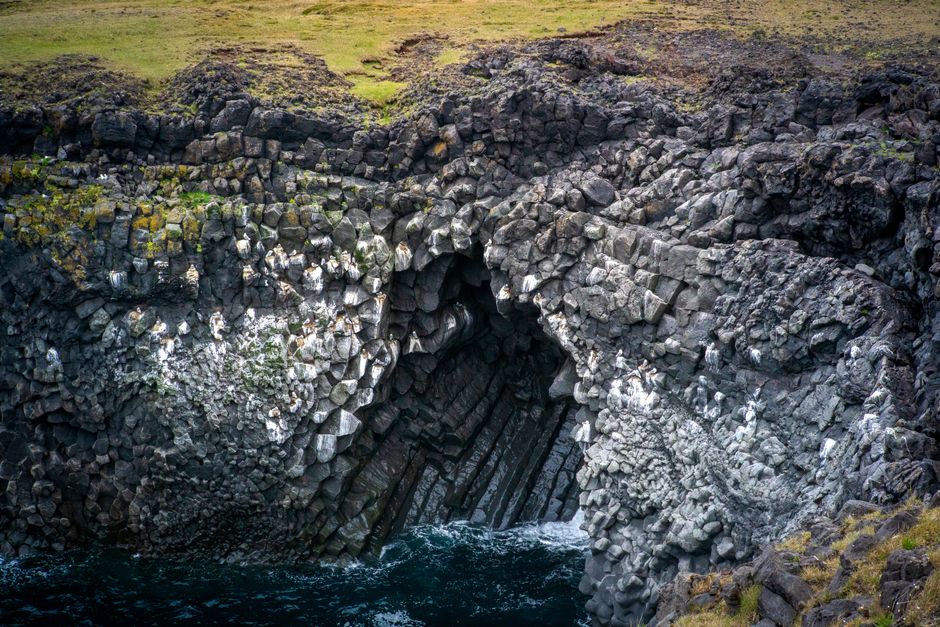
Welcome to the captivating Isle of Staffa, a true geological marvel off the coast of Scotland. Prepare to be awestruck by its iconic hexagonal basalt columns, remnants of ancient volcanic activity that sculpted a landscape unlike any other on Earth. This uninhabited island holds secrets of fiery origins and powerful natural artistry.
Our AllTours.ai audio guide will lead you through Staffa's dramatic coastlines and into the legendary Fingal's Cave. Uncover the myths of giants, hear how its natural acoustics inspired classical music, and witness the raw beauty that has drawn explorers and artists for centuries. Get ready for an unforgettable journey.
What you'll hear on this tour
Stop 1. Fingal's Cave Entrance
Stand at the mouth of Fingal's Cave, a natural cathedral carved by the sea and shaped by ancient volcanoes. Gaze at the towering hexagonal basalt columns, perfectly formed like a giant's handiwork, supporting its immense arched roof. This striking architecture, born from cooling lava, immediately reveals why legends of giants building a causeway to Ireland took root here. The sheer scale and precision of these formations are truly breathtaking.
Stop 2. Inside Fingal's Cave
Venture deeper into Fingal's Cave, where the true magic of its acoustics comes alive. The rhythmic lapping of the waves against the basalt walls creates a haunting, ethereal soundscape that captivated Felix Mendelssohn, inspiring his famous Hebrides Overture. The interplay of light and shadow on the wet, dark columns makes for a dramatic and ever-changing spectacle. It's a place where geology and art converge, creating an unforgettable sensory experience.
Stop 3. Clam Shell Cave
Just a short distance from Fingal's Cave, you'll discover the intriguing Clam Shell Cave. While perhaps less famous, its unique structure offers a different perspective on Staffa's volcanic past. Here, the basalt columns are curved and contorted, resembling the ribbed shell of a giant clam, hence its name. This variation in geological form showcases the diverse ways ancient lava flows cooled and fractured, adding another layer to the island's natural wonders.
Stop 4. Treshnish Isles Viewpoint
From Staffa's rugged cliffs, take in the panoramic views of the surrounding Treshnish Isles. These islands are a vital habitat for a diverse array of seabirds, including puffins, guillemots, and razorbills, especially during nesting season. Imagine the ancient mariners navigating these waters, guided by the calls of the birds and the dramatic island silhouettes. This vista reminds us of Staffa's place within a vibrant marine ecosystem.
Stop 5. Staffa's Summit Trail
Follow the path towards the higher ground of Staffa, offering a different vantage point over the island's unique topography. From here, you can appreciate how the hexagonal columns extend across the island, creating a natural, almost paved pathway. This perspective truly brings to life the legend of Fionn mac Cumhaill's causeway to Ireland, connecting Staffa to the Giant's Causeway with similar geological marvels. It’s a testament to nature's incredible power and artistry.
Planning your visit
- Best time to go
- Late spring to early autumn (May to September) for calmer seas and better wildlife viewing.
- Approximate duration
- about 60-90 minutes
- Where to start
- The main landing point on Staffa, recognizable by the path leading towards Fingal's Cave.
Access and conditions change seasonally — check the official site before you go.
Frequently asked questions
How do I get to Staffa?
Staffa is accessible by boat tours departing from various points in the Inner Hebrides, such as Oban, Fionnphort (Mull), and Iona. It's advisable to book your boat trip in advance, especially during peak season.
Is Fingal's Cave always accessible?
Access to Fingal's Cave can be dependent on weather and sea conditions. Boat captains make decisions based on safety, and sometimes the landing or entry into the cave may not be possible. Always check with your tour operator.
What should I wear/bring?
Dress in layers suitable for changeable Scottish weather, including waterproof outer layers. Sturdy, non-slip footwear is essential for navigating the rocky paths and wet basalt columns. Binoculars are great for spotting wildlife.
Keep exploring
Photography via Pexels. AllTours.ai is an AI audio tour guide — point your camera at any landmark and hear its story.