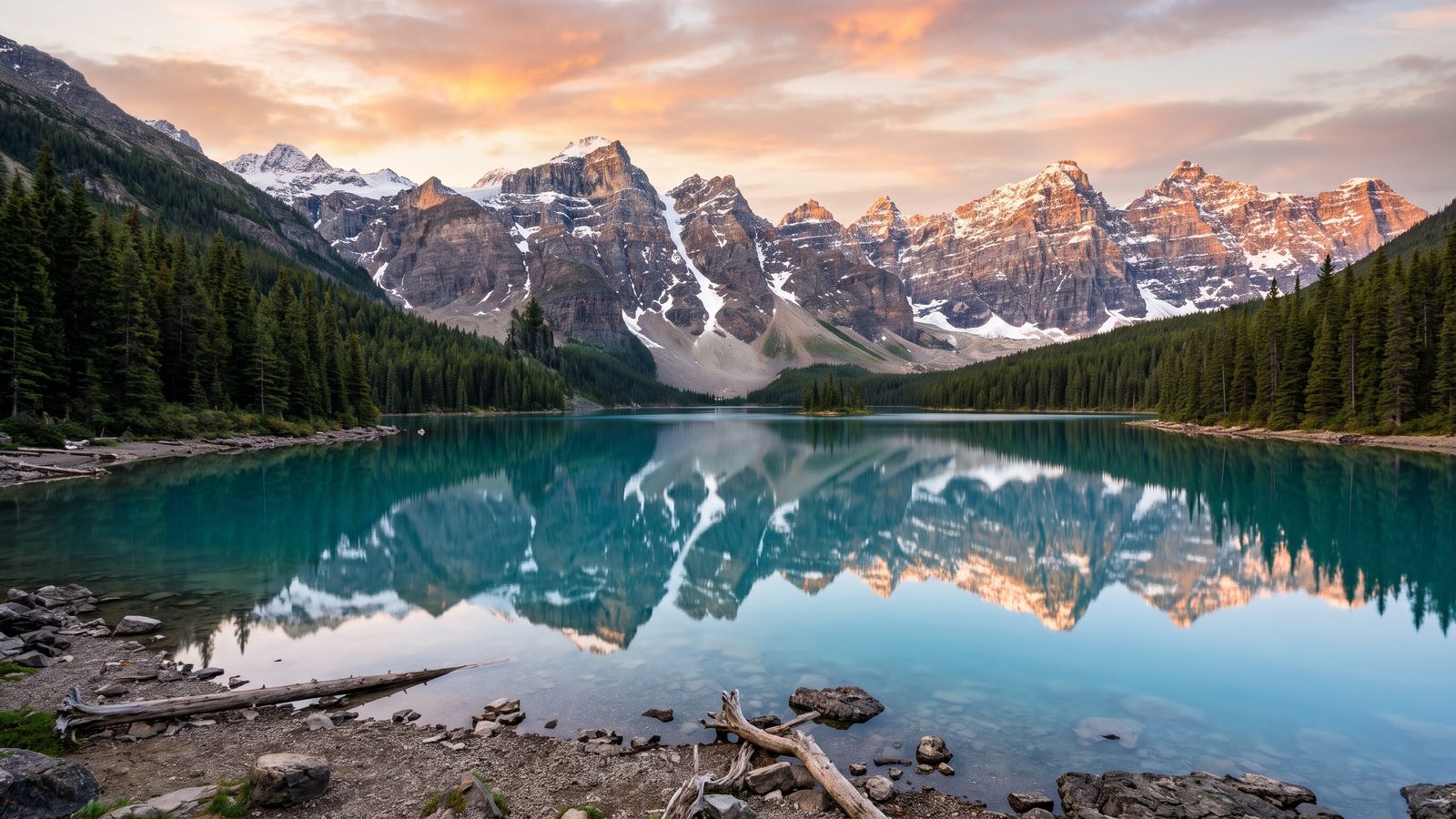
Welcome to Jasper National Park, an expansive wilderness sanctuary nestled within the majestic Canadian Rockies of Alberta. As you journey through this glacial realm, you will encounter soaring limestone peaks, brilliant turquoise lakes fed by ancient glaciers, and winding river valleys. This self-guided audio tour immerses you in the raw beauty and ecological harmony of a pristine landscape shaped over millions of years by ice, water, and dramatic geological shifts.
From bugling elk during the autumn rut to deep canyon trails and adrenaline-pumping river adventures, Jasper offers an unforgettable encounter with nature. Put on your headphones, tune into the rhythm of the wild, and discover the wildlife, mountains, and winding trails that make this mountain haven truly extraordinary.
What you'll hear on this tour
Stop 1. Panoramas of Turquoise Lakes and Peaks
You stand before the sweeping scale of the Canadian Rockies, where dramatic vertical peaks like Mount Edith Cavell tower into the sky. Exposed limestone and quartzite strata tell a quiet story of ancient continental uplift and glacial sculpting. As you look across the landscape, the vibrant turquoise water of Maligne Lake catches your eye. This otherworldly color comes from fine glacial flour suspended in the water, which scatters sunlight in a brilliant spectrum. Below, the powerful Athabasca River winds through the valley floor, mirroring the jagged, snow-dusted mountains above, while dense subalpine forests of spruce and fir cling tenaciously to the lower slopes.
Stop 2. Sanctuary of the Mountain Wild
You step into an interconnected sanctuary where wildlife reigns supreme. In autumn, the haunting, resonant bugle of a bull elk echoes across the valley, marking the intense energy of the breeding rut. Look up toward the sheer, rocky cliffs to spot bighorn sheep. Their specialized hooves, lined with rough, pliable pads, give them exceptional traction as they scale vertical rock faces toward mineral licks. High above the treeline, shaggy white mountain goats navigate precarious ledges in their thick, insulating coats. Down in the valleys, powerful grizzlies dig for roots while black bears forage on berries, each species playing a vital role in this wilderness.
Stop 3. Ancient Monuments of Earth and Ice
You gaze up at colossal rock sentinels born from the Laramide Orogeny, a massive geological event over 70 million years ago that thrust ancient seabeds skyward. Look closely at the cliff faces—layers of marine fossils now rest thousands of feet above sea level. You see the distinct U-shaped valleys and sharp arêtes left behind by massive ice sheets during the last glacial maximum, when moving glaciers carved deep troughs through the rock. From towering peaks like Monarch to rounded alpine domes, these mountains form a living testament to Earth’s dynamic forces, shaping local weather patterns and sustaining the delicate alpine ecosystems clinging to their slopes.
Stop 4. Footsteps Along Glacial Canyons and Lakes
You step onto Jasper's scenic trails to connect intimately with the land along paths trodden by Indigenous peoples for thousands of years. As you walk through Maligne Canyon, you peer into deep rock gorges carved by centuries of rushing water, spotting ancient fossils embedded in the canyon walls. On the trail to the Valley of the Five Lakes, you discover five distinct bodies of emerald and turquoise water reflecting the surrounding forest in peaceful quiet. If you climb toward Sulphur Skyline, crisp mountain air fills your lungs as panoramic views of sharp peaks open up, while tiny pikas dart among the scree nearby.
Stop 5. Adrenaline in White Water and Ice
You feel the pulse of true mountain adventure as you push your limits against Jasper's rugged backdrop. Navigating the churning whitewater rapids of the Sunwapta River, cold icy spray splashes your face while your paddling crew pulls together through the waves. In winter, you focus intently on scaling frozen waterfalls during an ice climb, driving axes and crampons into crystal ice structures against gravity's pull. Whether meticulously ascending sheer rock faces for lofty summit views or skiing down untouched backcountry powder through silent, snow-laden pine forests, these thrilling experiences test your spirit and forge unforgettable alpine memories.
Stop 6. The Living Breath of Ecosystems
You enter a dynamic wilderness where glacial meltwater nourishes complex plant and animal communities. Tall, slender lodgepole pines stretch toward the sun, regenerating in uniform stands after forest fires to clear space for vibrant new growth. Above the treeline, delicate alpine wildflowers bloom in vivid colors against harsh mountain rock. Listen carefully for the sharp whistle of a high-country marmot warning its colony of a passing eagle, or the distinct call of a Clark's nutcracker dispersing whitebark pine seeds. Here, every creature and plant thrives in a self-sustaining web shaped by ice, fire, and time.
Planning your visit
- Best time to go
- June to September for hiking, turquoise lakes, and wildlife watching; October for the elk rut; December to March for winter sports.
- Approximate duration
- about 3 to 5 hours
- Where to start
- Jasper Townsite or the Icefields Parkway entrance near Maligne Lake Road.
Access and conditions change seasonally — check the official site before you go.
Frequently asked questions
Is Jasper National Park worth visiting?
Yes, Jasper National Park is world-renowned for its dramatic Rocky Mountain peaks, stunning turquoise lakes like Maligne, abundant wildlife including elk and grizzlies, and exceptional hiking trails.
How long do you need at Jasper National Park?
Most visitors spend 2 to 4 days exploring Jasper National Park. This provides ample time to drive scenic routes, hike Maligne Canyon or Valley of the Five Lakes, and spot native wildlife.
How were the mountains in Jasper National Park formed?
The mountains were thrust skyward over 70 million years ago during the Laramide Orogeny, lifting ancient ocean seabeds. Ice sheets during the last glacial period subsequently carved the U-shaped valleys and sharp ridges visible today.
Keep exploring
Header image is an AI-generated illustration of Jasper National Park. AllTours.ai is an AI audio tour guide — point your camera at any landmark and hear its story.