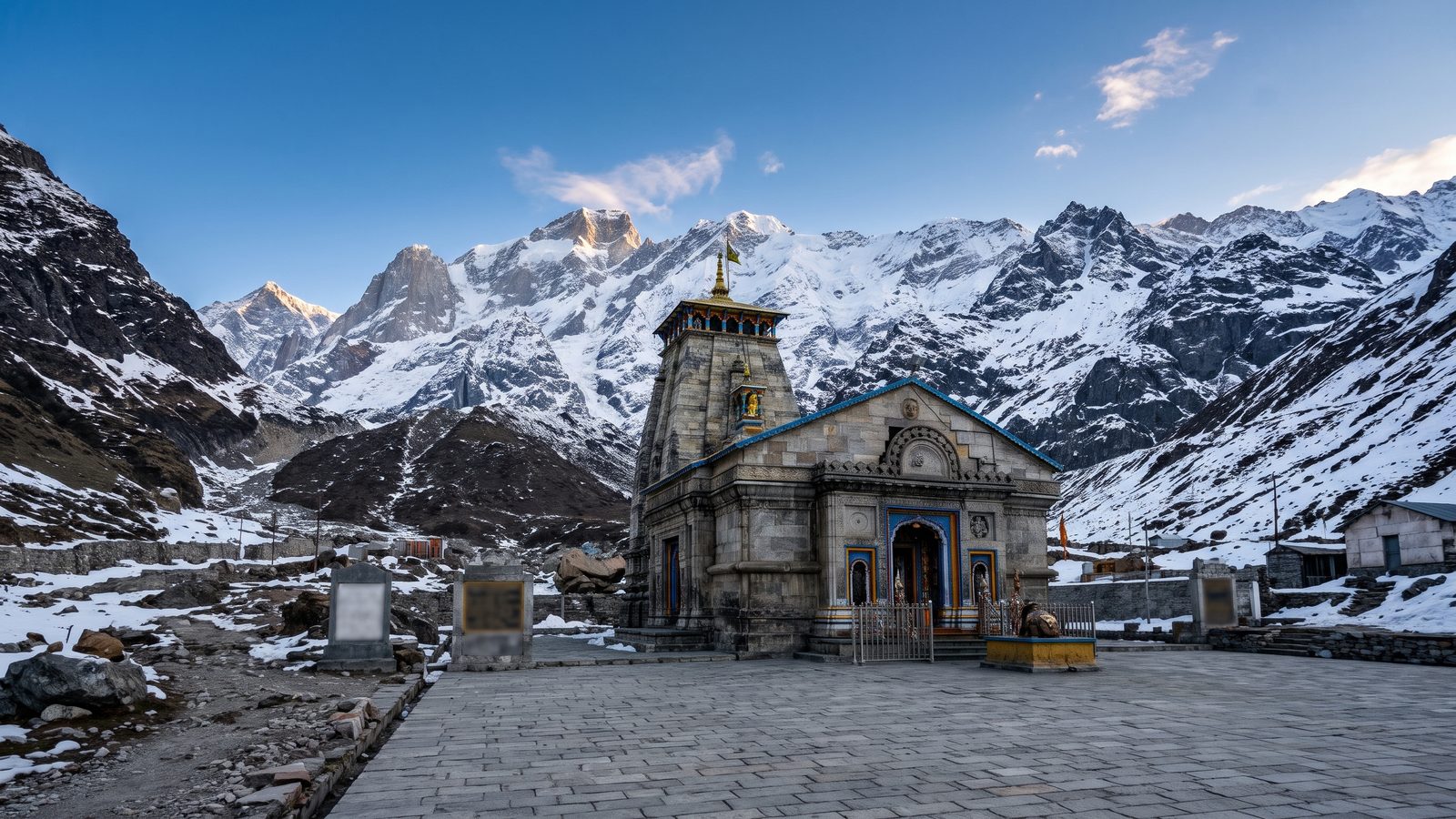
Welcome to Kedarnath, an ancient sanctuary perched high in the majestic Garhwal Himalayas of Uttarakhand. Rebuilt in the eighth century by Adi Shankaracharya, this revered stone shrine stands as a powerful testament to timeless devotion and divine energy. As you walk among these sacred grounds, you join generations of pilgrims who have braved the high mountain paths to seek blessings, solace, and spiritual transformation at Lord Shiva’s celestial abode.
Surrounded by towering snow-capped peaks and the roaring glacial waters of the Mandakini and Saraswati rivers, Kedarnath offers a rare harmony of raw natural power and profound peace. Let this audio tour guide your steps through its resilient mortarless architecture, rich cultural traditions, and centuries of fascinating Himalayan history.
Listen to a sample
The opening of this tour, exactly as AllTours narrates it on site.
What you'll hear on this tour
Stop 1. Traces of Pandavas and Ancient Empires
You stand on hallowed ground where history reaches back to ancient Puranic accounts and the era of the Mahabharata. Legend holds that the Pandavas journeyed through these rugged peaks seeking divine forgiveness after the Kurukshetra war, beginning their heavenly ascent right here. As you walk across these massive mortarless grey stones, you walk the same path as ancient rulers, sadhus, and invaders who once sought or plundered these mountain treasures. Rebuilt and consolidated in the eighth century by Adi Shankaracharya, this resilient stone sanctuary has weathered shifting dynasties and relentless weather. The ancient engineering beneath your feet reflects an unbroken tradition of devotion that continues to absorb prayer through the ages.
Stop 2. Mortarless Stonework and the Golden Spire
Gaze upon the temple’s impressive stone façade and observe the remarkable craftsmanship of ancient Himalayan builders. Notice how each massive grey stone block fits together with astonishing precision without a single drop of mortar, allowing the structure to survive harsh mountain elements and catastrophic floods. Look up at the distinctive pyramidal roof capped with a golden spire, designed purposefully to shed heavy snow while reaching toward the sky. As you walk around the layout, you discern subtle echoes of original foundations preserved across centuries. This harmonious blend of practical survival engineering and sacred geometry creates an enduring architectural marvel that has sheltered millions of pilgrims through the ages.
Stop 3. Echoes of Devotion Across the Centuries
As you step closer to the inner sanctuary, feel the overwhelming weight of centuries of spiritual longing. You are following in the footsteps of kings, sadhus, and humble pilgrims who trekked these treacherous mountain routes long before paved paths existed. Guided only by the stars and whispered prayers, millions have journeyed to Shiva’s high-altitude abode to seek solace and divine connection. With every breath in this thin alpine air, you become part of an unbroken chain of human devotion. The atmosphere around you hums with a vibrant spiritual energy, created by countless mantras and heartfelt supplications offered at this sacred threshold where earth feels intimately close to heaven.
Stop 4. Majesty of the Chaukhamba Massif
Turn your gaze toward the horizon and let your eyes sweep across an immense mountain panorama. Before you stand the snow-capped guardians of this sacred valley, their jagged summits piercing an impossibly blue sky. If you visit in the early morning light, watch how the sun paints the dramatic flanks of the Chaukhamba massif in shifting shades of gold and soft rose. These towering Himalayan giants are not merely a backdrop; they are living components of the temple's spiritual setting. Standing in their immense shadow, the sheer scale of the landscape dwarfs human achievements and fills you with quiet awe.
Stop 5. Sacred Waters and Wild Alpine Valleys
Breathe in the crisp mountain air, rich with the scents of wild pine, damp moss, and ancient granite. You are standing near the confluence of the Mandakini and Saraswati rivers, where freezing glacial meltwater rushes through rugged rock channels sculpted over millennia. Look around at the surrounding Garhwal mountains and notice the vibrant alpine meadows clinging to the lower slopes, where resilient wildflowers bloom against harsh climate conditions. This high-altitude ecosystem displays both intense power and delicate vulnerability. As wind and glacial waters carve the mountain pass around you, you can feel the raw, untamed energy that defines this sacred high-altitude sanctuary.
Stop 6. Carvings, Chants, and Kumaoni Traditions
Examine the temple walls to admire intricate stone carvings depicting celestial dancers and sacred beings, each serving as a visual mantra carved into granite. You are witnessing the living cultural tapestry of Uttarakhand, where deep-rooted local traditions weave seamlessly into the grand pilgrimage experience. The skilled touch of local artisan families remains visible throughout the stone structure, preserving craftsmanship passed down through generations. Listen as the resonant, rhythmic chanting of temple priests fills the mountain air, carrying ancient Sanskrit verses that have echoed off these stone walls for over a thousand years. This vibrant sacred culture forms the living heart of the local mountain community.
Planning your visit
- Best time to go
- May to June and September to October offer the best weather for pilgrimage, ideally early in the morning for serene views and clear skies.
- Approximate duration
- about 2 to 3 hours
- Where to start
- In front of the main temple entrance facing the eastern outer courtyard.
Access and conditions change seasonally — check the official site before you go.
Frequently asked questions
Is Kedarnath Temple worth visiting?
Yes, Kedarnath Temple is one of India's most revered pilgrimage sites, offering a powerful mix of ancient history, magnificent stone architecture, and stunning high-Himalayan scenery.
How long do you need at Kedarnath Temple?
Most visitors spend 2 to 3 hours exploring the temple complex, attending prayers, viewing the stone carvings, and soaking in the mountain panorama.
What is the history of Kedarnath Temple?
Associated with the Mahabharata and Pandavas, the temple was revived in the 8th century by Adi Shankaracharya. Its mortarless stone structure has survived centuries of harsh weather and invasions.
Keep exploring
Header image is an AI-generated illustration of Kedarnath Temple. AllTours.ai is an AI audio tour guide — point your camera at any landmark and hear its story.