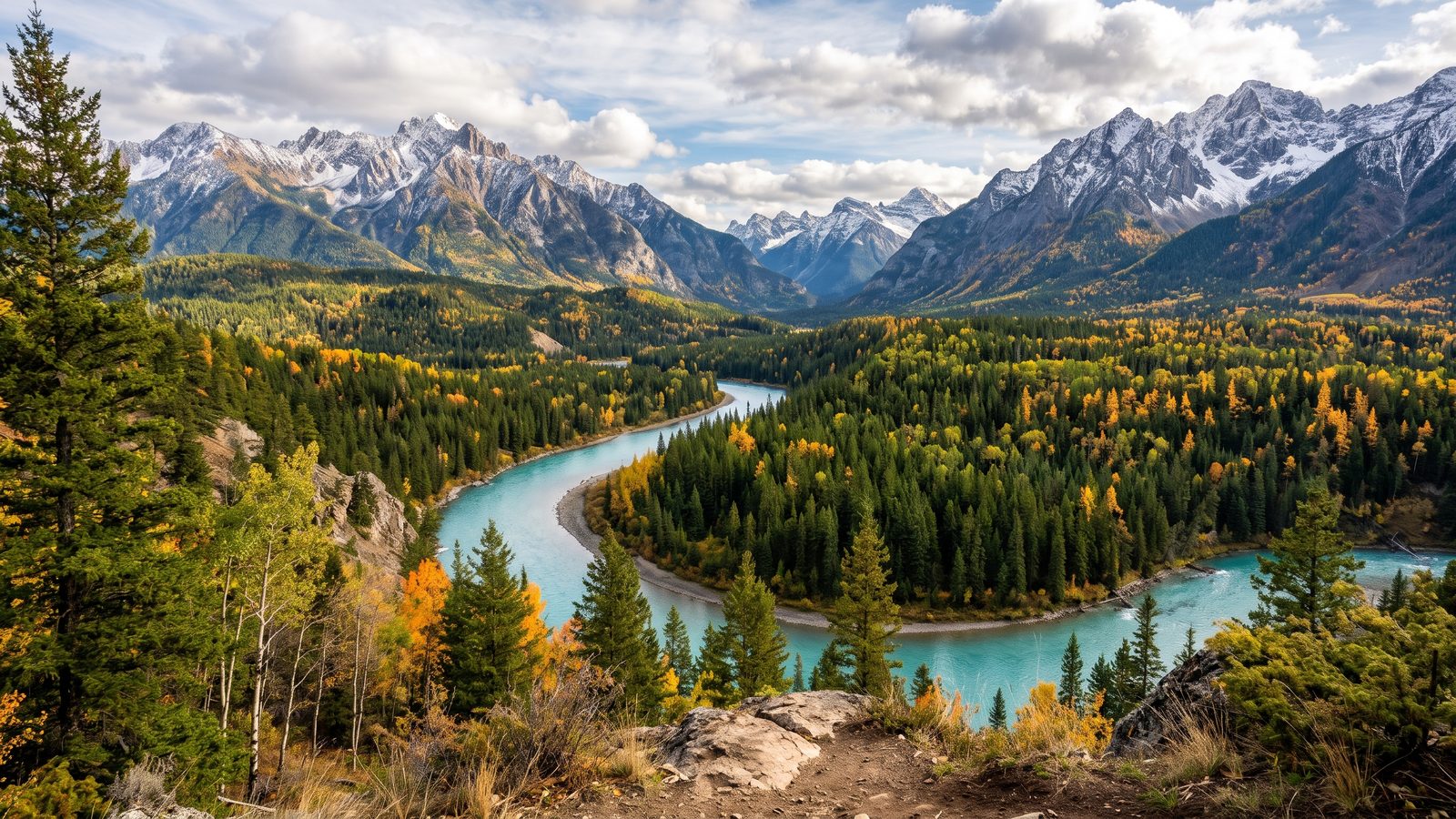
Welcome to Kootenay National Park, a pristine sanctuary where glacier-carved valleys, roaring glacial rivers, and towering mountain peaks converge. Stretching from the continental divide down towards Radium Hot Springs, British Columbia, this untamed landscape invites you to experience raw geological history. As you journey along scenic mountain corridors, you will encounter vibrant mineral springs, ancient evergreen forests, and dramatic U-shaped canyons shaped by ice and time.
This self-guided audio tour allows you to explore at your own pace, uncovering stories of early Indigenous routes, Depression-era conservation, and dynamic wilderness ecosystems. Simply press play as you travel, immersing yourself in the rich natural heritage and striking scenery that define this Canadian Rocky Mountain park.
What you'll hear on this tour
Stop 1. Carved Valleys and Turquoise Waters
You stand before a breathtaking panorama where jagged, snow-capped peaks pierce an impossibly blue sky. As you breathe in the crisp, pine-scented air, you feel the immensity of a landscape sculpted by ancient glacial ice. Dramatic cirques and hanging valleys are etched directly into the mountainsides above, showing the incredible force that hollowed out these U-shaped corridors. Below, the vibrant turquoise ribbon of the Kootenay River snakes through the valley floor, carrying icy glacial meltwater downstream. Sunlight shifts across the towering rock faces, painting the cliffs in subtle shades of ochre and grey that reflect millions of years of geological transformation.
Stop 2. Footsteps Across Ancient Glacial Trails
You step onto gravel trails carved by shifting glaciers, early explorers, and park wardens who once patrolled these remote passes. Feel the crunch under your boots as you hike toward the vibrant Paint Pots, where mineral-rich earth turns the soil into rich shades of ochre and rust. You are walking along routes traversed for millennia by Indigenous peoples who passed down their deep knowledge of these mountain passes. Further along the trail to Stanley Glacier, you watch rushing meltwater cut through rock right before your eyes. Every bend in the path reveals a new perspective on this living, breathing landscape.
Stop 3. Jewels of Suspended Rock Flour
Gazing across tranquil mountain waters like Olive Lake, you witness ecosystems born directly from melting glacial ice. You notice the vibrant turquoise hue glowing beneath the surface, a visual wonder caused by fine rock flour suspended in the frigid depths. Look closely through the remarkably clear water, and you see smooth, ancient stones sitting peacefully on the lakebed, polished by immense geological forces. Early prospectors arrived here searching for rich veins of ore, but discovered these aquatic treasures instead. Today, these cold, mineral-rich lakes remain vibrant, dynamic habitats that sustain unique mountain life in the heart of the park.
Stop 4. The Ancient Pulse of the Forest
Standing beneath towering Engelmann spruce and subalpine fir, you enter an ecosystem that serves as a living laboratory. Vibrant green mosses cling to rugged rocks, acting as ecological pioneers that slowly break down stone into fertile soil. If you listen carefully, you might hear the distant, echoing call of a Bighorn sheep navigating steep, rocky slopes with effortless agility. Rushing before you are the crystal-clear waters of the Vermilion River, carrying glacial melt through the heart of the valley. Here, you witness the delicate balance between predator and prey, forest fires, and natural regeneration constantly playing out around you.
Stop 5. The Call of the Wild Heart
You feel an exhilarating pull to explore Kootenay's untamed backcountry and test your spirit against the wild. Imagine scrambling toward the Paint Pots to see surreal mineral springs, or trekking along the Stanley Glacier trail where raw ice continues to carve through solid rock. For those seeking true solitude, multi-day routes invite you into deep wilderness valleys surrounded by majestic peaks. You can picture the spray of freezing glacial water as you raft down roaring river currents, or celebrate reaching a high mountain ridge. This park offers a massive natural canvas where every rugged trail feeds your thirst for discovery.
Stop 6. Echoes of Surveyors and Conservation
You stand on ground shaped by the struggles of early surveyors and the economic hardships of the Great Depression. Before official national park status in 1920, this terrain served as a vital travel corridor for prospectors who charted steep passes on foot and horseback. The government established the Dominion Forest Reserve here to protect delicate ecological features, laying the groundwork for the protected area you enjoy today. The very roads you travel were forged to manage these vast tracts of mountain land, reflecting a conscious effort to balance human access with wilderness conservation for future generations.
Planning your visit
- Best time to go
- Late spring through early autumn offers optimal driving conditions, clear hiking trails, and vivid turquoise waters.
- Approximate duration
- About 3 to 5 hours
- Where to start
- Radium Hot Springs visitor center or the park's southern entrance along Highway 93.
Access and conditions change seasonally — check the official site before you go.
Frequently asked questions
Is Kootenay National Park worth visiting?
Yes, Kootenay National Park is renowned for its striking glacial rivers, vibrant ochre Paint Pots, hot springs, and dramatic mountain scenery, offering fewer crowds than neighboring national parks.
How long do you need at Kootenay National Park?
Most visitors spend between half a day to a full day driving Highway 93, stopping at key viewpoints, glacial lakes, and short hiking trails like the Paint Pots or Stanley Glacier.
What is the history of Kootenay National Park?
Designated in 1920 from the earlier Dominion Forest Reserve, the park area originally served as vital travel corridors for Indigenous peoples, prospectors, and surveyors before becoming a sanctuary for conservation.
Keep exploring
Header image is an AI-generated illustration of Kootenay National Park. AllTours.ai is an AI audio tour guide — point your camera at any landmark and hear its story.