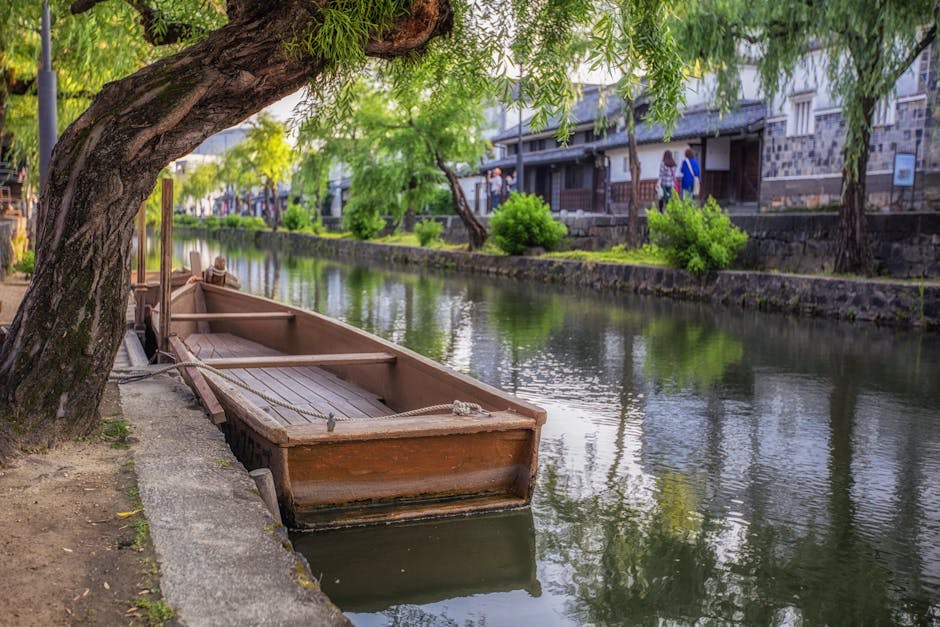
Step into a living Edo-period painting at Japan's Kurashiki Canal Bikan District. This beautifully preserved historic area invites you to wander along willow-lined canals, admire traditional white-walled storehouses, and soak in an atmosphere where time seems to slow down. Prepare to discover the rich cultural tapestry woven into every stone and beam.
Our self-guided tour with AllTours.ai transforms your stroll into an immersive journey. We’ll uncover the secrets behind the district's distinctive architecture, from the unique 'namako-kabe' walls to the stories of merchants and artisans who once thrived here. Get ready to experience Kurashiki's timeless charm firsthand, revealing details only a local guide would know.
Watch the 20-second tour
What you'll hear on this tour
Stop 1. Kurashiki Canal Boat Ride
The iconic flat-bottomed boats gliding along the Kurashiki River are more than just a scenic attraction; they are a direct link to the district's past. Originally, these canals were the lifeblood of Kurashiki, used by merchants to transport rice and other goods from surrounding areas to the port. From the water, you gain a unique perspective on the 'namako-kabe' storehouses and willow trees that now define the landscape, imagining the bustling trade that once filled these waterways during the Edo period.
Stop 2. Namako-kabe Walls
Look closely at the distinctive white-and-black patterned walls adorning many of Kurashiki's historic buildings. These are 'namako-kabe,' or 'sea cucumber walls,' a signature architectural style of the Bikan District. More than just decorative, these raised plaster joints were originally designed for fire resistance, making the storehouses more resilient against blazes. They also served as a status symbol, showcasing the wealth of the merchants who could afford such intricate craftsmanship. Each pattern tells a silent story of meticulous artistry and practical ingenuity.
Stop 3. Ohara Museum of Art
A surprising treasure amidst the traditional Japanese architecture is the Ohara Museum of Art, Japan's first private museum dedicated to Western art. Founded in 1930 by local textile magnate Magosaburo Ohara, it houses an impressive collection of masterpieces by artists like Monet, Rodin, and El Greco. Ohara's vision was to bring world-class art to Japan, making it accessible to everyone. Its presence here highlights Kurashiki's progressive spirit and its connection to global culture, even while deeply rooted in its Edo-period heritage.
Stop 4. Kurashiki Ivy Square
Step into Kurashiki Ivy Square, a vibrant complex built around the red-brick buildings of Japan's first modern cotton mill, established in 1888. The walls are dramatically draped in ivy, giving the square its name and a picturesque charm. This site beautifully illustrates Kurashiki's industrial past and its successful transformation. Today, it houses a hotel, shops, restaurants, and museums, yet the echoes of its textile heritage remain. It’s a perfect example of how the district preserves its history while embracing new life.
Stop 5. Achi Shrine
Perched atop Mount Tsurugata, overlooking the Bikan District, is Achi Shrine, a sacred site with a history stretching back over 1,700 years. Dedicated to goddesses associated with navigation and maritime safety, it reflects Kurashiki's historical importance as a port town. The climb to the shrine offers not only spiritual tranquility but also panoramic views of the entire white-walled district and beyond. Legend says the 'fuji' wisteria vines here are among the oldest in Japan, blooming vibrantly each spring.
Planning your visit
- Best time to go
- Spring or Autumn for pleasant weather and vibrant scenery. Weekday mornings are ideal to experience the district with fewer crowds.
- Approximate duration
- about 2-3 hours, allowing time for leisurely strolls and potential museum visits
- Where to start
- Near the main Kurashiki Canal bridge, easily recognizable by the iconic white-walled buildings and willow trees lining the water.
Access and conditions change seasonally — check the official site before you go.
Frequently asked questions
Is the Kurashiki Canal boat ride available all year?
The traditional "Kawabune" boat rides typically operate year-round, with some seasonal variations or closures on specific days. It's always best to check the official local tourism website for the most current schedule and operating hours before your visit. The experience offers a unique perspective of the historic district.
What does 'Bikan District' mean?
"Bikan" (美観) translates to "beautiful view" or "scenic area" in Japanese, perfectly describing this picturesque district. The name reflects its designation as an Important Preservation District for Groups of Traditional Buildings, acknowledging its exceptional beauty and historical significance. It is a testament to the efforts made to preserve its Edo-period charm.
Are there other attractions besides the canal area?
Absolutely! Beyond the iconic canal, Kurashiki offers several renowned museums, including the Ohara Museum of Art and the Kurashiki Folk Craft Museum. You can also explore Kurashiki Ivy Square, visit the ancient Achi Shrine, or wander through charming side streets filled with artisan shops and cafes. The district is rich with cultural experiences.
Keep exploring
Photography via Pexels. AllTours.ai is an AI audio tour guide — point your camera at any landmark and hear its story.