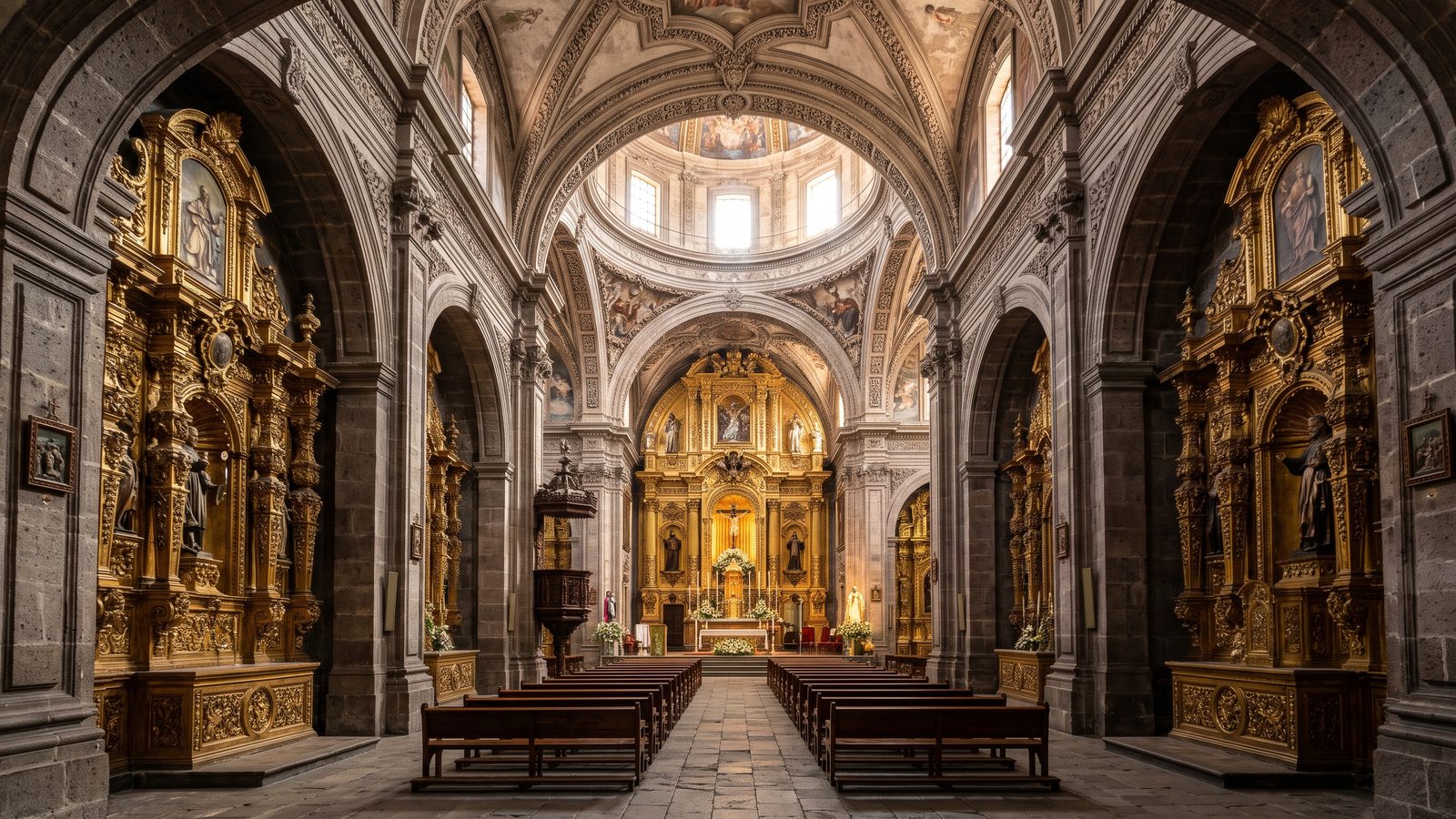
Step inside the Temple of San Felipe Neri, known affectionately as La Profesa, located in the heart of Mexico City. Built as a Jesuit house and later stewardship of the Oratorians, this Baroque church stands as a testament to faith, artistic brilliance, and political drama. As you enter, towering altarpieces shimmering with gold leaf draw your gaze while centuries of history surround you in quiet reverence.
Beyond its breathtaking art, La Profesa harbored pivotal secrets. In 1820, conservative plotters gathered within these walls during the infamous Profesa Conspiracy, shaping the path toward Mexican independence. This audio guide leads you through its architecture, sacred art, and enduring cultural legacy.
Listen to a sample
The opening of this tour, exactly as AllTours narrates it on site.
What you'll hear on this tour
Stop 1. Shadows of the Secret Conspiracy
You stand on ground steeped in centuries of faith and political intrigue. Originally established as a 16th-century Jesuit foundation, this site fell vacant after the 1767 expulsion of the Society of Jesus from Spanish territories. The Oratory of San Felipe Neri acquired the property, embarking on a major rebuilding project between 1714 and 1720 under architect Pedro de Arrieta. You walk through a space that ignited history during the 1820 Conspiracy of La Profesa. Conservative criollos and high-ranking clergy secretly convened right here to resist the liberal Spanish Constitution. Their clandestine meetings ultimately paved the way for Agustín de Iturbide's Plan de Iguala and Mexico's national independence.
Stop 2. Exuberance of the Churrigueresque Facade
You gaze upon the dynamic Churrigueresque facade, where inverted obelisk columns known as estípites draw your eyes heavenward. Notice how dark red tezontle volcanic stone contrasts against lighter grey cantera quarry stone, creating dramatic visual depth and movement across the surface. As you move inside, the vast nave leads your eye to a soaring octagonal dome that bathes the interior in ethereal light. Intricate stucco work adorns the soaring vaults, acting as a visual narrative through the central space. Look around to spot subtle shifts in side chapels, where later Neoclassical sobriety offers an intriguing stylistic counterpoint to the surrounding Baroque splendor.
Stop 3. Masterpieces of Colonial Sacred Art
You step into a sacred space that doubles as a gallery of New Spanish Baroque and Neoclassical art. Dominating the main altar, Cristóbal de Villalpando’s dynamic Virgin of the Apocalypse captures your attention with its celestial energy and rich play of light and shadow. As you explore the sacristy, you encounter José de Ibarra’s Adoration of the Magi, renowned for its emotional depth and dramatic chiaroscuro. In the chapels, you discover Miguel Cabrera’s serene Immaculate Conception, showcasing his delicate palette and graceful figures. Surrounding you on every side, these incredible paintings showcase the intense spiritual devotion and artistic genius of colonial Mexico.
Stop 4. Gilded Drama of New Spain
You feel the thick, opulent atmosphere of the Baroque style surrounding you inside the sanctuary. Towering retablos carved in wood and bathed in gold leaf rise up to overwhelm your senses, transforming sacred narrative into pure spectacle. You admire the characteristic estípite columns, signature elements of Mexican Churrigueresque architecture that push decorative detail to its peak. Sunlight filtering from high windows dances across polychrome carvings, bringing saints and angels to life with theatrical flair. Every curve and gilded flourish operates as a declaration of faith, immersing you in a dynamic, emotional symphony of light and shadow crafted during the Golden Age of New Spain.
Stop 5. Living Traditions of Devotional Heritage
You feel the continuous pulse of Mexican devotional life as faithful visitors gather before the ornate altarpieces, particularly the shrine dedicated to the Virgin of Guadalupe. Soft prayers fill the air, echoing a centuries-old dialogue between sacred devotion and daily life. You notice intricate floral arrangements crafted by local artisans, preserving pre-Hispanic traditions within Catholic practice. Beyond visual art, the church carries a celebrated musical heritage. Sacred polyphony and historic organ music have resonated through these naves for generations, defining the auditory landscape of Mexico City's spiritual heart. Here, artistic expression and living faith merge into a rich cultural tapestry.
Stop 6. From Jesuit Roots to Oratorian Piety
You trace the profound spiritual transformations that shaped this historic sanctuary. Established as the Casa Profesa for the Society of Jesus, this building originally served professed fathers who swore direct obedience to the Pope. Following their dramatic expulsion in 1767, the Oratorians of San Felipe Neri took stewardship of the sanctuary, re-consecrating it to their patron saint and renewing its spiritual life. You look toward the main altar, which remains focused on the Eucharist as the central sacrament of daily worship. This transition from Jesuit academic rigor to Oratorian piety illustrates the enduring, evolving thread of Catholic tradition inside Mexico City.
Planning your visit
- Best time to go
- Morning hours when sunlight streams through the high dome lantern.
- Approximate duration
- About 45 minutes
- Where to start
- Main entrance of La Profesa Church along Calle de Madero.
Access and conditions change seasonally — check the official site before you go.
Frequently asked questions
Is La Profesa Church worth visiting?
Yes, La Profesa Church is a must-see landmark in historic Mexico City, famed for its Churrigueresque Baroque facade, priceless colonial artwork by artists like Cristóbal de Villalpando, and its role in Mexico's independence history.
How long do you need at La Profesa Church?
A typical self-guided audio tour takes approximately 45 to 60 minutes to explore the architecture, altarpieces, and sacristy collection.
What was the Conspiracy of La Profesa?
In 1820, conservative leaders and clergy secretly met inside La Profesa Church to plan opposition to the liberal Spanish Constitution, leading directly to Agustín de Iturbide's Plan de Iguala and Mexican independence.
Keep exploring
Header image is an AI-generated illustration of La Profesa Church. AllTours.ai is an AI audio tour guide — point your camera at any landmark and hear its story.