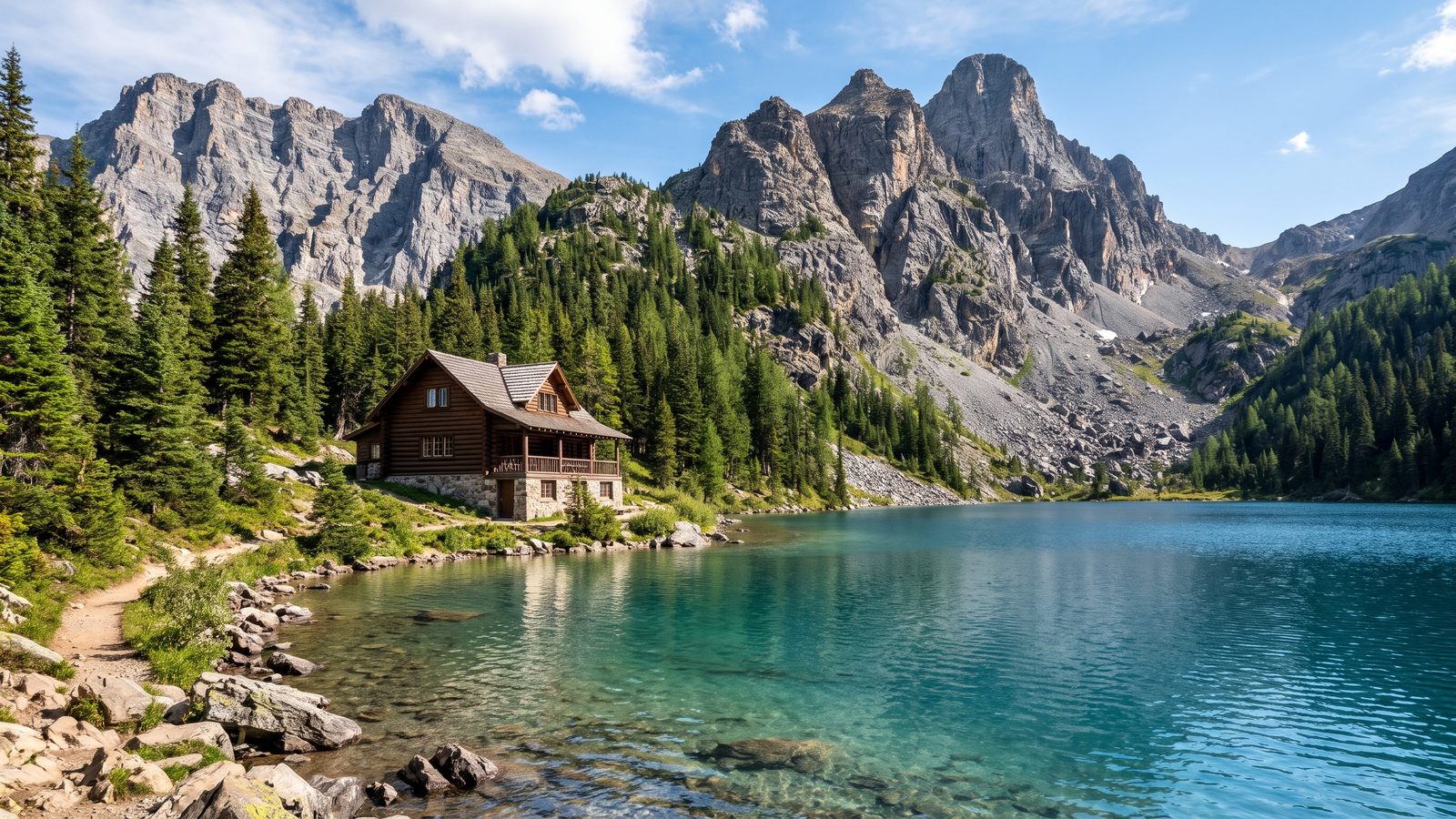
Experience one of Banff National Park's most beloved hikes as you climb from Lake Louise to the historic Lake Agnes Tea House. Ascending through fragrant subalpine forests of spruce and pine, this trail offers breathtaking views of surrounding peaks and turquoise glacial waters. Along the way, you will discover the remarkable alpine engineering, rich railway history, and resilient mountain ecology that make this historic trail a quintessential Canadian Rockies adventure.
Perfect for active travelers, this self-guided audio tour narrates your journey past steady switchbacks, ancient rock formations, and serene mountain scenes. Step into living history at a backcountry sanctuary built over a century ago, and enjoy an unforgettable high-country experience.
What you'll hear on this tour
Stop 1. Swiss Guides and Rustic Shelters
You step back to 1901, when the Canadian Pacific Railway built a humble log refuge to spark mountain tourism in the Canadian Rockies. By 1905, Swiss mountain guides hired by the railway transformed that simple shelter into the iconic tea house you see today. Imagine the immense effort required to transport every wooden plank, glass pane, and teacup up this steep trail using horses and mules. For over a century, dedicated operators have lived here during isolated summers, maintaining continuous mountain hospitality. As you stand in this living museum, you join generations of explorers and travelers who have sought warmth, respite, and hot tea in this remote alpine haven.
Stop 2. Turquoise Waters and Towering Peaks
You gaze across Lake Agnes, where striking turquoise and emerald waters sparkle against pale granite cliffs. This distinctive color comes from glacial rock flour suspended in the deep water, scattering sunlight into a shifting spectrum of blues and greens. Look up at the Big Beehive, its massive sedimentary rock layers telling a silent story of ancient geological forces and erosion. Gnarled subalpine firs and Engelmann spruces cling to the steep slopes, framing the cascading waterfall that feeds the lake with a steady, soothing hum. Under changing light and passing clouds, this dynamic mountain landscape presents a constantly evolving masterpiece right before your eyes.
Stop 3. Hand-Hewn Logs and Alpine Design
You stand before a masterclass in early 20th-century mountain construction. Built from hand-hewn local timber, the tea house features dense log walls that provide natural insulation against severe alpine weather. Notice the steeply pitched roof, specifically designed to shed heavy winter snow accumulation and protect the structure's integrity. A sturdy stone foundation anchors the building into the rugged, rocky terrain against sweeping mountain winds. Inside, a central wood-burning stove radiates warmth through the compact space, acting as the heart of the layout. Small multi-pane windows minimize heat loss while framing breathtaking lake views, perfectly balancing practical energy conservation with rustic wilderness charm.
Stop 4. Climbing Through the Subalpine Canopy
You embark on an iconic ascent, tracing a path taken by mountain adventurers for over a century. Starting with a gentle incline, the trail gradually leads you into a series of switchbacks designed to ease the 400-meter elevation climb. As you ascend through dense subalpine forest, tall Engelmann spruce and lodgepole pines shade your way. You feel the satisfying effort in your legs with every deliberate step, invigorated by the crisp, pine-scented mountain air. Between the trees, fleeting glimpses of the valley below build your anticipation. This physical trek invites you to slow down, connect with nature, and earn your arrival at the historic tea house.
Stop 5. Hidden Networks of the Mountain Woods
You walk through a subalpine forest engineered for high-altitude survival. Notice the thick, waxy needles of the pine and spruce trees, an essential adaptation designed to retain moisture and shield them from harsh ultraviolet rays and mountain winds. Beneath your feet lies a hidden organic network of mycorrhizal fungi, connecting tree roots to share vital nutrients and warnings across the forest floor. Decaying moss-covered logs along the path serve as nurse logs, nurturing young sapling growth in their nutrient-rich bark. Each gnarled tree trunk acts as a living archive, its inner rings recording centuries of harsh winters, brief summers, and the forces shaping this vital ecosystem.
Stop 6. Alpine Wildlife and Resilient Flora
You immerse yourself in a vibrant ecosystem bustling with specialized life. Look closely at the forest floor to discover delicate wildflowers like bright Indian paintbrush and intricate blue columbine, blooming against the harsh mountain climate. Along the rocky scree slopes above the turquoise water, listen for pikas, small rabbit-like mammals busily gathering winter caches of plants, or spot marmots basking on sun-warmed rocks. Resilient subalpine firs and Engelmann spruces form a protective canopy, filling the crisp air with the refreshing scents of damp moss and pine. Every detail around you highlights how plant and animal life thrives in harmony within Banff's high-country wilderness.
Planning your visit
- Best time to go
- June through September for clear trail conditions and full tea house operation.
- Approximate duration
- about 3 hours
- Where to start
- Lake Louise shoreline path near the Fairmont Chateau Lake Louise.
Access and conditions change seasonally — check the official site before you go.
Frequently asked questions
Is Lake Agnes Tea House Trail worth visiting?
Yes, it is one of the most rewarding and popular hikes in Banff National Park. The trail combines rich history, stunning views of turquoise glacial lakes, lush subalpine forest, and a visit to a tea house built in 1905.
How long do you need at Lake Agnes Tea House Trail?
Plan for about 3 to 4 hours in total. The round-trip hike covers approximately 7.2 kilometers with 400 meters of elevation gain, taking around 2.5 to 3 hours of walking time plus time to enjoy the tea house.
Who built the Lake Agnes Tea House?
The Canadian Pacific Railway built a simple log shelter at the site in 1901. In 1905, Swiss mountain guides employed by the CPR transformed it into the traditional wooden tea house that continues to serve visitors today.
Keep exploring
Header image is an AI-generated illustration of Lake Agnes Tea House Trail. AllTours.ai is an AI audio tour guide — point your camera at any landmark and hear its story.