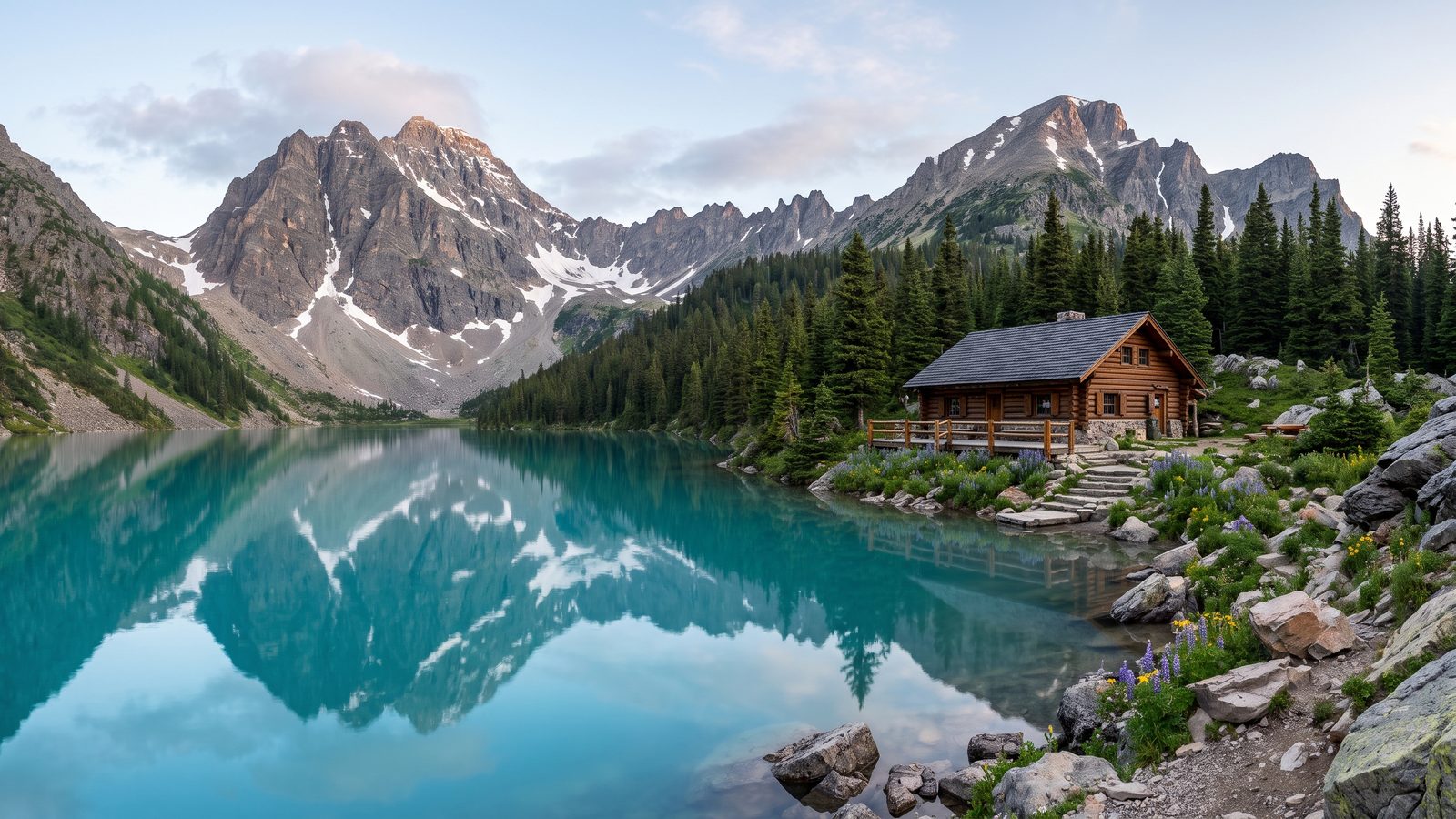
You stand high in the Canadian Rockies beside Lake Agnes, a glacial tarn framed by Mount Niblock and Mount Whyte. Rising 400 meters above Lake Louise, this subalpine sanctuary rewards your hike with vibrant turquoise waters, pristine forest trails, and historic mountain hospitality. Let this audio guide reveal the rich geology, resilient alpine wildlife, and captivating history that make this pristine jewel an unforgettable mountain retreat.
As you walk along the shore, you will hear the sharp call of pikas, marvel at suspended rock flour giving the water its iconic pigment, and discover how early explorers shaped this iconic trail. Take a breath of crisp mountain air and immerse yourself in an ancient, sculpted landscape.
Listen to a sample
The opening of this tour, exactly as AllTours narrates it on site.
What you'll hear on this tour
Stop 1. A Historic High-Country Haven
You step up to Lake Agnes, an emerald jewel named in 1888 after Lady Agnes Macdonald, wife of Sir John A. Macdonald, Canada's first Prime Minister. As you look around, pristine glacier-fed waters shimmer in an otherworldly hue, reflecting towering surrounding peaks. Ahead stands the historic Lake Agnes Tea House, operating since 1905 to welcome tired hikers. This beloved mountain refuge offers warm respite and delicious treats, all carried up the steep mountain by hand. You stand at a site of enduring hospitality, where a historic tradition rewards your climb with unforgettable views across the shimmering alpine tarn.
Stop 2. Glacial Origins and Vibrant Waters
You gaze into the mesmerizing emerald waters of Lake Agnes, a true glacial tarn carved by ancient ice sheets thousands of years ago. The vivid turquoise pigment comes from microscopic rock flour—pulverized rock suspended in frigid meltwater—that scatters sunlight across the surface. Feel the crisp mountain air, a constant reminder that the water rarely warms above a few degrees Celsius. This extreme cold preserves incredible water clarity, creating a specialized habitat for cold-water invertebrates and native cutthroat trout. As you look across the still surface, the lake acts as a living mirror, reflecting the towering rock faces and vast sky above.
Stop 3. Giants of Stone and Ice
You look up at the immense rock faces framing the basin: Mount Niblock on your left and Mount Whyte directly ahead. These colossal peaks consist of ancient sedimentary rock, once ocean floors pushed skyward during the Laramide Orogeny and carved by advancing glaciers. Mount Niblock presents a sheer north face named after a Canadian Pacific Railway official, testing generation after generation of mountaineers. Beside it, Mount Whyte holds glistening snowfields well into the summer months. Notice the stark treeline where harsh alpine winds stop tree growth, leaving a dramatic boundary between subalpine forest and raw, high-altitude rock.
Stop 4. Resilient Creatures of the Subalpine
You listen carefully to the crisp air and hear a distinctive high-pitched eep echoing across the boulders. That call belongs to the American pika, a tiny lagomorph gathering vegetation into winter haypiles among the rockfalls. Scanning the sun-warmed rocks, you might see a hoary marmot basking before whistling its alarm call to nearby neighbors. Overhead, bold Clark's nutcrackers soar above subalpine firs, caching pine seeds that help regenerate the surrounding forest. Even curious gray jays glide through the canopy, adapting quickly to high-altitude living. Every creature in this tranquil sanctuary possesses unique adaptations for survival in this rugged mountain landscape.
Stop 5. The Journey Up From Louise
You trace the path of your journey starting from the shores of Lake Louise, climbing 400 meters of elevation through dense subalpine forest. As you ascend gentle switchbacks, the scent of pine fills the air, punctuated by the rushing sound of a waterfall at the halfway mark. Moving past the falls, the trees thin to grant sweeping previews of the valley below before revealing the stunning tarn ahead. The trail represents a sensory progression, rewarding your effort with iconic turquoise vistas. From here, ambitious trails continue climbing toward the Big Beehive or Little Beehive, carrying forward an enduring spirit of exploration.
Stop 6. A Natural Alpine Amphitheater
You stand in a dramatic, natural amphitheater formed by ancient rock faces and cascading scree fields. The lake presents a shifting palette of emerald and turquoise, changing pigment as passing clouds alter the sunlight. Subalpine firs and Engelmann spruce cling tenaciously to the lower slopes, contrasting against the stark grey rock of Mount Niblock and Mount Whyte above. Delicate alpine wildflowers dot the rocky edges, adding subtle splashes of color to the rugged scenery. As you look out over the mirror-like surface, towering peaks reflect with surreal visual clarity, blurring the boundary between reality and reflection in this pristine mountain refuge.
Planning your visit
- Best time to go
- Early morning or late afternoon during summer for calmer waters, clear reflections, and lighter trail traffic.
- Approximate duration
- about 2 to 3 hours
- Where to start
- Lake Louise shoreline trailhead, Banff National Park, Alberta.
Access and conditions change seasonally — check the official site before you go.
Frequently asked questions
Is Lake Agnes worth visiting?
Yes, Lake Agnes is widely considered one of the most rewarding hikes in Banff National Park. It features stunning emerald-turquoise glacial waters, towering mountain amphitheaters, historic 1905 tea house traditions, and panoramic views over Lake Louise.
How long do you need at Lake Agnes?
Plan on spending about 2 to 3 hours total for the round-trip hike from Lake Louise, allowing extra time to rest by the lake, enjoy treats from the tea house, and take photos along the shore.
Who was Lake Agnes named after?
Lake Agnes was named in 1888 after Lady Agnes Macdonald, the wife of Sir John A. Macdonald, Canada's first Prime Minister, following her visit to the Canadian Rockies.
Keep exploring
Header image is an AI-generated illustration of Lake Agnes. AllTours.ai is an AI audio tour guide — point your camera at any landmark and hear its story.