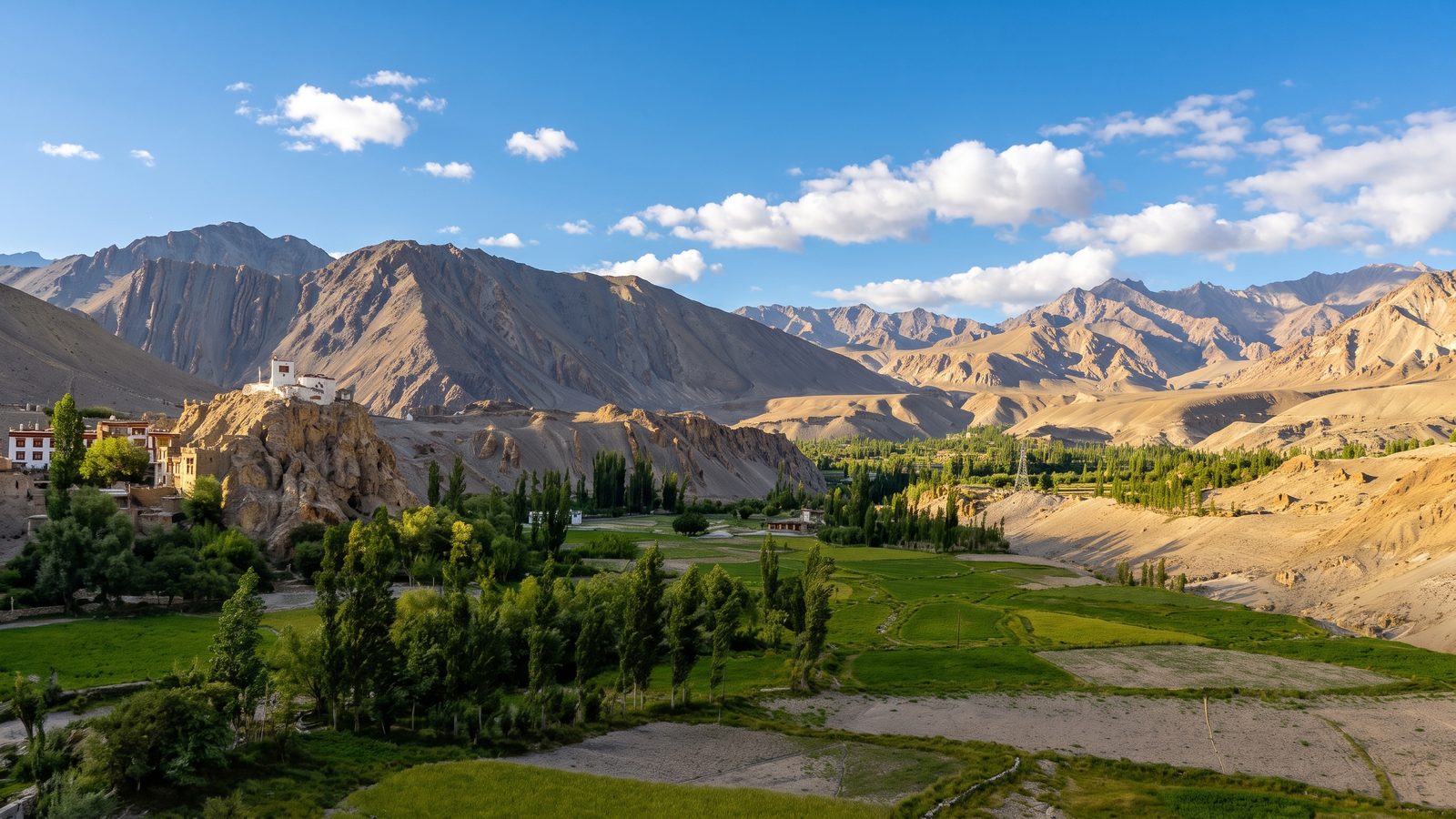
Welcome to Lamayuru, one of Ladakh's oldest and largest gompas, perched strikingly amid otherworldly, crater-like rock formations known as the Moonland. Founded in the tenth century by the Indian Mahasiddha Naropa, this spiritual sanctuary offers a dramatic intersection where high-altitude Himalayan nature meets deep Tibetan Buddhist tradition. As you walk through its ancient halls and surrounding vistas, you step into a landscape steeped in centuries of devotion.
This self-guided audio tour leads you through Lamayuru's historic prayer halls, sacred meditation caves, and astonishing geological wonders. You will uncover ancient prophecies, rich artistic traditions, and the timeless heritage of the Drigung Kagyu lineage preserved high in the Zanskar Range.
Listen to a sample
The opening of this tour, exactly as AllTours narrates it on site.
What you'll hear on this tour
Stop 1. Welcome to the Surreal Moonland
You take a deep breath as you stand before Lamayuru Monastery, surrounded by incredible crater-like rock formations that look like a piece of the lunar surface fallen to Earth. Known as the Moonland of Ladakh, this sanctuary rests in an otherworldly geological basin. Founded in the tenth century by the Mahasiddha Naropa, Lamayuru is one of the region's oldest and largest gompas. As you look out over the surreal landscape, you imagine ancient monks meditating in cliffside caves. Here, vibrant murals and profound Buddhist history meet high-altitude desert peaks, creating an unforgettable haven where the earth truly seems to touch the heavens.
Stop 2. Sacred Prophecies and Lake Waters
You tread upon ground steeped in thousands of years of spiritual practice. Before Buddhism arrived, this very location served as a sacred Bon-po site. In the tenth century, the Indian Mahasiddha Naropa meditated in a nearby cave and prophesied that a massive lake would dry up to reveal land for a monastery. The waters indeed receded, creating the undulating terrain you see today. Later, during the eleventh century, the legendary translator Rinchen Zangpo constructed a temple here. Over centuries of political shifts and invasions, Lamayuru evolved into the central monastery of the Drigungpa lineage, preserving an unbroken chain of Himalayan Tibetan Buddhist heritage.
Stop 3. Inside the Ancient Dukhang
You step inside the main prayer hall, or Dukhang, where the scent of burning juniper incense and flickering butter lamps immediately wraps around you. Low, smoke-stained ceilings shelter colorful murals depicting fierce protector deities and serene Buddhas, some dating back to the eleventh century. You notice a central statue of Naropa, adorned with fresh offerings, marking the very cave where he meditated to establish this haven. As you look at the monastic cells carved directly into the cliff face, you see how the monks live intimately bound to the mountain. This eternal Yungdrung complex remains a living, breathing center of Buddhist learning and ascetic practice.
Stop 4. Geological Wonders of the Moonland
You gaze beyond the monastery walls at the astonishing landscape known as the Moonland. Wind and water erosion carved these bizarre, crater-like formations over millions of years. You are looking at ancient seabed sediments, once teeming with marine life, that were thrust thousands of feet skyward when continental plates collided. Mineral-rich sedimentary rocks paint the surrounding hillsides in shifting shades of ochre, grey, and rust as the sun moves across the sky. This stark, high-altitude desert environment heightens the monastery's profound isolation and spiritual gravitas, offering you a breathtaking encounter with the Earth's raw, unadulterated artistry.
Stop 5. Living Traditions and Sacred Chants
You hear rhythmic chanting resonating through the monastery's ancient walls, serving as a continuous prayer carrying centuries of monastic aspirations. As you observe internal life here, you witness monks crafting vibrant thangka paintings, where every brushstroke acts as a form of visual meditation. If you visit during the annual Yuru Kabgyat festival, you experience mesmerising Chham dances, where monks wear elaborate masks and costumes representing compassionate and wrathful deities to ward off evil. From flickering butter lamps to shared silent meals, this vibrant cultural heritage thrives, sustaining a deep sense of spiritual community and preservation that defines Lamayuru today.
Stop 6. Trails Through Ancient Pilgrim Routes
You stand at the trailhead for some of Ladakh's most legendary Himalayan treks. From here, ancient paths wind through the moonland terrain toward Wanla and isolated villages like Phanjila, where traditional culture remains preserved across generations. As you walk these routes, you follow in the footsteps of ancient traders and monks who once carried goods and spiritual wisdom across high mountain passes. You pass sacred chortens standing as silent guardians along the way, while prayer flags flutter in the thin air. Breathtaking panoramas of snow-capped peaks and the distant Indus River unfold, connecting you directly to the region's rich trade and pilgrimage history.
Planning your visit
- Best time to go
- May to October during daylight hours for clear road access and ideal light on the rock formations.
- Approximate duration
- About 2 hours
- Where to start
- At the main entrance courtyard near the lower base of the monastery complex.
Access and conditions change seasonally — check the official site before you go.
Frequently asked questions
Is Lamayuru Monastery worth visiting?
Yes, Lamayuru Monastery is widely considered one of Ladakh's most breathtaking destinations. Renowned for its unique 'Moonland' geological formations, 10th-century meditation caves, and vibrant Buddhist art, it offers a remarkable blend of natural wonder and cultural depth.
How long do you need at Lamayuru Monastery?
Most visitors spend about 1.5 to 2.5 hours exploring the main prayer hall (Dukhang), Naropa's meditation cave, the surrounding complex, and viewing the surrounding Moonland landscape.
What is the history of Lamayuru Monastery?
Originally a Bon-po sacred site, Lamayuru was established as a Buddhist sanctuary in the 10th century by Mahasiddha Naropa. It expanded in the 11th century under Rinchen Zangpo and eventually grew into the principal monastery of the Drigung Kagyu lineage in Ladakh.
Keep exploring
Header image is an AI-generated illustration of Lamayuru Monastery. AllTours.ai is an AI audio tour guide — point your camera at any landmark and hear its story.