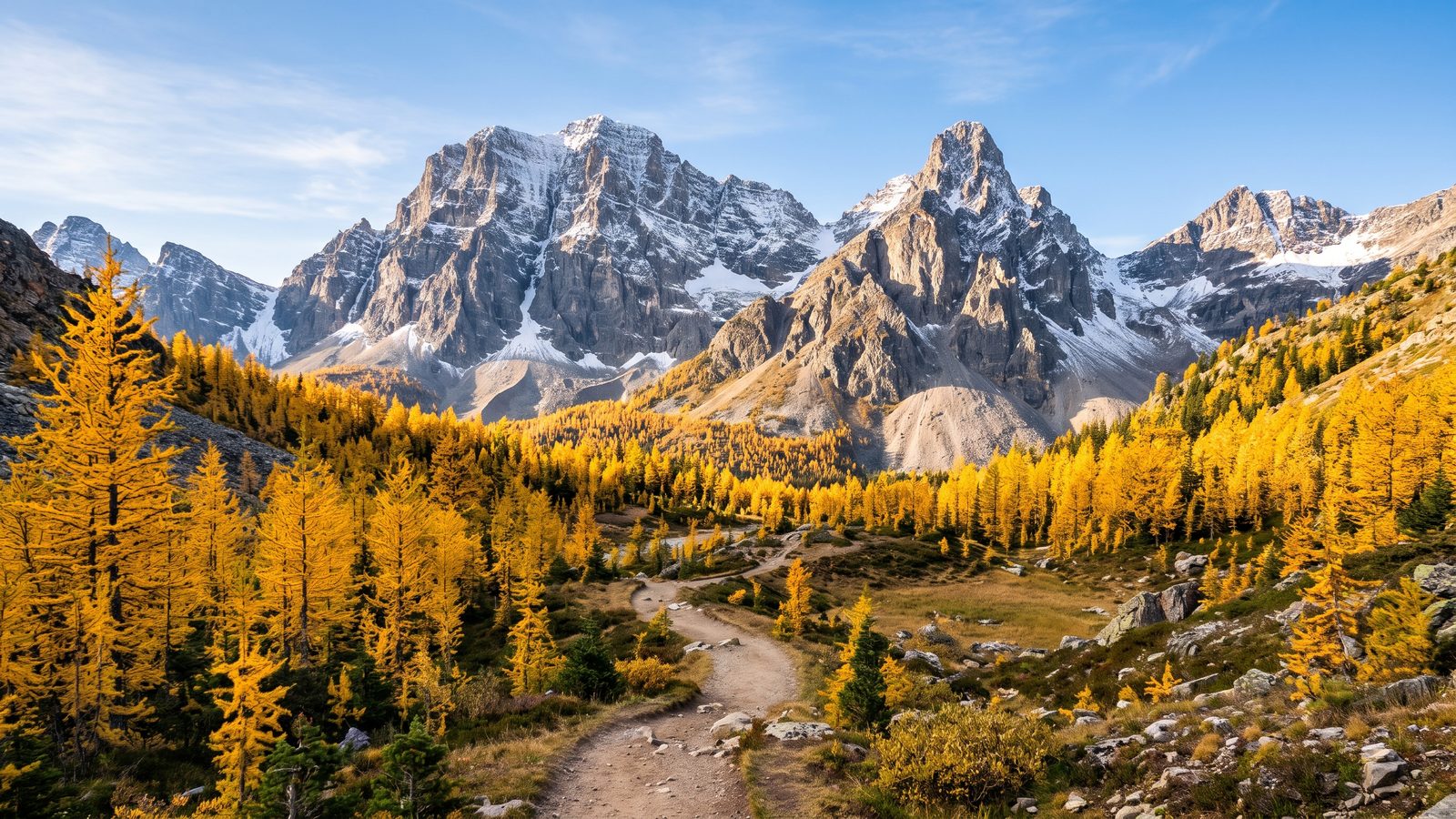
Welcome to the Larch Valley Trail, an iconic mountain hike starting near Moraine Lake in Banff National Park. As you ascend through pristine subalpine forest, you step onto ancient trails walked for centuries by Indigenous peoples. Here, high-elevation larches paint the landscape in brilliant gold each autumn against dramatic limestone peaks. Prepare to discover the geological forces, rare wildlife, and rich history that define this Canadian Rockies sanctuary.
This self-guided audio tour reveals the hidden details of Larch Valley as you climb. From glacier-carved amphitheaters to subtle trail architecture, each audio stop enriches your journey. Immerse yourself in the story of this majestic wilderness at your own pace, taking in unforgettable vistas at every turn.
What you'll hear on this tour
Stop 1. Golden Larches and Alpine Wildlife
You stand among magnificent subalpine larches (*Larix lyallii*), the trees that define this high-altitude valley. Unlike common evergreens, these needles turn a brilliant golden hue each autumn before dropping to conserve precious moisture and energy through harsh, snow-bound winters. Beneath this shimmering yellow canopy, vibrant alpine wildflowers like purple lupines and red Indian paintbrush flourish during the short mountain summer. As you listen, you might catch the sharp call of a pika gathering vegetation for its winter haystacks among nearby rockfalls. Crystal-clear streams around you flow directly from ancient glaciers, carrying vital nutrients that nourish every plant and creature in this delicate subalpine ecosystem.
Stop 2. A Cathedral of Towering Peaks
You gaze upward into a vast mountain amphitheater carved over millennia by relentless ice. Towering directly above you, the jagged limestone faces of Mount Fay, Mount Little, and Eiffel Peak pierce the sky, their craggy surfaces etched with ancient fault lines and exposed geological layers. Sunlight rakes across these colossal guardians, casting dramatic light and shadow patterns along the U-shaped valley floor. The sheer scale of these massive rock faces creates an intense sense of enclosure, wrapping you completely within the untamed heart of the Canadian Rockies. Standing here, you witness a living geological masterpiece where natural forces continuously reshape the rugged wilderness around you.
Stop 3. Carved by Giant Ice Sheets
Look around at the broad, classic U-shaped valley floor beneath your feet, sculpted by massive glaciers thousands of feet thick during the last ice age. These relentless rivers of ice slowly ground away the landscape, transforming sharp river gorges into wide alpine basins and carving deep cirques into surrounding peaks. In the distance, notice the remarkably intense turquoise color of the water. This striking hue comes from rock flour—fine silt crushed by glacial grinding suspended in meltwater. Beyond their ancient sculpting power, these lingering ice reserves act as vital freshwater sources feeding the streams you cross, remaining powerful reminders of our planet's changing climate.
Stop 4. A Living Canadian Masterpiece
You are standing inside a living canvas that has inspired generations of Canadian artists, including painters from the famous Group of Seven. Look across the valley and observe how the rugged Ten Peaks form a monumental sculpture, contrasting sharp stone lines against soft forest contours. When autumn sun strikes the golden larch needles, it creates a striking light-and-shadow interplay that painters strive to capture on canvas. Far below, the impossibly vivid turquoise of Moraine Lake provides a central color focal point so intense it defines classic Canadian wilderness art. This landscape is a carefully balanced natural composition inviting you to capture its fleeting beauty.
Stop 5. Ancient Routes and Conservation Roots
You stand on traditional lands traversed for generations by the Stoney Nakoda, Ktunaxa, and Siksika peoples, who followed ancient seasonal migration routes to hunt game and gather medicinal plants across these slopes. Late nineteenth-century European explorers and mapmakers, including Walter Wilcox and Samuel Allen, later documented these high alpine basins and celebrated the shimmering golden larches. Their early mapping efforts helped establish Banff National Park following its initial creation in 1885 as a small hot springs reserve. The path you follow today grew from these early expeditions, marking the dawn of Canadian wilderness conservation and opening this once-remote mountain sanctuary to respectful travelers.
Stop 6. Subtle Craftsmanship of the Trail
As you climb, notice the thoughtful design of the path underfoot. Every switchback and carefully set stone represents intentional landscape architecture engineered to protect the fragile alpine environment while ensuring your climb remains manageable. The trail gently curves to frame dramatic views of peaks and larch forests, operating as a natural gallery that guides your steps effortlessly up the mountain slope. Drainage features and stone reinforcements utilize local, natural materials, reflecting a minimalist design approach where human construction harmonizes with wild nature. This invisible engineering grants access to rugged heights while preserving the delicate mountain ecosystem for generations to come.
Planning your visit
- Best time to go
- Late September during peak autumn larch season, early in the morning to secure access and avoid crowds.
- Approximate duration
- About 3 to 4 hours
- Where to start
- Moraine Lake shoreline trail head near Lake Louise, Alberta.
Access and conditions change seasonally — check the official site before you go.
Frequently asked questions
Is Larch Valley Trail worth visiting?
Yes, Larch Valley Trail is widely considered one of Banff National Park's premier hikes, famous for its glowing autumn larch trees, dramatic views of the Ten Peaks, and pristine glacial scenery.
How long do you need at Larch Valley Trail?
Most hikers need about 3 to 4 hours to complete the round-trip trail through Larch Valley, though additional time may be needed to rest, take photos, or continue toward Sentinel Pass.
What is the history of Larch Valley Trail?
The area was historically used by Stoney Nakoda, Ktunaxa, and Siksika peoples for seasonal routes before being mapped by explorers Walter Wilcox and Samuel Allen in the late 1890s, following Banff National Park's founding in 1885.
Keep exploring
Header image is an AI-generated illustration of Larch Valley Trail. AllTours.ai is an AI audio tour guide — point your camera at any landmark and hear its story.