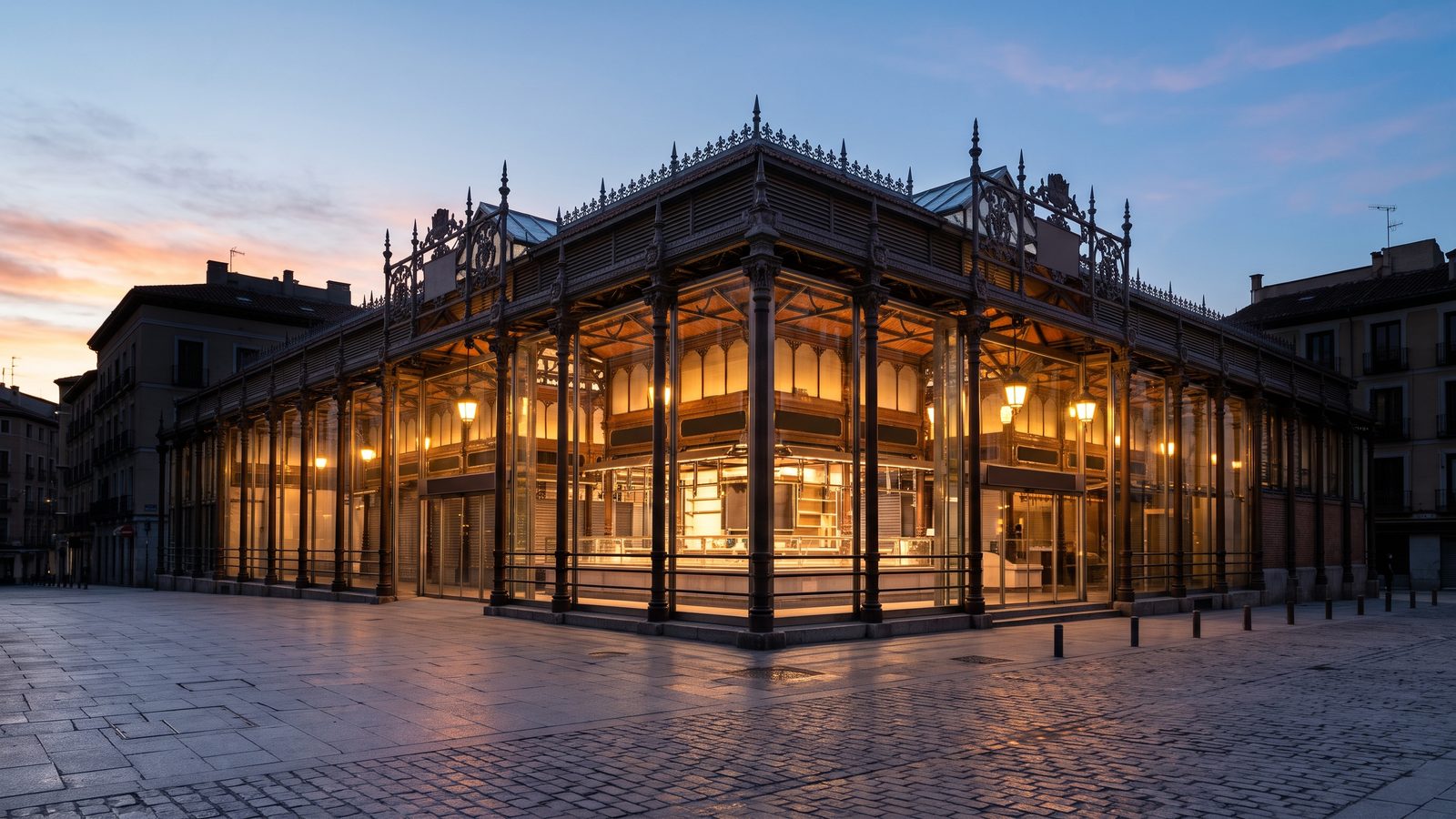
Step under the light-filled cast-iron ceiling of Mercado de San Miguel, Madrid's premier destination for lovers of Spanish gastronomy. Originally built in 1916 as a modern covered market, this historic site now stands as a vibrant culinary haven where traditional tapas meet contemporary flair. As you stroll past glistening stalls filled with regional delicacies, you immerse yourself in an unforgettable feast for all five senses.
This self-guided audio tour walks you through the market's rich history, iconic dishes, and unique social rituals. From savory jamón ibérico to crisp vermut on tap, you will uncover the story behind every bite while experiencing authentic Spanish hospitality at your own comfortable pace.
What you'll hear on this tour
Stop 1. A Temple of Spanish Gastronomy
You stand in a bustling temple dedicated to Spanish gastronomy, where traditional flavors meet elegant modern presentation. Gaze at glistening displays of jamón ibérico, ruby-red slices offering a rich, melt-in-your-mouth taste born from centuries of curing expertise. Around you, vibrant stalls display miniature works of art, from sizzling gambas al ajillo to creamy croquetas. Specialized vendors showcase the finest produce from across the Iberian Peninsula: briny olives from Andalucia, aged cheeses from Castilla-La Mancha, and fresh Galician oysters shucked before your eyes. Pair these treats with crisp vermut de grifo or a glass of Rioja wine as you embark on an unforgettable culinary journey.
Stop 2. The Legend and Art of Tapas
Look over the lively counters to discover the heart of Spanish dining culture. The word tapa means lid, originating from a legend about King Alfonso X of Castile, who decreed that taverns must serve a small bite of food over wine glasses to prevent drunkenness. Today, this humble tradition shines as a culinary art form. You see fiery patatas bravas drenched in smoky sauce beside delicate Basque gildas—skewers of olive, anchovy, and guindilla pepper offering a salty, piquant burst. Embrace the social ritual of tapeo as you graze from bar to bar, savoring how these mini specialties capture the soul of Spain's varied regional cooking.
Stop 3. From Public Square to Gourmet Landmark
Before this grand iron and glass structure existed, you would have found the open-air Plaza de San Miguel, named after a demolished 19th-century church. Vendors hawked daily provisions in a chaotic outdoor market until early 20th-century modernization inspired a hygienic indoor venue. Conceived in 1913 and opened in 1916, the building showcases elegant Art Nouveau and Modernismo architecture crafted from cast iron. Though it thrived as a traditional neighborhood market for decades, rising supermarkets led to decline. Following extensive restoration, the market dramatically reopened in 2009 as Spain's first gourmet food hall, revitalizing the historic neighborhood and inspiring food markets across the nation.
Stop 4. The Communal Spirit of Sobremesa
Listen to the vibrant hum of voices echoing beneath the historic iron framework. You are participating in a cherished Spanish social ritual where food serves as the ultimate catalyst for connection. Here, local families gather and friends lean close over shared croquetas and oysters, embodying the spirit of tapeo. Notice how people linger naturally after their meals—a central cultural value known as sobremesa, where conversation flourishes long after the last bite is gone. As you graze from stall to stall, you step into a living classroom of Spanish life, absorbing the welcoming, convivial atmosphere that unites generations around shared plates.
Stop 5. A Theater of Light and Flavors
As you walk deeper into the hall, you experience a meticulously curated culinary theater. Centuries ago, open-air vendors sold fresh fish from wooden carts on this exact ground, completely exposed to Madrid's weather. The 1916 iron-and-glass framework revolutionized local trade by bringing order and cleanliness to the city's food supply. Today, sunlight filters through the soaring glass roof, illuminating colorful displays of cured meats, fresh Galician seafood, and glistening tapas. You observe a space that honors its century-old architectural heritage while continuously reinventing itself, transforming traditional market stalls into a celebrated museum of Spanish flavors.
Stop 6. Curating Your Personal Spanish Feast
Your shopping experience here goes beyond routine buying; it becomes a guided exploration of artisanal craftsmanship. As you approach the stalls, knowledgeable vendors—often third-generation specialists—eagerly explain the roots of their offerings. You might sample a razor-thin slice of cured lomo or a taste of aromatic pimentón before deciding on your purchases. Select aged cheeses, plump olives, and crusty bread to assemble a gourmet picnic, or pick up rare spices and cold-pressed olive oils to recreate authentic Spanish meals at home. Every purchase connects you directly with the passionate producers and rich culinary heritage of Spain.
Planning your visit
- Best time to go
- Late morning around 11:30 AM or early evening around 7:30 PM to beat the largest peak crowds.
- Approximate duration
- about 1 hour
- Where to start
- Plaza de San Miguel entrance, facing the main cast-iron facade.
Access and conditions change seasonally — check the official site before you go.
Frequently asked questions
Is Mercado de San Miguel worth visiting?
Yes, Mercado de San Miguel is essential for food lovers. It combines early 20th-century Art Nouveau architecture with top-tier Spanish culinary stalls, offering everything from jamón ibérico to fresh seafood in one vibrant location.
How long do you need at Mercado de San Miguel?
Most visitors spend between 45 minutes to 1.5 hours wandering the stalls, tasting tapas, and enjoying a drink amidst the lively social atmosphere.
When was Mercado de San Miguel built?
The iron and glass structure was conceived in 1913 and officially inaugurated in 1916 on the former site of the Plaza de San Miguel church square. It was later restored and reopened as a gourmet market in 2009.
Keep exploring
Header image is an AI-generated illustration of Mercado de San Miguel. AllTours.ai is an AI audio tour guide — point your camera at any landmark and hear its story.