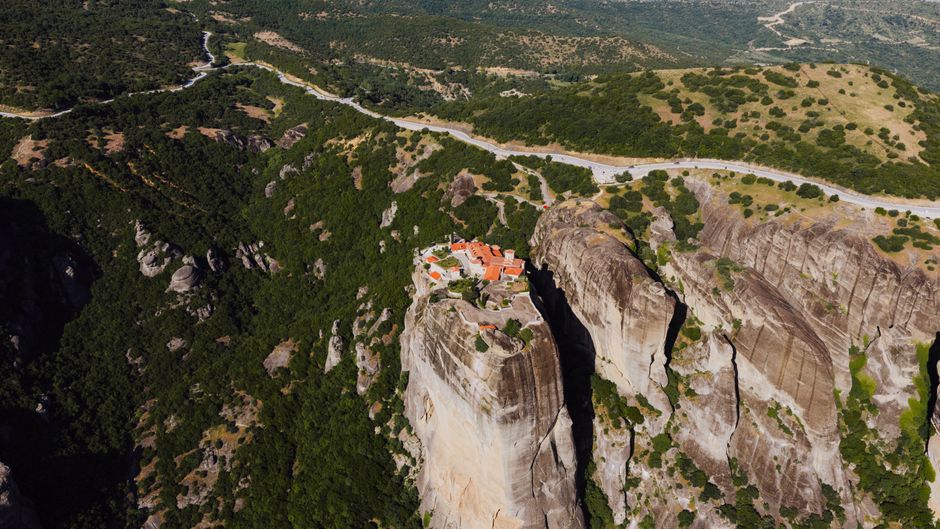
Welcome to Meteora, Greece, a landscape where the divine truly meets the dramatic. Imagine ancient monasteries, seemingly suspended between heaven and earth, atop colossal sandstone pillars. This UNESCO World Heritage site is not just a geological wonder but a testament to human faith and perseverance, a place where hermits and monks sought spiritual refuge for centuries.
With AllTours.ai, you'll uncover the captivating stories behind these "columns of the sky." Our audio tour guides you through the history of their construction, the daily lives of the monks, and the ingenious methods used to access these seemingly unreachable sanctuaries. Prepare to be awestruck by both the natural beauty and the profound spiritual legacy of Meteora.
Watch the 20-second tour
What you'll hear on this tour
Stop 1. Great Meteoron Monastery
Perched highest and largest, Great Meteoron is the spiritual heart of Meteora. Founded in the 14th century by Saint Athanasios, it served as a beacon for ascetic life. For centuries, the only way to reach its lofty entrance was via precarious rope ladders or by being hauled up in a large net, a method that required immense faith and strength. Imagine the sheer determination of the monks and builders, lifting every stone and supply by hand, transforming an inaccessible peak into a sacred sanctuary. This monastery still houses precious relics and frescoes, offering a glimpse into its long, rich history.
Stop 2. Varlaam Monastery
Just across from Great Meteoron stands Varlaam Monastery, established in the 16th century on a site first inhabited by a hermit named Varlaam. Legend says it took 22 years to hoist all the building materials to this towering height, using a system of ropes, pulleys, and immense human effort. Witnessing its grand architecture, one can truly appreciate the dedication of the monks who built it. Inside, explore its beautiful chapel and museum, which house rare manuscripts and religious artifacts, reflecting centuries of devotion and artistic skill in this challenging environment.
Stop 3. Rousanou Monastery
Unlike its loftier neighbors, Rousanou Monastery appears to grow directly out of its rock pillar, making it one of the most visually striking. Originally a monastery for men, it has operated as a nunnery since 1988. Its relatively easier access via a bridge makes it a popular stop, allowing visitors to admire its exquisite 16th-century frescoes up close. These vibrant paintings depict scenes from the life of Christ and the saints, providing a colorful narrative of Orthodox tradition against the dramatic backdrop of Meteora’s landscape. It’s a testament to enduring faith.
Stop 4. Holy Trinity Monastery
Holy Trinity Monastery, perched on its own isolated pinnacle, is arguably the most dramatically situated of all. Its iconic location, accessible by a long path and 140 steps carved into the rock, has made it a favorite for photographers and even a setting in the James Bond film, "For Your Eyes Only." This monastery embodies the monks' quest for solitude and closeness to God. While smaller, its strategic position offers unparalleled panoramic views of the entire Meteora complex, a constant reminder of the incredible feats of human endeavor in this sacred landscape.
Stop 5. Meteora Viewpoint
From this panoramic viewpoint, take a moment to truly absorb the awe-inspiring scale of Meteora. These colossal rock formations, sculpted over millions of years by geological forces, provided the perfect, defensible haven for early Christian ascetics seeking refuge from invaders and worldly distractions. Imagine the silence and isolation that drew them here. As you gaze across the valley at the monasteries clinging to their impossible peaks, reflect on the profound spiritual journey and architectural marvels born from the unique fusion of nature and faith in this extraordinary place.
Planning your visit
- Best time to go
- Early morning or late afternoon, especially during spring or autumn, to avoid crowds and heat.
- Approximate duration
- Allow approximately 3-4 hours to visit 2-3 monasteries and take in the viewpoints, or a full day for more extensive exploration.
- Where to start
- The town of Kalambaka, which sits at the base of the Meteora rocks, is the natural starting point. You can recognize it by the towering rock formations immediately above the town.
Access and conditions change seasonally — check the official site before you go.
Frequently asked questions
What should I wear when visiting the Meteora monasteries?
Visitors are required to dress modestly. This typically means shoulders and knees must be covered for both men and women. Skirts are often provided at the entrance for women who are not appropriately dressed, but it's best to come prepared.
How can I travel between the different monasteries?
While some monasteries are walkable from each other, distances can be significant and involve hills. Many visitors opt for a rental car, a taxi, or join an organized bus tour from Kalambaka or Kastraki to efficiently visit several sites.
Are all the Meteora monasteries open to the public?
Of the original 24 monasteries, six are still active and open for visitors. Each monastery has specific opening hours and may close on certain days, so it's advisable to check their individual schedules before your visit.
Keep exploring
Photography via Pexels. AllTours.ai is an AI audio tour guide — point your camera at any landmark and hear its story.