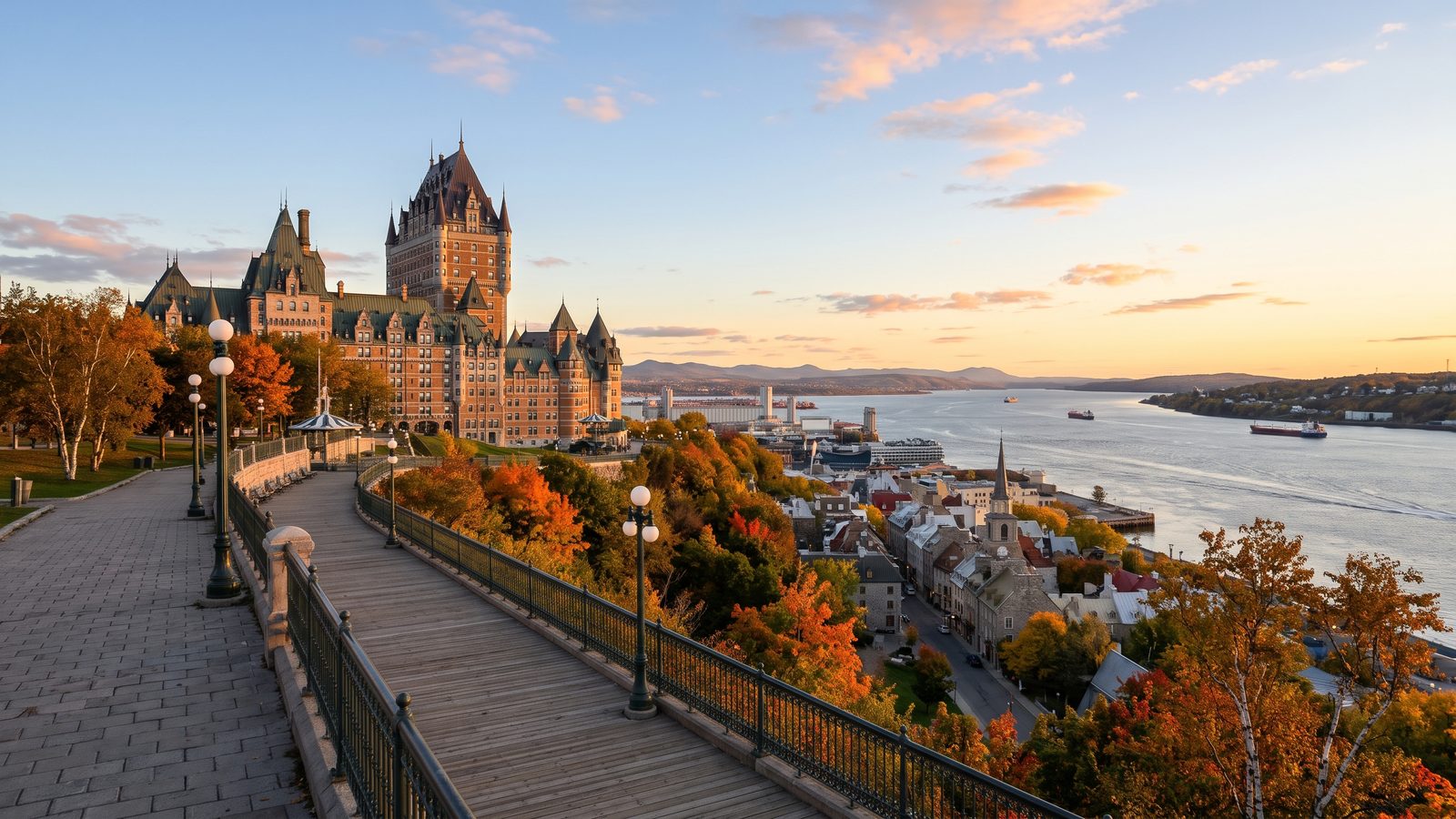
Welcome to Old Quebec, where history comes alive along charming cobblestone streets recognized as a UNESCO World Heritage site since 1985. Founded by Samuel de Champlain in 1608, this historic district stands as North America's only fortified city north of Mexico. As you walk, admire robust stone and brick architecture, vibrant boutiques, and local eateries framed by the constant backdrop of the St. Lawrence River.
Immerse yourself in a living fortress of francophone identity where European charm seamlessly blends with Canadian spirit. From sweeping river vistas atop Cap Diamant to centuries of culinary traditions and local artisan crafts, every corner of this historic neighborhood offers an unforgettable glimpse into a rich, enduring past.
Listen to a sample
The opening of this tour, exactly as AllTours narrates it on site.
What you'll hear on this tour
Stop 1. Sweeping Panoramas of the St. Lawrence
Step onto Dufferin Terrace and gaze across the mighty St. Lawrence River, a crucial waterway navigated by historic explorers, warships, and trading vessels. Below you, the Lower Town unfolds with narrow streets nestled tightly between the dramatic cliff face and the water. Turning toward Cap Diamant, you behold the Citadel's formidable walls crowning the highest point. You instantly grasp why this promontory provided an impregnable military command over the river. As you walk along the fortified ramparts, you experience the defender's vantage point, taking in a rich tapestry of historic spires, rooftops, and the distant, serene hills of Lévis across the water.
Stop 2. Mansard Roofs and Colonial Stone Façades
Notice the elegant mansard roofs with steep slopes and charming dormer windows, designed historically to maximize attic space while minimizing taxable height. As you navigate the winding streets, observe the thick walls of local limestone and granite, built to endure harsh Canadian winters, accented by delicate wrought-iron balconies. Ascending to Upper Town, you spot a shift toward British symmetry and Georgian windows, creating an architectural dialogue between two colonial powers. Dominating the skyline, the iconic Château Frontenac incorporates French Renaissance turrets and copper roofs, creating a deliberate, romanticized echo of European heritage etched high in stone above the river.
Stop 3. A Living UNESCO World Heritage Fortress
Immerse yourself in a UNESCO World Heritage site recognized for its remarkably intact urban ensemble. Here, 17th-century French colonial stone structures with steep gables stand beside elegant 18th-century British architectural elements. You walk past venerable institutions like the Ursuline Monastery, active since 1639, and the historic Séminaire de Québec, which highlight centuries of religious and educational tradition. This commitment to conservation protects not only stone and mortar, but also the French language and vibrant cultural customs that pulse through the streets today. In Old Quebec, heritage is far more than a museum display; it is actively lived, breathed, and celebrated daily.
Stop 4. Seasonal Celebrations on Historic Streets
Experience how Old Quebec transforms with every season. In winter, the boisterous Carnaval de Québec brings ice canoe races on the frozen St. Lawrence and colossal ice sculptures led by Bonhomme. In summer, the Festival d'été de Québec fills the Plains of Abraham with electrifying music, drawing music lovers onto historic cobblestones. By late August, the Fêtes de la Nouvelle-France transports you back centuries as costumed locals recreate colonial life with artisan markets, muskets, and traditional feasts. No matter when you arrive, these grand events reflect the deep rhythms of Québécois culture, filling these ancient streets with vibrant energy and unforgettable celebrations.
Stop 5. Traditional Flavors and Culinary Craft
Savor the rich culinary heart of Quebec, where French heritage meets hardy pioneer spirit. Taste traditional comforting dishes like Tourtière, a savory meat pie born from cold winters, and classic pea soup, a resourceful recipe dating back to early settlers. You encounter maple syrup woven throughout the local cuisine, celebrating centuries of sugar shack culture in everything from pastries to savory courses. Even modern staples like poutine showcase local culinary ingenuity. As you explore charming cobbled streets, you discover intimate bistros where innovative chefs reimagine classic Québécois recipes, blending centuries of tradition with modern artistry for an unforgettable dining experience.
Stop 6. Open-Air Canvas and Local Craftsmanship
Turn onto Rue du Trésor to feel the creative pulse of local painters displaying vibrant oils and watercolors of cobblestone streets. Beyond the open-air gallery, master woodcarvers transform raw timber into folk art and figures, continuing a tradition rooted in early settler life. Stained-glass artists capture sunlight in colorful glass panels, while leatherworkers stitch durable goods built to last generations. You also discover jewelers setting local stones and crafting filigree inspired by ancient motifs. Each handmade piece carries a direct connection to Québécois identity and the artisan's personal touch, offering you a unique, tangible piece of living craft tradition to take home.
Planning your visit
- Best time to go
- Year-round; mornings offer quieter streets, while summer and winter bring iconic seasonal festivals.
- Approximate duration
- About 2 to 3 hours
- Where to start
- Dufferin Terrace near the Château Frontenac.
Access and conditions change seasonally — check the official site before you go.
Frequently asked questions
Is Old Quebec worth visiting?
Yes, Old Quebec is a UNESCO World Heritage site and the only fortified city north of Mexico, renowned for its European charm, rich history, and dramatic river views.
How long do you need at Old Quebec?
A self-guided walking tour takes about 2 to 3 hours, though spending half a day or more allows time to explore local artisan shops, museums, and historic bistros.
When was Old Quebec founded and by whom?
Old Quebec was founded in 1608 by French explorer Samuel de Champlain, establishing it as a key colonial settlement along the St. Lawrence River.
Keep exploring
Header image is an AI-generated illustration of Old Quebec. AllTours.ai is an AI audio tour guide — point your camera at any landmark and hear its story.