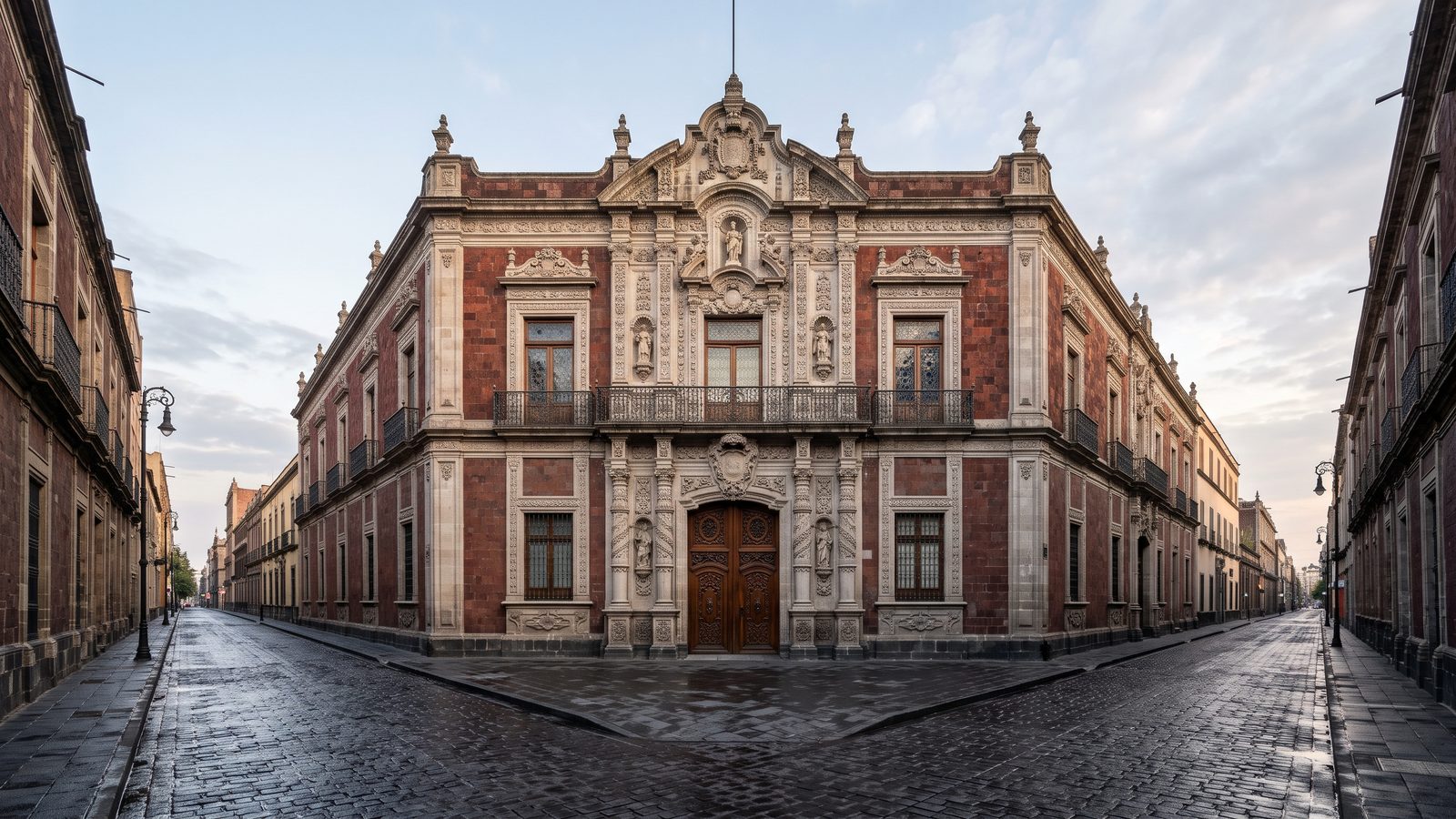
Welcome to the Palace of the Counts of San Mateo de Valparaíso, an 18th-century Baroque masterpiece located in the heart of Mexico City's historic center. Built between 1772 and 1776, this impressive residence stood as a testament to the immense silver wealth of New Spain. Today, the architectural gem famously houses Banamex, seamlessly blending colonial history with modern commercial life.
On this audio tour, you will admire the palace's striking red tezontle stone facade, ornate carvings, and elegant architectural details while discovering the history, culture, and high-society life of colonial Mexico.
Listen to a sample
The opening of this tour, exactly as AllTours narrates it on site.
What you'll hear on this tour
Stop 1. The Silver Count's Colonial Residence
You stand before a magnificent 18th-century mansion born from silver wealth. Construction began in 1772 under Don Fernando de la Campa y Cos, the first Count of San Mateo de Valparaíso. Having amassed an extraordinary fortune from the rich silver mines of Zacatecas, the Count designed this residence as a striking statement of power and prestige. During this zenith of the Viceroyalty of New Spain, opulent private homes served as vital centers for political influence and elite social gatherings. As you admire the facade, you reflect on how this grand palace encapsulates a pivotal moment in Mexico's colonial past, embodying the immense prosperity of its aristocratic owners.
Stop 2. Tezontle, Cantera, and Craftsmanship
As you examine the palace's stunning exterior, notice the striking interplay of contrasting local materials that define Mexican Baroque architecture. Deep volcanic red tezontle stone forms the durable walls, offering a rich texture and remarkable lightness. Framing every window, doorway, and cornice is creamy, intricately carved limestone, creating a vibrant visual balance. You can marvel at the Churrigueresque ornamentation surrounding the main portal, where pilasters, floral motifs, and broken pediments flow across the surface. Take in the delicate wrought-iron balcony railings, crafted by master artisans, alongside the elegant central patio designed to fill the interior spaces with light and fresh air.
Stop 3. The Drama of Mexican Baroque
Look closely at the facade to appreciate its theatrical Baroque composition. Notice the estípite columns, an iconic New Spanish Baroque innovation featuring inverted pyramidal sections that draw your eye upward with dynamic energy. This architecture rejects static classicism in favor of movement, light, and shadow. You see how broken pediments, elaborate scrollwork, and deeply carved volcanic stone create an undulating surface around the portal. Built during an era when architecture functioned as grand storytelling, this expressive design transforms the palace into a living sculpture, visually declaring the Count's wealth, piety, and standing to every passerby in the colonial city.
Stop 4. Tertulias and Colonial Elite Life
Step into the story of colonial Mexican life that unfolded within these grand walls. Imagine the lively tertulias hosted here, where Mexico City's intellectual and cultural elite gathered for music, poetry recitals, and animated discussions. The palace decor integrated talavera pottery, reflecting a unique fusion of Spanish ceramic traditions and indigenous artistic motifs. You can picture elaborate dining rituals where imported European silver service met regional ingredients, showcasing a rich culinary blend. Indigenous artisans also carved the fine chiluca stone details, making this residence a living dialogue between European Baroque aesthetics and local artistic identity.
Stop 5. At the Epicenter of Historic Mexico City
You are standing in the heart of Mexico City's historic downtown, where this palace has anchored power and commerce for centuries. Its prime location placed the Counts of San Mateo de Valparaíso just blocks from the Plaza de la Constitución, or Zócalo, allowing them to directly observe and influence the city's urban pulse. From these avenues, horse-drawn carriages and merchants once converged near the family's residence. The palace facade, crafted from red tezontle and light stone, became a landmark of the colonial city center, highlighting how the Count's mining wealth helped shape the economic dynamism of New Spain.
Stop 6. A Living Monument of Mexican Heritage
As you conclude your tour, consider how this residence remains a vital part of Mexico's cultural legacy. Designated as a National Historic Monument, the building preserves both its elaborate Baroque exterior and its refined interior spaces. Today, the historic structure famously houses Banamex, one of Mexico's largest banking institutions, seamlessly blending colonial heritage with modern commercial life. Meticulous restoration work ensures that the Valparaíso family's architectural legacy remains accessible. As you gaze at its preserved details, you connect directly with centuries of artistry, power, and the shared identity of Mexico City.
Planning your visit
- Best time to go
- Morning on weekdays for clear natural light on the facade and fewer downtown street crowds.
- Approximate duration
- about 45 minutes
- Where to start
- In front of the main entrance facade on Calle Isabel la Católica in Mexico City's historic center.
Access and conditions change seasonally — check the official site before you go.
Frequently asked questions
Is Palacio de los Condes de San Mateo de Valparaíso worth visiting?
Yes, it is one of the finest examples of 18th-century Mexican Baroque architecture in Mexico City, famed for its contrasting red tezontle and white stone facade.
How long do you need at Palacio de los Condes de San Mateo de Valparaíso?
Most visitors spend around 30 to 45 minutes taking in the exterior facade, architectural details, and central patio.
Who built the Palacio de los Condes de San Mateo de Valparaíso?
Construction began in 1772 under Don Fernando de la Campa y Cos, the first Count of San Mateo de Valparaíso, who funded the palace through his silver mining fortune from Zacatecas.
Keep exploring
Header image is an AI-generated illustration of Palacio de los Condes de San Mateo de Valparaíso. AllTours.ai is an AI audio tour guide — point your camera at any landmark and hear its story.