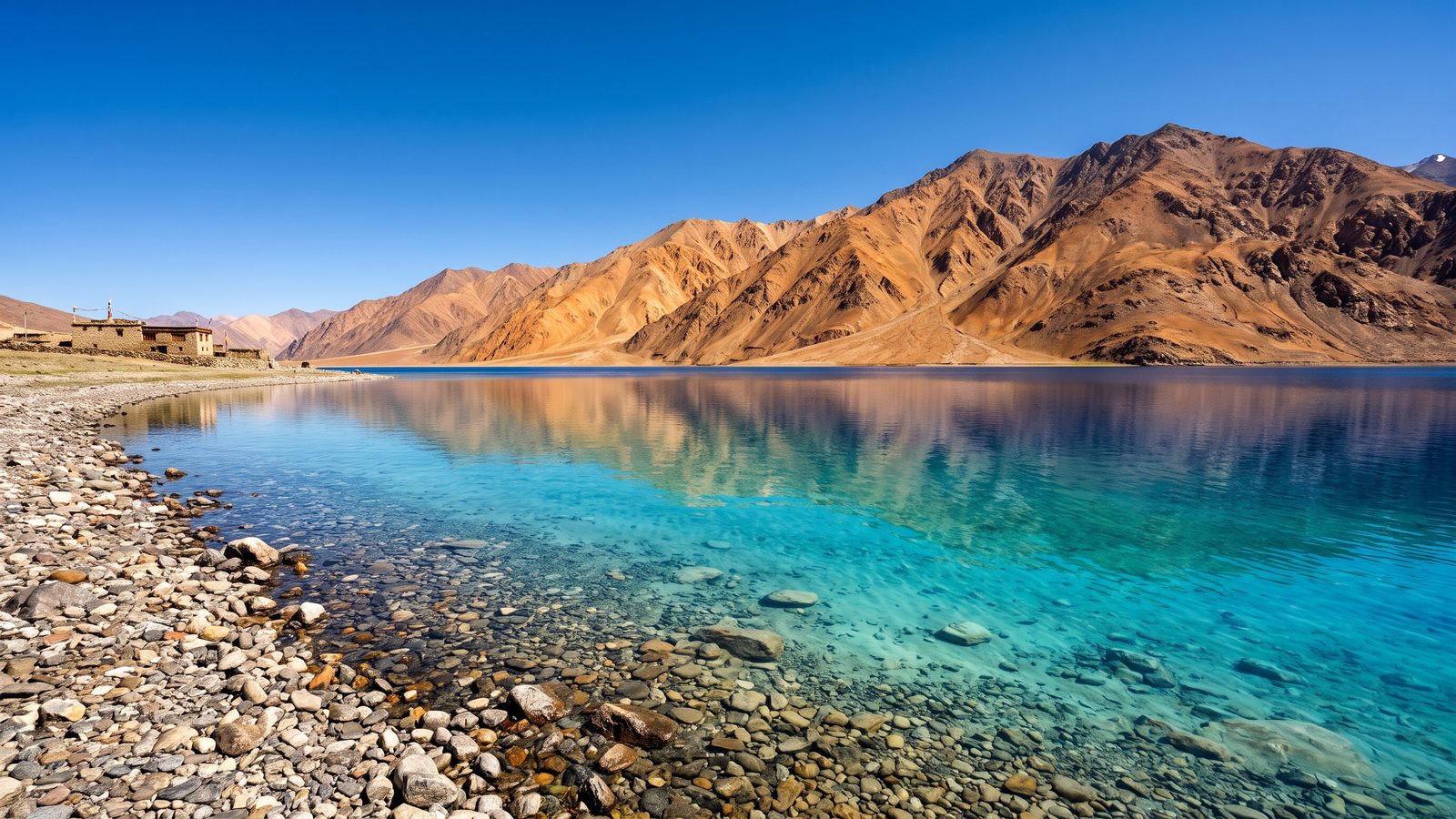
Welcome to Pangong Lake, an immense high-altitude saltwater marvel perched at 4,225 meters in Leh, Ladakh. Stretching over 130 kilometers across international borders, this endorheic basin mesmerizes visitors with its ever-changing canvas of azure, turquoise, and emerald green. Framed by dramatic, barren Trans-Himalayan ranges, Pangong offers an unforgettable escape into one of the world's most serene and starkly beautiful alpine landscapes.
As you stand along the shoreline, you witness millions of years of geological drama. From migratory bird havens to iconic cinematic backdrops, this self-guided audio experience leads you through the natural wonders, rich wildlife, and sacred mountain lore that define the very soul of the Himalayas.
Listen to a sample
The opening of this tour, exactly as AllTours narrates it on site.
What you'll hear on this tour
Stop 1. A Living Canvas of Color
You stand before a living canvas of light and water. As intense high-altitude sunlight strikes the surface, you watch Pangong Lake shift effortlessly from deep sapphire to ethereal turquoise and emerald green. Beyond the water, barren mountains cradle this vast expanse, their ancient faces patterned with subtle veins of ochre, rust, and purple. The sheer scale takes your breath away as distant shores blur into the horizon. Crystal-clear mountain air makes every jagged peak appear extraordinarily sharp, while the mirror-like reflections duplicate the sky and towering heights beneath your feet, wrapping you in a profound sense of stillness and wonder.
Stop 2. Resilient Life of the High Desert
You gaze beyond the shifting waters to discover a thriving alpine sanctuary. Despite the harsh salinity and thin air, thousands of migratory birds make this high-altitude haven their seasonal home. You hear the echoing calls of bar-headed geese navigating Himalayan passes, while rusty-feathered Brahmini ducks dabble in the shallows. Along the rocky shorelines, Great Crested Grebes perform intricate courtship rituals. If you scan the surrounding terrain, you may spot Himalayan marmots basking on sun-warmed boulders or hear their sharp warning whistles. Farther across the remote plains, the majestic Kiang, or Tibetan wild ass, gallops freely across this untamed landscape.
Stop 3. Titans of Continental Collision
You lift your eyes to the staggering Himalayan peaks that form the very backbone of Asia. Here, you witness the immense power of tectonic force as the Indian plate presses beneath the Eurasian plate, pushing these mountains toward the sky. These massive sentinels block monsoon clouds, carving the dry, high-altitude desert you experience today. Observe the twisted, uplifted layers of ancient sedimentary rock along the ridges. For the local Changpa nomads, these sacred ranges harbor ancient spirits and provide vital alpine pastures. Standing in their shadow, you feel the raw, silent energy that has shaped life and weather across the region for millennia.
Stop 4. The High Saline Miracle
You look out across an extraordinary endorheic basin resting at an altitude of 4,225 meters. With no natural outlet, Pangong Lake concentrates its natural salts and minerals, creating brackish waters that reflect impossible shades of blue and green under changing sunlight. Extending over 130 kilometers, this vast body of water straddles two nations, with about a third situated inside India. Despite the saline waters, migratory birds like Brahmini ducks and bar-headed geese arrive each year to breed. Local Changpa nomads believe the lake is a living guardian spirit whose shifting hues mirror the very soul of the surrounding Himalayas.
Stop 5. Guardians of the Trans-Himalayas
You turn your attention to the imposing Chang-Chenmo range, a stark Trans-Himalayan system framing the northern sky. Formed by millions of years of grinding tectonic plates, these treeless slopes reveal a striking color palette of slate grey, deep purple, and ochre that transforms as clouds drift overhead. Carved by relentless winds and ice, these ancient slopes direct glacial melt down into the lake below. As you admire their rugged beauty, you sense the silent power of these ancient mountains, which have long served as natural guardians, guiding trade routes and defining historical boundaries across this high desert realm.
Stop 6. The Iconic Turquoise Backdrop
You marvel at the sprawling beauty of this high-altitude saltwater marvel stretching 130 kilometers across international borders. As you stand by the shore, you observe how the brackish water freezes solid during cold winters, supporting migratory birds rather than fish. Ancient trade routes once passed beside these shores, leaving a quiet legacy of travel and exchange. You may also recognize this serene vista as the famous backdrop from the climax of the Bollywood film '3 Idiots.' Surrounded by shifting blues and towering peaks, you feel the deep, lasting peace of a landscape that truly touches the soul.
Planning your visit
- Best time to go
- May to September for clear skies and accessible roads; early morning offers the calmest waters and vivid color reflections.
- Approximate duration
- about 2 hours
- Where to start
- Pangong Lake shoreline viewpoint near Lukung village.
Access and conditions change seasonally — check the official site before you go.
Frequently asked questions
Is Pangong Lake worth visiting?
Yes, Pangong Lake is famous for its stunning, color-changing brackish waters set against dramatic Himalayan peaks, offering a unique high-altitude desert landscape that attracts travelers from around the globe.
How long do you need at Pangong Lake?
Most visitors spend 2 to 4 hours exploring the shoreline and taking photos, though staying overnight in nearby eco-camps allows you to witness incredible sunset and sunrise color shifts.
How was Pangong Lake formed?
Pangong Lake formed in a closed endorheic basin created by millions of years of tectonic activity during the continental collision between the Indian and Eurasian plates.
Keep exploring
Header image is an AI-generated illustration of Pangong Lake. AllTours.ai is an AI audio tour guide — point your camera at any landmark and hear its story.