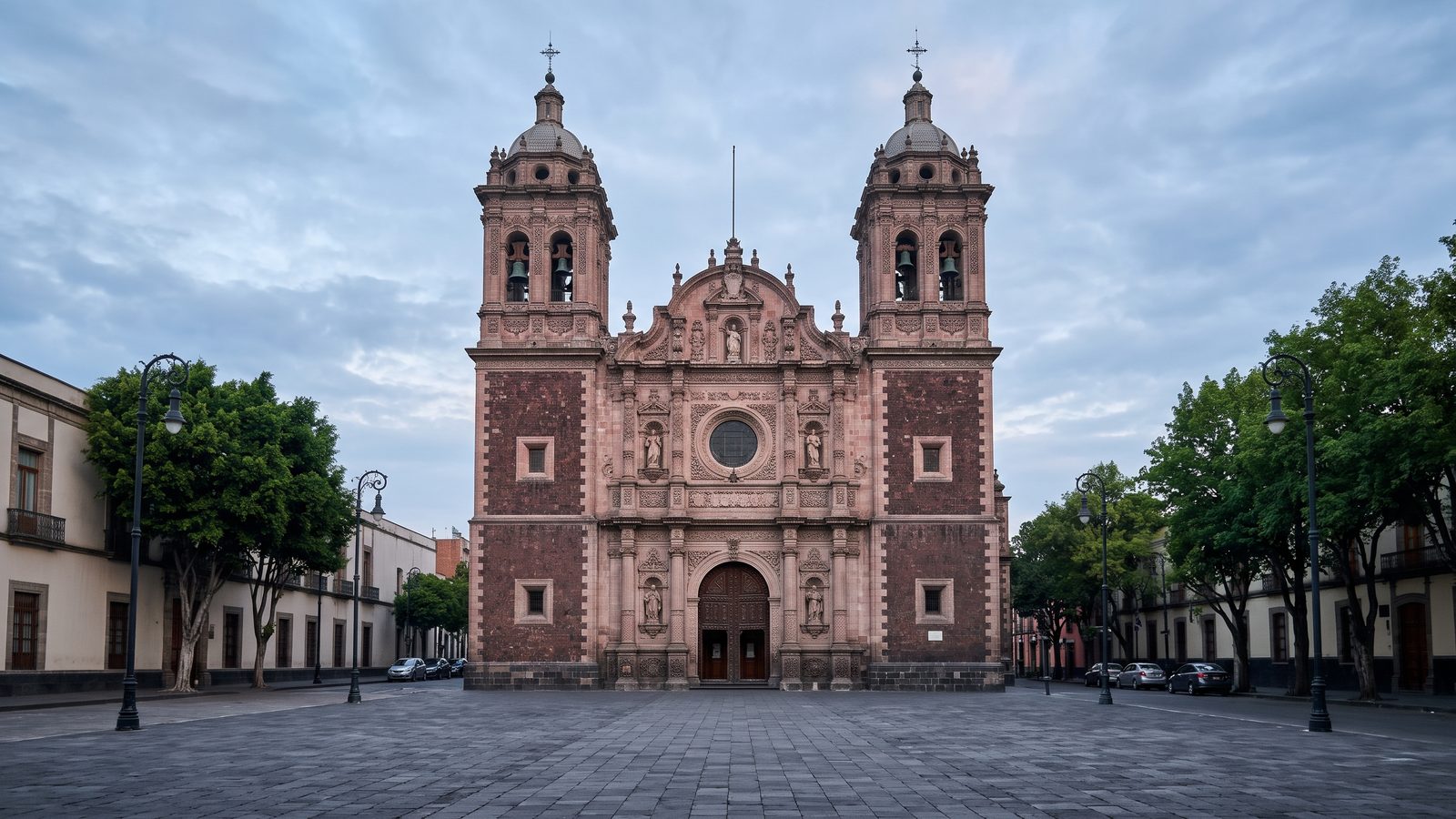
Welcome to the Parish of San Hipólito and San Casiano, an enduring sanctuary in the heart of Mexico City. From its late 16th-century roots as a humble hermitage to its transformation into a colonial Baroque masterpiece, this sacred parish has stood resilient through centuries of revolutions and restorations. Step inside to discover a living chronicle of faith, community traditions, and brilliant artistic expression that continues to inspire visitors.
As you walk these grounds, you will explore majestic stone carving, gilded altarpieces, and vibrant living traditions. This self-guided audio tour guides you through the rich architectural details, sacred stories, and quiet corners of one of Mexico City's most historic and culturally significant places of worship.
Listen to a sample
The opening of this tour, exactly as AllTours narrates it on site.
What you'll hear on this tour
Stop 1. The Churrigueresque High Altar
Look up at the high altar, the spiritual and artistic centerpiece of the parish. Commissioned in the late seventeenth century, this masterpiece represents Churrigueresque Baroque art at its finest, crafted from carved wood and shimmering gold leaf. As you admire its intricate retablo, notice the dynamic movement of the figures, especially the flanking angels with outstretched hands guiding your gaze upward. The central statue of San Hipólito carries local legend; elders say a relic inside once miraculously protected the community from a devastating epidemic. Every gilded curve, bloom, and column serves as a visual sermon, reflecting the deep devotion and incredible skill of the master artisans who created it.
Stop 2. Baroque Stonework and Soaring Heights
Stand before the church facade to admire its dynamic Baroque design, carved from vibrant cantera stone. You see twin bell towers rising in rhythmic harmony, adorned with delicate balustrades that catch the sunlight. The central portal functions as a retablo facade, framed by spiraling Solomonic columns and sculpted saints set into delicate niches. Above, an elegant Neoclassical dome with a lantern fills the sanctuary with soft light. As you step inside, notice how the soaring frescoed barrel vaulting lifts your eyes heavenward. Even the sturdy exterior buttresses guide your gaze along the length of the building, creating an impressive architectural balance between structural strength and artistic grandeur.
Stop 3. Centuries of Continuous Devotion
You are standing on ground where continuous devotion spans over four centuries. Your journey begins in the late sixteenth century, when a modest hermitage first occupied this site. As the local community expanded, ambitious construction on the present church began in the early seventeenth century to honor the early Christian martyrs, San Hipólito and San Casiano. Over the ages, this resilient structure weathered intense political turmoil, revolutions, occupations, and major seismic activity in the late nineteenth century. Though careful restorations preserved its delicate elements, the core building maintains its original Baroque majesty, standing as an enduring symbol of spiritual stability through Mexico City's vibrant and changing history.
Stop 4. The Pulsating Soul of the Community
Step deeper into the parish to experience the vibrant cultural heartbeat of this sanctuary. This church functions as a living center for local traditions and shared heritage. If you visit in August during the Feast of San Hipólito, you witness the surrounding streets erupt into vibrant color, thrumming to the steady rhythm of traditional drums during solemn processions. Generations of families gather to carry revered effigies through the neighborhood. Inside the nave, you notice intricate floral arrangements painstakingly created by local parishioners using seasonal blossoms. Beyond the stone walls, the quiet hum of prayers carries local cadences, showing how deeply faith, art, and communal bonds weave together here.
Stop 5. Capturing Light, Shadow, and Texture
Frame your photos around the dramatic play between natural light and ancient stone. In the late afternoon, soft sunlight streams through high clerestory windows, casting long, evocative shadows that accentuate the three-dimensional depth of the main altarpiece. Look closely to capture intimate details: zoom in on the filigree silver reliquaries, delicate brushstrokes in side chapels, or the worn wood of confessional booths that speak to generations of visitors. For a striking architectural perspective, crouch low and shoot upward toward the soaring arches and vaulting of the nave. You are not just photographing a building; you are capturing quiet moments of peace, history, and light written across sacred stone.
Stop 6. Sacred Echoes and Martyr Convictions
Pause to absorb the deep spiritual atmosphere surrounding you in this sacred sanctuary. Consecrated to early Christian martyrs San Hipólito and San Casiano, this parish honors their unwavering conviction under persecution. As you observe the detailed altarpiece, you see carved scenes illustrating the lives and sacrifices of these patron saints, designed to guide the faithful through narratives of salvation. Imagine centuries of quiet prayers, festive baptisms, and solemn masses echoing through the nave. Breathe in the lingering scent of incense and notice the worn kneelers beneath the pews—touching reminders of personal encounters with the divine that make this church a deeply lived space of continuous worship and solace.
Planning your visit
- Best time to go
- Late afternoon for optimal lighting through the clerestory windows, or during August for the Feast of San Hipólito celebrations.
- Approximate duration
- about 45 minutes
- Where to start
- Begin at the main exterior facade along the plaza before stepping into the central nave.
Access and conditions change seasonally — check the official site before you go.
Frequently asked questions
Is Parish of San Hipólito worth visiting?
Yes, the Parish of San Hipólito is highly worth visiting for its magnificent Churrigueresque Baroque architecture, gilded high altar, rich 17th-century colonial history, and vibrant local traditions.
How long do you need at Parish of San Hipólito?
Most visitors spend between 30 to 60 minutes exploring the exterior facade, admiring the gilded altarpieces inside, and appreciating the quiet historic atmosphere.
What is the history behind the Parish of San Hipólito?
Originally established as a modest hermitage in the late 16th century, construction of the current Baroque church began in the early 17th century to honor Christian martyrs San Hipólito and San Casiano.
Keep exploring
Header image is an AI-generated illustration of Parish of San Hipólito. AllTours.ai is an AI audio tour guide — point your camera at any landmark and hear its story.