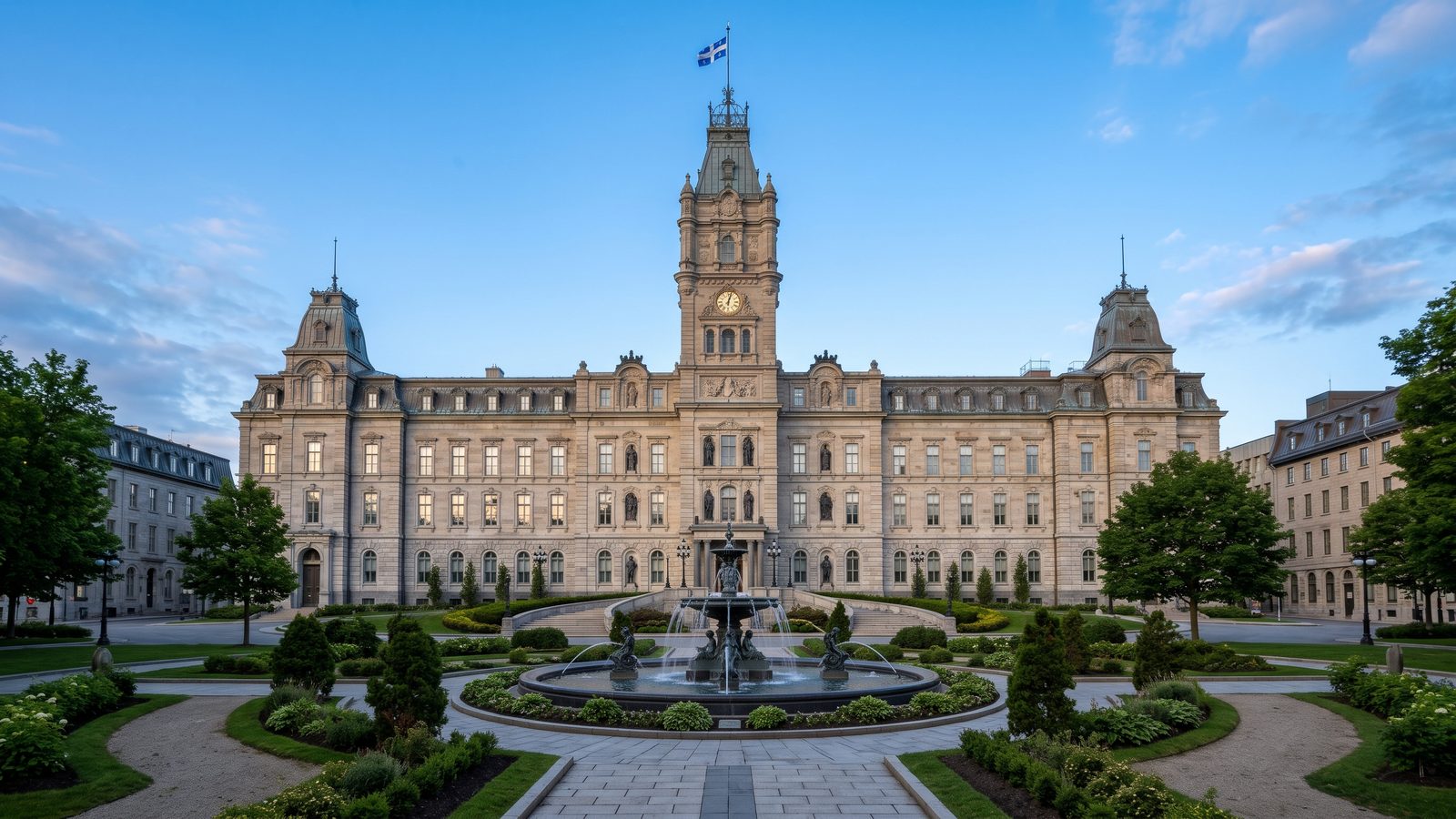
Welcome to Quebec City's magnificent Parliament Building, a grand monument to provincial governance standing proudly at the edge of Historic Old Quebec. Designed by architect Eugène-Étienne Taché and constructed between 1877 and 1886, this National Historic Site showcases stunning Second Empire architecture. As you explore its expansive grounds and imposing stone facade, you step into a century-old realm of legislative debate, democratic tradition, and rich Quebec heritage.
This self-guided audio tour leads you through the history, artistic details, and grand design of Quebec's premier civic landmark. Immerse yourself in the stories carved into stone and bronze as you wander around the impressive exterior and surrounding gardens at your own relaxed pace.
Listen to a sample
The opening of this tour, exactly as AllTours narrates it on site.
What you'll hear on this tour
Stop 1. Grand Second Empire Monument
You gaze upon the magnificent Parliament Building in Quebec City, a grand monument of provincial governance that has stood as a fixture for over a century. Designed by architect Eugène-Étienne Taché, its elegant Second Empire style immediately impresses you. As you walk along the expansive front, you admire the facade stretching approximately 100 meters, adorned with 22 bronze statues that honor key figures from Quebec's rich past. Constructed between 1877 and 1886, and designated a National Historic Site of Canada in 1985, this historic landmark embodies the region's vibrant heritage. You feel the echoes of history and spirited political debate lingering around these impressive grounds.
Stop 2. Neo-Gothic Splendor and Symbolism
As your gaze sweeps across the Parliament Building, you immediately grasp the profound statement its resplendent architecture makes. You notice the deliberate choice of local limestone, precisely cut by tireless masons to imbue every facade with enduring strength. Look closer at the detailed stone carvings adorning the archways and cornices, forming a gallery of national flora, fauna, and historic figures. Your eyes climb the central clock tower, piercing the sky with its intricate copper spire burnished to a rich patina. You see how large multi-paned windows flood the chambers with natural light, symbolizing transparency, while robust buttresses and leaded glass inspire civic pride.
Stop 3. Masterpieces in Glass and Bronze
Beyond the legislative chambers, you explore an exquisite artistic legacy woven into the building's fabric. You stand in awe before the breathtaking stained-glass masterpiece dominating the Grand Gallery, where artisan Eleanor Vance meticulously depicts allegories of justice and liberty. Moving through the corridors, you observe detailed early 20th-century historical murals by artists like Marcus Thorne, capturing pivotal national moments that educate and inspire. You discover subtle bronze reliefs adorning committee room doors, presenting miniature narratives of shared values. Everywhere you look, from sculpted cornices to column capitals, a continuous frieze of national symbols invites you to appreciate the visual storytelling around you.
Stop 4. Bronze Mentors and Historic Figures
Traversing these historic corridors, you walk in the company of the figures who shaped the nation's destiny. You examine sculpted friezes along the Grand Hall detailing the visages of founding delegates who negotiated for independence during constitutional conventions. Inside the Hall of Champions, you find meticulously rendered busts honoring society's pillars, from pioneering suffragettes fighting for equal rights to acclaimed scientists advancing progress. In the main lobby, you stand before an imposing bronze statue of the first Prime Minister, his outstretched hand serving as a silent invitation to uphold democratic ideals. These silent mentors remind you of the sacrifices that built this enduring democracy.
Stop 5. Serene Grounds and Living History
Stepping into the Parliament gardens, you experience a calming shift away from the grand solemnity of the building interior. You notice formal flower beds designed to echo the building's architectural symmetry, showcasing vibrant indigenous flora like the seasonal National Laurel. You pause by the central tiered fountain, where local lore suggests the gentle murmur of water once inspired crucial compromises during deadlocked parliamentary sessions. Further along, you discover the secluded Statesman's Grove, where oak saplings planted by former prime ministers stand as living testaments to democratic legacies. You admire the curated herb garden, whose historical plants connect this modern institution to pioneering settlers.
Stop 6. Living Traditions of Democratic Character
Beyond written laws, you discover the rich cultural tapestry woven into Parliament's daily operations. Your gaze locks onto the gleaming mace paraded with solemn dignity, an ancient symbol of sovereign authority and a powerful cultural anchor stretching back centuries. You sense the distinctive decorum governing parliamentary discourse, where impassioned debates adhere to an unwritten code of mutual respect. You observe the Speaker's elaborate robes, which serve as a living textile archive of parliamentary continuity and reverence for custom. As formal addresses to the Chair unfold, traditional expressions reflect a unique national discourse that celebrates vigorous verbal exchange as the cornerstone of civic life.
Planning your visit
- Best time to go
- Morning or late afternoon for optimal light on the historic facade and quieter garden strolls.
- Approximate duration
- about 1 hour
- Where to start
- In front of the main facade along Boulevard René-Lévesque East.
Access and conditions change seasonally — check the official site before you go.
Frequently asked questions
Is Parliament Building worth visiting?
Yes, the Parliament Building (Hôtel du Parlement) is a premier National Historic Site in Quebec City, renowned for its magnificent Second Empire architectural facade, 22 historical bronze statues, and scenic surrounding grounds.
How long do you need at Parliament Building?
Most visitors spend about 45 to 60 minutes taking in the impressive exterior architecture, statutory figures, and formal gardens.
When was the Quebec Parliament Building built and who designed it?
The Quebec Parliament Building was designed by architect Eugène-Étienne Taché in the Second Empire style. Construction began in 1877 and was completed in 1886.
Keep exploring
Header image is an AI-generated illustration of Parliament Building. AllTours.ai is an AI audio tour guide — point your camera at any landmark and hear its story.