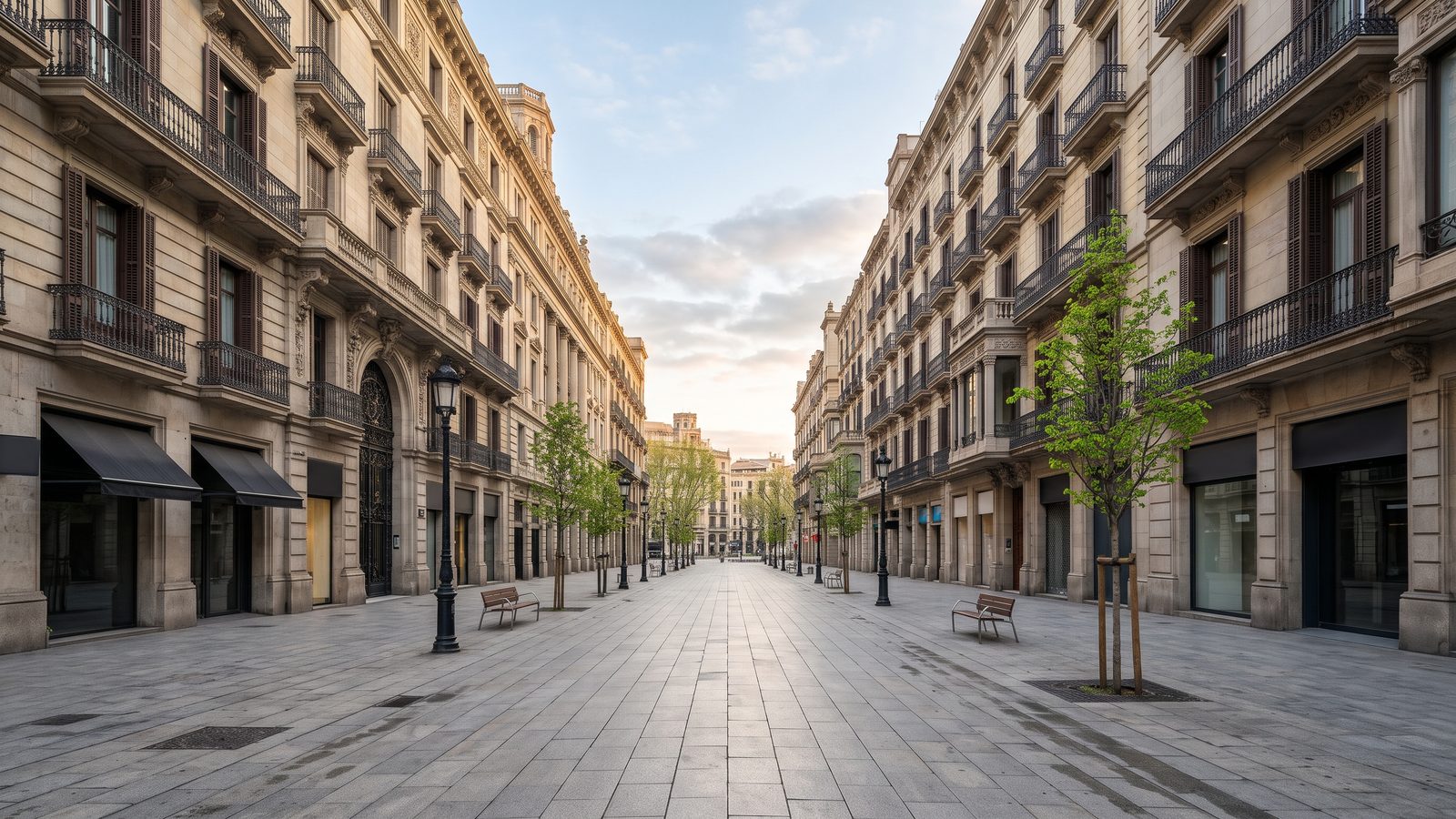
Welcome to Portal de l'Àngel, one of Barcelona's most historic and energetic avenues. Linking Plaza de Catalunya to the medieval heart of the Gothic Quarter, this bustling pedestrian thoroughfare offers a captivating blend of grand commercial energy and rich architectural heritage. As you walk along these polished stone paths, you step directly into a living stage of Catalan tradition, where centuries of history seamlessly intertwine with dynamic modern city life.
This self-guided audio tour takes you along the street's layered narrative, from ancient city entryways to stunning Modernisme facades, vibrant street performances, and classic culinary traditions. Prepare your senses to experience the authentic rhythm of the city as you uncover the enduring spirit of Portal de l'Àngel.
What you'll hear on this tour
Stop 1. From Medieval Path to Retail Gateway
You step onto Portal de l'Àngel and instantly feel the vibrant pulse of Barcelona's commercial heart. Once a historical path traveled by medieval merchants, this grand promenade now hosts expansive flagship stores for major international fashion houses and beloved Spanish brands like Zara and Mango. As you move between multi-story emporiums, you participate in the traditional paseo, where browsing and people-watching seamlessly blend. Look closely at the shopfronts around you; ornate modernist details balance against sleek contemporary designs. Street performers adjust their daily acts to the rhythm of the shopping crowds, making your journey along this famous commercial artery feel like an engaging, essential Barcelona experience.
Stop 2. Upper Balconies and Layered Urban Planning
Direct your eyes upward above the vibrant modern shopfronts to uncover the true architectural ensemble of Portal de l'Àngel. You discover an elegant mix of 19th-century eclecticism and early Modernisme decorating the upper levels. Notice the gracefully curved wrought-iron balconies and intricate friezes that reflect Barcelona's historic prosperity. Contrast the deliberate width of this open promenade with the tight, labyrinthine alleys of the adjacent Gothic Quarter just behind you. The subtle variations in local stone and later stucco applications illustrate centuries of urban adaptation. Here, continuous building facades form an impressive urban canyon designed to guide foot traffic in functional, beautiful style.
Stop 3. The Art of the Catalan Paseo
Beyond the bustling shops, you experience the true social pulse of the city through the cherished Catalan tradition of the paseo. This broad avenue serves as an open stage where locals and visitors gather to stroll, see, and be seen. Musician melodies and living statues fill the air with spontaneous artistic energy, turning the thoroughfare into a shared community living space. The name Portal de l'Àngel itself carries deep cultural weight, recalling a guardian angel that symbolically watched over the historic city threshold. As you walk, you feel how this vibrant avenue functions as a vital artery of Barcelona's collective identity and artistic soul.
Stop 4. Centuries of Stories on the Promenade
Imagine the vast human tapestry that has crossed this ground across the ages. Centuries ago, medieval citizens, returning knights, and cloaked merchants passed through this area beneath the protective gaze of the original angel statue. Today, you are part of a new mix of humanity: local barcelonís meeting for an evening stroll, families out together, and international street artists weaving their own narratives into the city fabric. Look at the performers around you, carrying forward generations of storytelling and artistic craft. From historic gatherings to personal everyday encounters, this avenue remains a dynamic stage where diverse lives intersect, creating Barcelona's living urban story.
Stop 5. Aromas of Tapas and Traditional Granjas
As you explore, enticing scents draw your attention toward Barcelona's rich culinary traditions. The aroma of freshly baked bread from a panadería and savory jamón ibérico from a neighborhood bodega fill the air. While medieval traders once sought hearty meals like escudella i carn d'olla in nearby taverns, today you can sample classic tapas like crispy patatas bravas and blistered pimientos de Padrón. For a cozy treat, seek out a traditional granja, a historic dairy shop, to enjoy a rich suís—thick, hot chocolate topped with sweet whipped cream. Every culinary stop along this ancient route connects deep Catalan traditions with modern tastes.
Stop 6. Polished Paving Stones and Urban Soundscapes
Feel the smooth, polished paving stones beneath your shoes, worn down by centuries of footsteps passing through Barcelona. You are part of a continuous human stream, moving gently within a shared urban rhythm. Listen carefully as your senses take in the surrounding soundscape: friendly chatter, distant acoustic music, and the distinct rustle of shopping bags blending together. As you walk, your gaze naturally shifts from detailed architectural features high above to bright window displays at ground level. Each step you take along this historic route follows ancient Roman and medieval pathways, adding your own journey to the ongoing story of Portal de l'Àngel.
Planning your visit
- Best time to go
- Morning (10:00 AM – 12:00 PM) for quieter architectural viewing, or late afternoon (5:00 PM – 8:00 PM) to experience the lively evening paseo and street music.
- Approximate duration
- about 45 minutes
- Where to start
- Avinguda Portal de l'Àngel at the intersection with Plaça de Catalunya.
Access and conditions change seasonally — check the official site before you go.
Frequently asked questions
Is Portal de l'Àngel worth visiting?
Yes, Portal de l'Àngel is one of Barcelona's most vibrant pedestrian avenues, renowned for its flagship shopping, historic Modernisme architecture, lively street performers, and direct connection to the Gothic Quarter.
How long do you need at Portal de l'Àngel?
A typical walk along Portal de l'Àngel takes about 30 to 45 minutes. If you plan to shop in its major fashion emporiums or stop at a granja for traditional hot chocolate, allow 1 to 2 hours.
What is the historical origin of Portal de l'Àngel's name?
The street takes its name from a medieval city gate once crowned with a sculpture of a guardian angel, believed to offer celestial protection to everyone entering or departing old Barcelona.
Keep exploring
Header image is an AI-generated illustration of Portal de l'Àngel. AllTours.ai is an AI audio tour guide — point your camera at any landmark and hear its story.