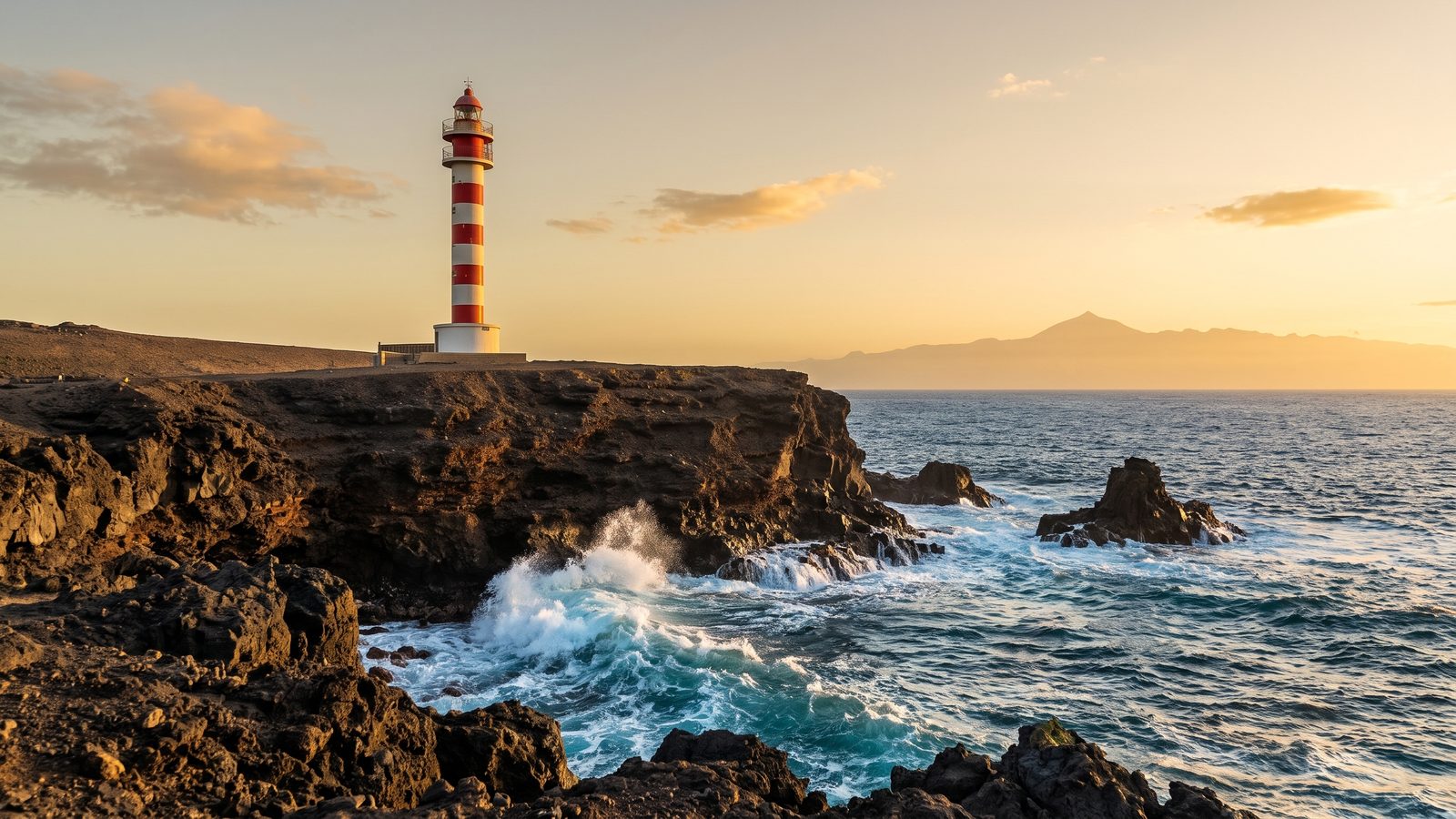
Welcome to Punta Sardina Lighthouse, standing proudly on the rugged northern tip of Gran Canaria in Gáldar. Built in 1890, this striking white tower with its red lantern room has guided generations of mariners through treacherous Atlantic waters. As you walk along the dark basalt cliffs, you will experience a landscape shaped by ancient volcanic eruptions, sweeping ocean breezes, vibrant marine life, and unforgettable sunset panoramas overlooking the ocean.
This self-guided audio tour reveals the history of local lighthouse keepers, the unique flora clinging to coastal fissures, and secret spots like El Charcón cove. Set your own pace as you take in dramatic views across the water, where on clear days, the silhouette of neighboring Tenerife appears on the horizon.
Listen to a sample
The opening of this tour, exactly as AllTours narrates it on site.
What you'll hear on this tour
Stop 1. The Sentinel of the Northern Soul
You stand before the striking cylindrical tower of Punta Sardina Lighthouse, an enduring symbol of human resilience since its inauguration in 1890. Built from robust local volcanic stone, this structure easily endures the fierce Atlantic gales that batter Gran Canaria's northern shores. As you gaze up at the tower, picture the early lighthouse keepers who manually maintained its rhythmic light through long, solitary nights. You can appreciate how its original oil lamp eventually gave way to modern electric lighting while still utilizing an intricate Fresnel lens to magnify the beam. Today, this fully automated beacon continues its tireless vigil, casting a reassuring white pulse across the ocean night after night.
Stop 2. Capturing the Golden Hour Light
You hold your camera ready as the golden hour light bathes the white tower in a warm, captivating glow against the deep blue Atlantic. Frame your shots using a wide-angle lens to capture the winding path and hardy native succulents in the foreground, framing the lighthouse in its isolated grandeur. As dusk approaches, you position yourself so the setting sun aligns behind the lantern room, creating a striking silhouette against the burning sky. You can also experiment with long-exposure photography down by the crashing waves, turning the churning surf into an ethereal sea mist while keeping the stoic volcanic structure crisply in focus.
Stop 3. Endless Horizons and Distant Peaks
You step onto the scenic viewing platform where the vast expanse of the Atlantic Ocean stretches infinitely before you. Fresh sea breezes carry the scent of salt as your eyes trace the dramatic volcanic coastline curving gracefully toward hidden coves. On clear days, you look west to spot the distant silhouette of Tenerife, where Mount Teide rises dramatically above the hazy horizon. Below your feet, turquoise waters crash against dark basalt ledges in a continuous display of foam and spray. Whether you visit at dawn to see fishing boats head out or at dusk for a molten gold sunset, this breathtaking vista connects you directly to the ocean.
Stop 4. Volcanic Cliffs and Hidden Coves
You look down at the dark, layered basalt cliffs, carved over millennia by the relentless waves of the Atlantic Ocean. These formidable rock faces tell the silent story of ancient eruptions and constant coastal erosion at Gran Canaria's northern edge. Nestled at the base of these sheer drops, you notice sheltered spots like El Charcón cove, where local fishermen historically launched their small boats into challenging swells. These nutrient-rich waters are driven by the powerful Canary Current system, nourishing a thriving marine ecosystem beneath the surface. Today, descendants of those early seafarers still fish these waters for prized local species like the famous vieja parrotfish.
Stop 5. Tragedy, Triumph, and Automation
You explore a coastal headland whose history transformed dramatically during the late nineteenth century. Before this lighthouse arose in 1890, this treacherous coastline claimed many ships caught off guard by powerful currents and hidden reefs. You learn that erecting this navigational beacon required immense effort to transport building materials across rugged, undeveloped terrain. Early keepers lived in strict isolation, keeping a manual vigil with a paraffin vapor lamp that guided both local fishing fleets and international cargo vessels. Over time, the lighthouse transitioned through electrification and mid-twentieth-century automation, maintaining its vital role as Gran Canaria evolved into an important Atlantic maritime hub.
Stop 6. Resilient Life on the Volcanic Edge
You feel the energetic Atlantic wind carrying the fragrance of sea brine and wild coastal herbs across the headland. Looking closely at the basalt rocks, you see hardy Aeonium succulents clinging to narrow fissures, thriving on mineral-rich volcanic soil and constant salt spray. Above you, the sharp calls of yellow-legged gulls echo as they ride thermal winds, while Cory's shearwaters glide effortlessly across the updrafts. This windswept environment serves as a vital sanctuary and navigational waypoint for migratory birds traversing oceanic routes. Even in the harsh intertidal zone below, resilient endemic plants like Limonium demonstrate nature's remarkable ability to adapt.
Planning your visit
- Best time to go
- Late afternoon leading into sunset for optimal photography and clear ocean light.
- Approximate duration
- About 45 minutes
- Where to start
- Punta Sardina Lighthouse viewpoint parking area in Gáldar.
Access and conditions change seasonally — check the official site before you go.
Frequently asked questions
Is Punta Sardina Lighthouse worth visiting?
Yes, Punta Sardina Lighthouse offers exceptional Atlantic views, dramatic basalt cliffs, historic 1890 architecture, and some of the best sunset viewing spots in northern Gran Canaria.
How long do you need at Punta Sardina Lighthouse?
Most visitors spend between 30 and 60 minutes exploring the viewing areas, taking photos of the tower and coast, and admiring the ocean scenery.
When was the Punta Sardina Lighthouse built?
The lighthouse was built in 1890 to prevent shipwrecks along Gran Canaria's hazardous northern coast, initially operating with a paraffin lamp maintained by resident keepers.
Keep exploring
Header image is an AI-generated illustration of Punta Sardina Lighthouse. AllTours.ai is an AI audio tour guide — point your camera at any landmark and hear its story.