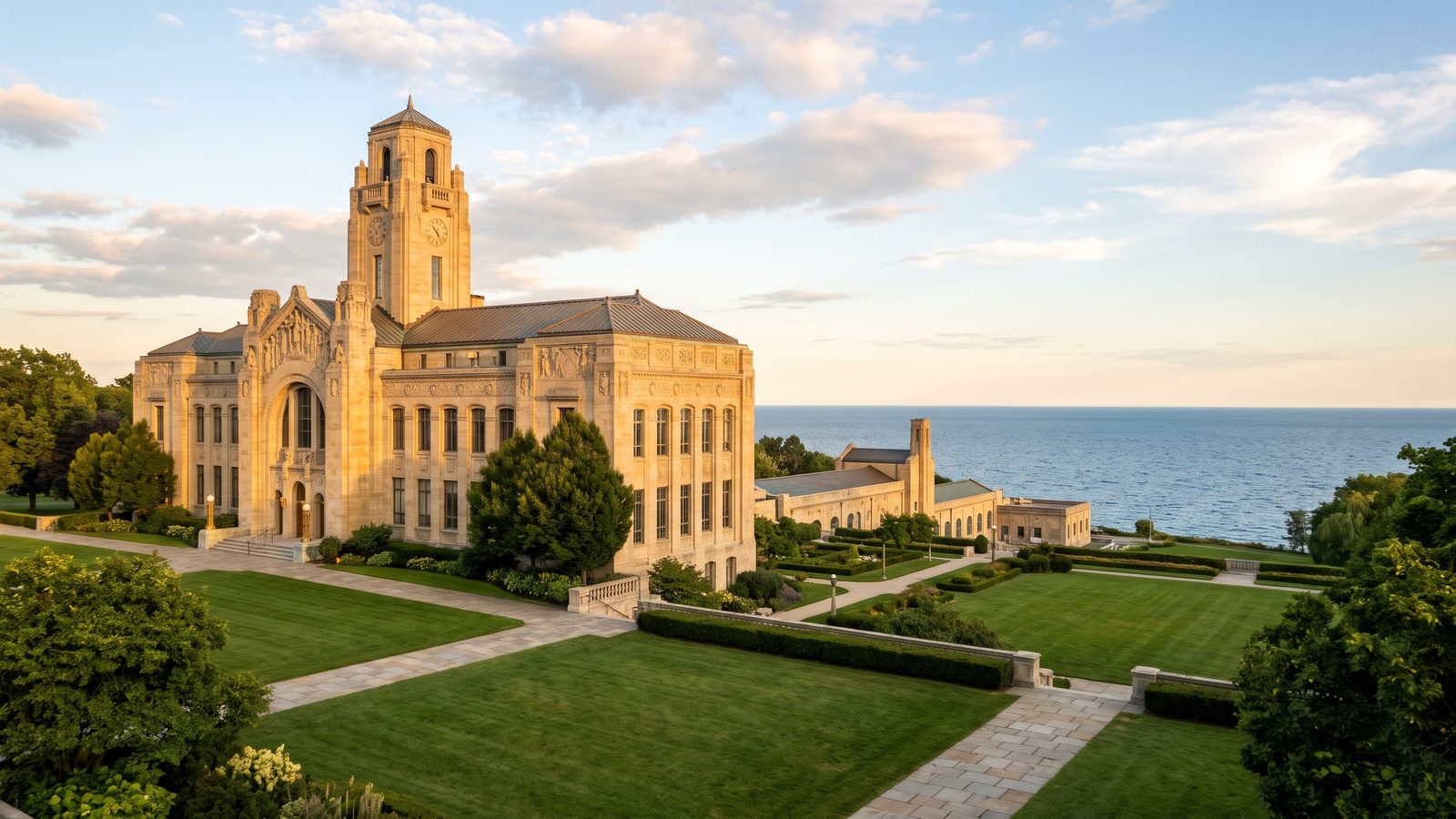
You stand before Toronto's remarkable "Palace of Purification," a stunning intersection of monumental civic architecture and essential municipal infrastructure. Perched on a dramatic bluff above Lake Ontario, the R.C. Harris Water Treatment Plant turns the simple act of filtering drinking water into a grand architectural statement. As you explore these lakeside grounds, you discover how vision, engineering, and Art Deco elegance united to safeguard public health and define the city's waterfront skyline.
This self-guided audio tour leads you through the history, design, and surrounding natural beauty of Toronto's largest water treatment facility. Experience the grand promenades, sweeping lake vistas, and majestic limestone facades while learning how Lake Ontario's raw waters transform into the pristine tap water powering the metropolis every day.
What you'll hear on this tour
Stop 1. The Monumental Art Deco Temple
As you take in the main building, you are immediately struck by the sheer audacity of its Art Deco design, masterfully crafted by chief architect Thomas C. Pomphrey. You observe meticulous symmetry and towering fluted pilasters that draw your eye up toward ornate friezes, lending a temple-like gravitas to the complex. Geometric patterns integrated into the buff brickwork and Queenston limestone celebrate the machine age's fascination with order. Intricate bronze grilles and proportioned windows exude strength and sophisticated elegance. You see firsthand how a purely functional water plant transforms into an enduring civic masterpiece celebrating public service.
Stop 2. The Astonishing Journey of Purification
You connect with the heart of this facility as Lake Ontario's raw water is drawn through colossal intake pipes miles offshore. You trace the astonishing metamorphosis from untamed lake water into crystal-clear drinking water right before your eyes. You follow the complex stages of purification, beginning with coagulation and flocculation where microscopic particles clump together. You look over vast, silent basins where these clumps settle during sedimentation. The water then flows through deep sand and gravel filters that polish it to exceptional clarity. Finally, precise disinfection ensures every drop reaching your tap stays completely safe and pure.
Stop 3. A Vision Born in the Great Depression
You step back in time to the early 1930s, when Toronto desperately needed a reliable, clean water supply. Commissioner Roland Caldwell Harris championed this monumental project, resisting utilitarian mindsets to envision an architectural marvel. Construction began in 1932, converting this lakeside bluff into a bustling hive of activity that provided essential employment during the hardships of the Great Depression. You can almost feel the energy of the workers and early machinery as this grand structure slowly rose from the lakeside earth. By 1941, the plant's powerful pumps roared to life, forever transforming the city's health and future.
Stop 4. Panoramic Vistas Across Lake Ontario
You step onto the grounds to absorb an extraordinary panorama unfolding before you. From this elevated vantage point, the Art Deco edifice commands a sweeping, unobstructed view across Lake Ontario's vast expanse. You see how the grand limestone facade and intricate carvings frame the water like a monumental proscenium arch. The horizon blurs into an endless canvas of sky and water, reflecting light that shifts continuously throughout the day. You realize early planners deliberately chose this high bluff so the plant would not only draw fresh water from the lake, but also stand as a proud sentinel safeguarding it.
Stop 5. Strolling the Grand Lakeside Promenade
You step onto the grand promenade encircling the main administration building, where meticulously laid brick pathways guide your steps alongside symmetrical facades. You feel the deliberate rhythm of Art Deco design in every stride as retaining walls curve smoothly to frame Lake Ontario. You imagine the daily routine of engineers and operators walking across terrazzo floors as the plant pulses around them. As you explore, you discover secluded courtyards hidden along these routes, offering quiet pockets of calm amidst industrial power. Each turn presents fresh perspectives, from polished bronze railings to soaring windows reflecting the open sky.
Stop 6. A Tranquil Sanctuary on the Bluff
You step onto the peaceful grounds and immediately feel a soothing shift in atmosphere. Commissioner Harris designed this public utility to double as a quiet sanctuary where architectural grandeur meets natural tranquility. You hear the gentle lapping of Lake Ontario against the shore, providing a calming rhythm beyond the monumental limestone walls. Meticulously landscaped terraces cascade toward the water, inviting you to pause and take a deep breath. You can sit upon the expansive lawns, soaking in the impressive scale of the Palace of Purification away from urban noise, guided by the balanced lines of Art Deco architecture.
Planning your visit
- Best time to go
- Late afternoon or early evening during golden hour for warm light on the limestone facade and clear lake views.
- Approximate duration
- About 45 to 60 minutes
- Where to start
- The grand promenade in front of the main administration building entrance.
Access and conditions change seasonally — check the official site before you go.
Frequently asked questions
Is R.C. Harris Water Treatment Plant worth visiting?
Yes, the R.C. Harris Water Treatment Plant is widely regarded as one of Toronto's finest architectural gems. Known as the 'Palace of Purification,' it combines magnificent Art Deco architecture with expansive, scenic public grounds overlooking Lake Ontario.
How long do you need at R.C. Harris Water Treatment Plant?
Most visitors spend about 45 minutes to an hour exploring the public exterior grounds, admiring the Art Deco facade, and taking in the panoramic vistas of Lake Ontario along the promenade.
What is the history behind the R.C. Harris Water Treatment Plant?
Championed by Public Works Commissioner Roland Caldwell Harris and designed by chief architect Thomas C. Pomphrey, construction began in 1932 during the Great Depression to ensure clean water and create jobs. The landmark facility opened in 1941.
Keep exploring
Header image is an AI-generated illustration of R.C. Harris Water Treatment Plant. AllTours.ai is an AI audio tour guide — point your camera at any landmark and hear its story.