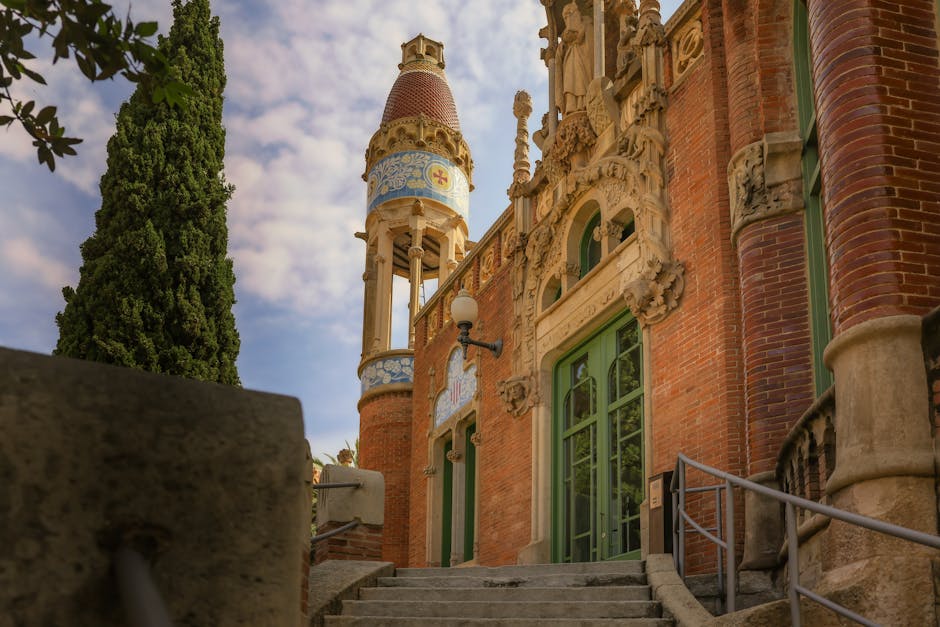
Welcome to Sant Pau Recinte Modernista, a breathtaking testament to Catalan Modernism and a visionary project that redefined healthcare architecture. More than just a hospital, this complex was designed as a self-contained healing city, where art, nature, and functionality converged to promote patient recovery.
As you walk through its vibrant pavilions and serene gardens, AllTours.ai will illuminate the ingenious design of Lluís Domènech i Montaner. We'll uncover the stories behind its intricate mosaics, colorful stained glass, and the groundbreaking philosophy that made Sant Pau a pioneer in medical care and a UNESCO World Heritage site.
What you'll hear on this tour
Stop 1. Main Administration Building
Begin your journey at the magnificent Main Administration Building, the architectural crown jewel of Sant Pau. Its grand facade, adorned with intricate sculptures, colorful mosaics, and a towering clock, immediately signals the complex's importance. This building served as the welcoming gateway and administrative heart, designed to inspire hope and a sense of dignity from the moment patients and visitors arrived. Notice the rich symbolism in its art, often depicting themes of healing, charity, and knowledge, setting the stage for the progressive ideals embodied throughout the entire Recinte.
Stop 2. The Gardens and Open-Air Galleries
Step into the therapeutic embrace of Sant Pau's extensive gardens, a core element of its healing philosophy. Unlike traditional hospitals, this complex integrated lush green spaces and open-air galleries between pavilions, allowing patients direct access to fresh air and natural light. These gardens were not merely decorative; they were considered vital for mental and physical recovery, offering peaceful retreats for contemplation and gentle exercise. Imagine patients strolling here, finding solace amidst the vibrant flora, a radical concept for hospital design in the early 20th century.
Stop 3. Underground Tunnels
Beneath your feet lies a hidden network of underground tunnels, a marvel of early 20th-century engineering. These subterranean passages were designed to connect all the pavilions, facilitating the discreet movement of medical staff, supplies, and even deceased patients, keeping the practical operations of the hospital separate from the serene patient areas above. This ingenious system ensured that the 'city within a city' functioned seamlessly and efficiently, maintaining a calm and orderly environment on the surface, undisturbed by the daily necessities of a bustling medical facility.
Stop 4. Sant Rafael Pavilion
Enter the meticulously restored Sant Rafael Pavilion, offering a vivid glimpse into the patient experience of over a century ago. Here, you can appreciate the thoughtful design focused on comfort and hygiene, with high ceilings, large windows for ample light and ventilation, and colorful ceramic details. Each ward was arranged to maximize natural light and air circulation, crucial for preventing the spread of disease. The artistic details, from the floor tiles to the ceiling decorations, were believed to contribute to a positive psychological environment, aiding in the healing process.
Stop 5. The Old Operating Theatres
Discover the site of the former operating theatres, where groundbreaking medical procedures took place amidst an inspiring architectural setting. While the equipment has changed dramatically, the space itself reflects the era's advancements in surgery and hygiene. The design prioritized natural light and accessibility, crucial for surgical precision. It's a powerful reminder that this beautiful complex was, at its heart, a fully functional and highly advanced medical institution, blending cutting-edge care with an aesthetic environment unlike any other hospital of its time.
Planning your visit
- Best time to go
- Mornings or late afternoons, especially during spring or fall, to enjoy the gardens and avoid crowds.
- Approximate duration
- about 90-120 minutes
- Where to start
- The main entrance on Sant Antoni Maria Claret street, easily recognizable by its grand, ornate facade and clock tower.
Access and conditions change seasonally — check the official site before you go.
Frequently asked questions
Is Sant Pau Recinte Modernista still an active hospital?
No, the medical facilities moved to a new hospital building in 2009. The historic Modernista site has since been beautifully restored and repurposed as a cultural and knowledge center, open to the public for visits and events.
Why was Sant Pau built with such elaborate architecture?
The complex was designed by Lluís Domènech i Montaner with the belief that a beautiful and harmonious environment, incorporating natural light, fresh air, and art, would contribute significantly to patient recovery and well-being. It combined functionality with the artistic principles of Catalan Modernism.
Is it worth visiting Sant Pau Recinte Modernista if I'm short on time in Barcelona?
Absolutely. As a UNESCO World Heritage site and a masterpiece of Modernist architecture, Sant Pau offers a unique and enriching experience distinct from other Barcelona attractions. Its blend of history, art, and a visionary approach to healthcare makes it a highly recommended visit.
Keep exploring
Photography via Pexels. AllTours.ai is an AI audio tour guide — point your camera at any landmark and hear its story.