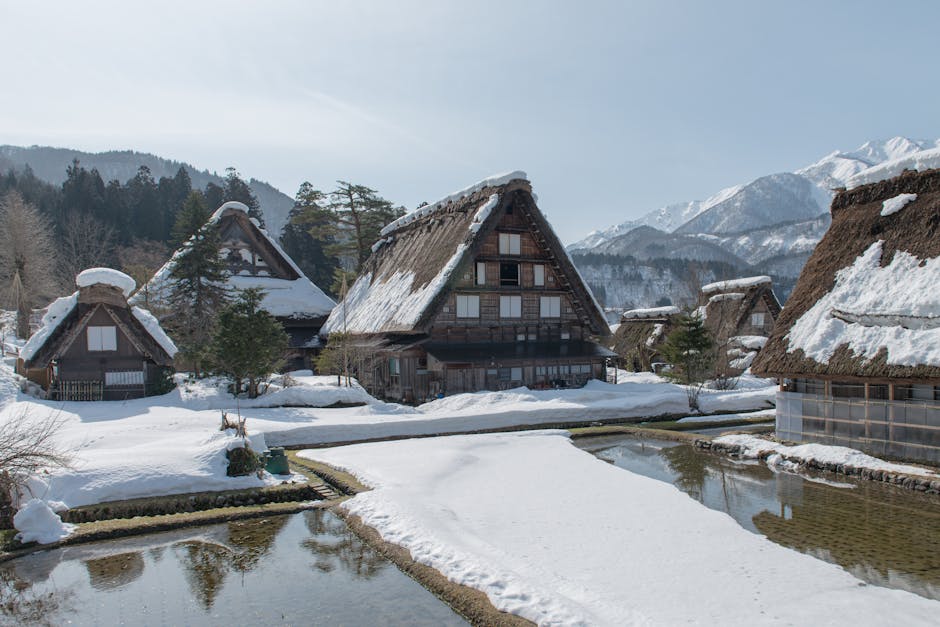
Welcome to Shirakawa-go, a breathtaking UNESCO World Heritage site nestled in the remote mountains of central Japan. Here, time seems to slow, inviting you to wander through a living museum of traditional gassho-zukuri farmhouses, famous for their steeply pitched, thatched roofs that resemble hands clasped in prayer.
This self-guided audio tour will lead you through the charming Ogimachi village, revealing the ingenious craftsmanship behind these unique homes, the resilient spirit of their inhabitants, and the captivating legends that echo through the valley. Prepare to be enchanted by a landscape that feels straight out of a fairytale, where ancient traditions endure amidst stunning natural beauty.
Watch the 20-second tour
What you'll hear on this tour
Stop 1. Gassho-zukuri Architecture
As you gaze upon these iconic homes, notice their distinctive 'gassho-zukuri' style, meaning 'praying hands' in Japanese. The roofs are angled upwards at a steep 60 degrees, designed to withstand heavy snowfall and provide a large attic space for silkworm cultivation. What's truly remarkable is that these structures are built entirely without nails. Instead, they rely on intricate joinery and strong ropes made from plant fibers, a testament to centuries of local wisdom. This ingenious design has allowed these homes to stand resiliently against the harsh mountain climate for generations, preserving a unique piece of architectural heritage.
Stop 2. Shiroyama Viewpoint
Ascend to the Shiroyama Viewpoint, and you'll be rewarded with the most iconic panorama of Shirakawa-go. From this vantage point, the entire Ogimachi village unfolds before you, a picturesque tapestry of thatched roofs nestled amidst lush rice paddies or pristine snow, depending on the season. It’s here you truly grasp the harmony between human ingenuity and nature. Imagine the villagers working together, raising these massive roofs, a collective effort that forged strong community bonds. This view is not just a photo opportunity; it's a window into a timeless way of life, perfectly preserved.
Stop 3. Wada House
Step inside the Wada House, one of the largest and oldest gassho-zukuri homes in Shirakawa-go, designated an Important Cultural Property. This beautifully preserved residence offers a rare glimpse into the daily life and social structure of a wealthy farming family from centuries past. As you explore its multiple levels, from the living quarters to the vast attic where silkworms were once raised, you'll feel the echoes of history. The thick smoke from the central hearth, essential for preserving the thatch and providing warmth, still permeates the timbers, telling a silent story of enduring tradition and community life.
Stop 4. Myozenji Temple Museum
The Myozenji Temple is a fascinating example of Shirakawa-go's unique heritage, as it is the only gassho-zukuri temple in the village. Its main hall, bell tower, and priest's residence all feature the distinctive thatched roofs, blending seamlessly with the surrounding farmhouses. The temple also houses a small museum where you can learn more about local history and the spiritual life of the community. It offers a unique perspective on how the gassho-zukuri style wasn't limited to homes but was also adapted for sacred spaces, reflecting the deep integration of this architectural tradition into every aspect of village life.
Stop 5. Ogimachi Village Stroll
Wander through the narrow lanes of Ogimachi village, the largest of Shirakawa-go's gassho-zukuri settlements. Beyond the grand farmhouses, you'll discover charming smaller residences, crystal-clear streams, and vibrant rice paddies that shimmer in the sun. This stroll is your chance to absorb the tranquil atmosphere, observe local life, and perhaps spot unique details like the small shrines nestled between homes or the traditional tools displayed outside. It’s a place where every corner holds a story, inviting you to imagine the generations who have lived, worked, and preserved this extraordinary cultural landscape.
Planning your visit
- Best time to go
- Winter for iconic snowscapes, or spring/autumn for lush greenery and vibrant foliage.
- Approximate duration
- About 2-3 hours to explore Ogimachi village thoroughly.
- Where to start
- The main parking area or bus terminal in Ogimachi Village. Look for the large information center near the river.
Access and conditions change seasonally — check the official site before you go.
Frequently asked questions
How do I get to Shirakawa-go?
The most common way to reach Shirakawa-go is by bus from major cities like Takayama or Kanazawa. Reservations are highly recommended, especially during peak seasons, as routes can be popular.
Can I stay overnight in Shirakawa-go?
Yes, experiencing a night in a gassho-zukuri minshuku (traditional inn) is a truly unique experience. Be sure to book well in advance, as accommodations are limited and highly sought after.
What should I wear when visiting Shirakawa-go?
Layers are always recommended, as mountain weather can be unpredictable. Comfortable walking shoes are essential, and in winter, warm waterproof clothing, hats, and gloves are a must for navigating the snow.
Keep exploring
Photography via Pexels. AllTours.ai is an AI audio tour guide — point your camera at any landmark and hear its story.