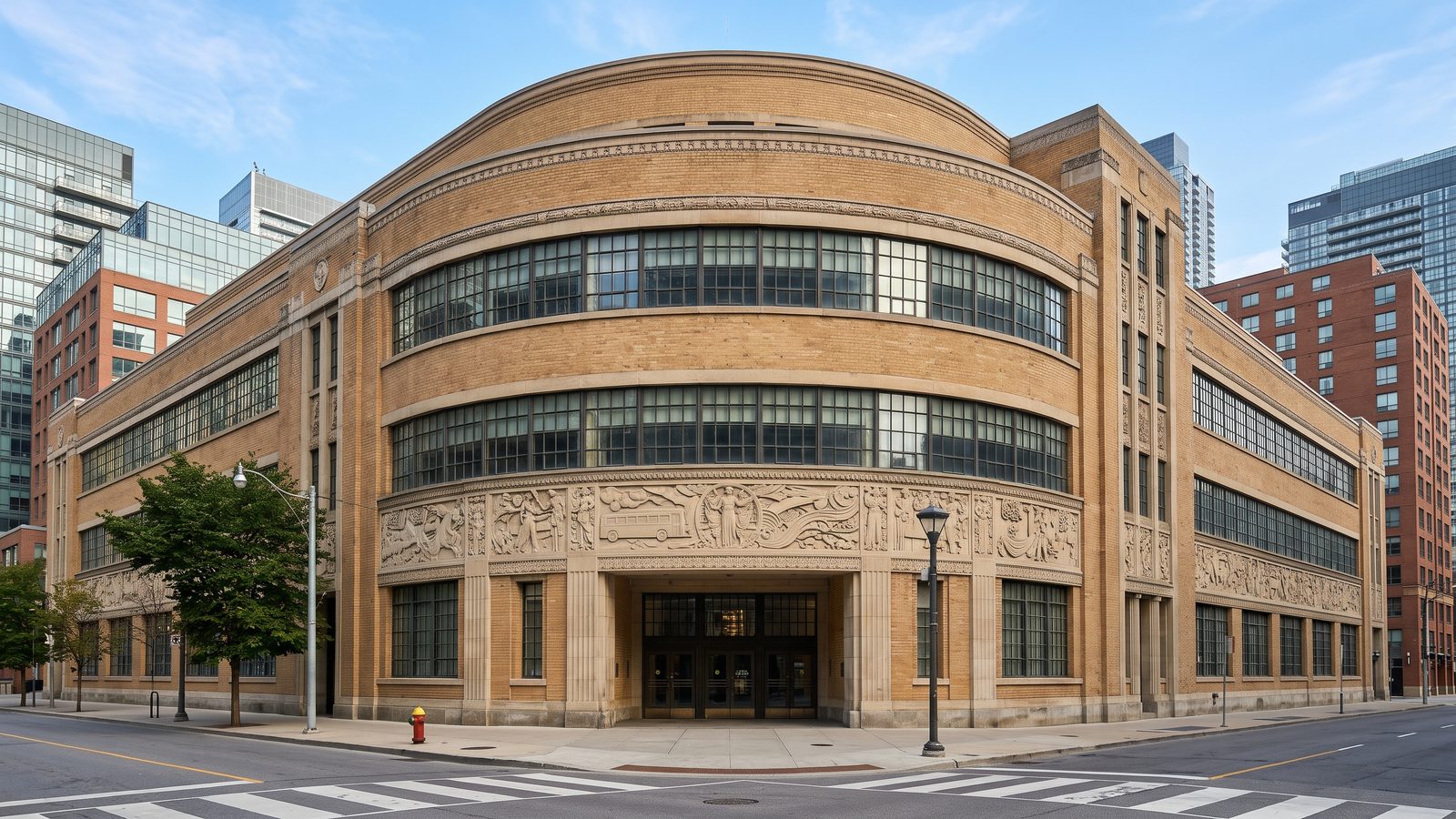
Welcome to the former Toronto Coach Terminal, an architectural jewel standing in downtown Toronto. Opened in 1931 during the height of the Great Depression, this Streamline Moderne landmark served as the city's primary intercity bus station for nearly a century. As you stand before its classic facade, prepare to discover how this transit hub shaped Canadian journeys until closing its operational doors in 2021.
Designed by architect Charles B. Dolphin, the terminal combines elegant symmetry, buff brick, and limestone detailing. On this self-guided audio tour, you will trace the history, art, and personal human stories etched into every corner of this historic monument to transit and mobility.
Listen to a sample
The opening of this tour, exactly as AllTours narrates it on site.
What you'll hear on this tour
Stop 1. A Depression-Era Public Works Triumph
You stand before a profound chapter of Toronto's past, created during the depths of the Great Depression in 1931. Commissioned by the Toronto Transportation Commission as a vital public works initiative, this site provided essential employment when jobs were exceptionally scarce. Architect Charles B. Dolphin designed it to be the pulsating center for intercity travel, linking Toronto to distant towns and cities across North America long before air travel and highways dominated. As you look at the structure, imagine generations of departing soldiers, hopeful new immigrants, eager students, and reuniting families who crossed this threshold, making it a true lifeline shaping Canadian life for nearly a century.
Stop 2. Streamline Moderne and Art Deco Elegance
Look closely at the terminal's striking Art Deco design, a masterpiece that defines early twentieth-century elegance. You notice the clean, vertical lines drawing your eye upward, highlighting a streamlined modern aesthetic. The exterior features buff-coloured brick accented by fine limestone detailing, built to reflect permanent quality and craftsmanship. Geometric patterns subtly frame the main entrance, celebrating speed and progress. Large multi-paned windows flood the space with light while maintaining a sleek exterior profile. Even the original signage displays distinct Art Deco typography, unifying the building's identity. You are observing a carefully crafted monument where every line and curve celebrates a sophisticated era of intercity transit.
Stop 3. Bas-Relief Narratives Etched in Stone
Cast your gaze upward to see how this building acts as a magnificent, functional sculpture. Above the main entrance, stylized bas-reliefs are subtly carved directly into the limestone facade. You see geometric yet fluid forms that depict the energy of early travel, featuring streamlined buses, radiating lines of speed, and dynamic figures representing human progress. These stone carvings transform abstract movement into a silent, permanent narrative. Each curve celebrates the optimism of the era and the excitement of departure without using a single spoken word. As you inspect the detailed stonework, you feel the quiet tribute to human curiosity and the golden age of bus journeys etched into the building itself.
Stop 4. Grand Halls of Hope and Departure
Step toward the entrance and picture the grand interior concourse designed to inspire awe and confidence. Soaring ceilings create an expansive atmosphere, serving as a dignified gateway for journeys stretching across Ontario and beyond. Beneath your feet, imagine the polished terrazzo floors where millions of nervous and excited travelers once walked. The classic ticket counters long retained the memory of endless activity, where painful goodbyes and joyous reunions unfolded daily. This structure stands as a monument to mobility rather than just a simple bus depot. You are standing where personal lives interconnected, with each architectural touch echoing the enduring legacy of Toronto's historic connectivity.
Stop 5. The Democratic Gateway to New Beginnings
Feel the pulse of countless journeys that emanate from this historic travel hub. For generations, this terminal offered an accessible, democratic gateway to adventure, movement, and opportunity. You can envision immigrants arriving with packed suitcases ready to build new lives, families embracing after long months apart, and students setting off toward academic pursuits. Each bus ticket purchased here represented a life-changing decision to cross vast landscapes. This space captures the profound human experience of transition and the freedom of the open road. As you explore, you realize these walls preserve a complex web of shared Canadian memories, bridging the distance between desire and destination.
Stop 6. Engines of Modern Intercity Travel
Consider the powerful machines that gave life to these boarding bays for decades. Buses served as the vital arteries connecting Toronto to communities across Canada and the United States. From rugged 1930s coaches engineered for endurance to sleek modern cruisers, each vehicle carried endless stories across thousands of kilometers. You can almost hear the deep hum of diesel engines echoing through the bays, marking daily arrivals and departures. These democratic vessels offered millions of people an affordable window to the world outside city limits. As you examine the platform area, reflect on the robust engineering that reliably bound distant communities together through generations of transit history.
Planning your visit
- Best time to go
- Daylight hours year-round to best appreciate the architectural details and limestone bas-reliefs on the exterior facade.
- Approximate duration
- about 30 minutes
- Where to start
- Outside the main entrance of the former terminal at the corner of Bay Street and Edward Street.
Access and conditions change seasonally — check the official site before you go.
Frequently asked questions
Is Toronto Coach Terminal worth visiting?
Yes, architecture and history enthusiasts will appreciate visiting the exterior of this landmark. Opened in 1931, the building is a prominent example of Art Deco and Streamline Moderne design in Toronto, featuring historic brickwork, limestone bas-reliefs, and classic typography.
How long do you need at Toronto Coach Terminal?
A visit typically takes 20 to 30 minutes. Since the bus terminal ceased operations in 2021, visits focus on admiring the exterior architectural features, facade carvings, and historical significance from the street level.
When was the Toronto Coach Terminal built and why did it close?
The terminal opened in 1931 during the Great Depression as a public works project by the Toronto Transportation Commission to provide jobs and centralize intercity transit. It served millions of passengers for decades until bus operations officially ended at this location in 2021.
Keep exploring
Header image is an AI-generated illustration of Toronto Coach Terminal. AllTours.ai is an AI audio tour guide — point your camera at any landmark and hear its story.