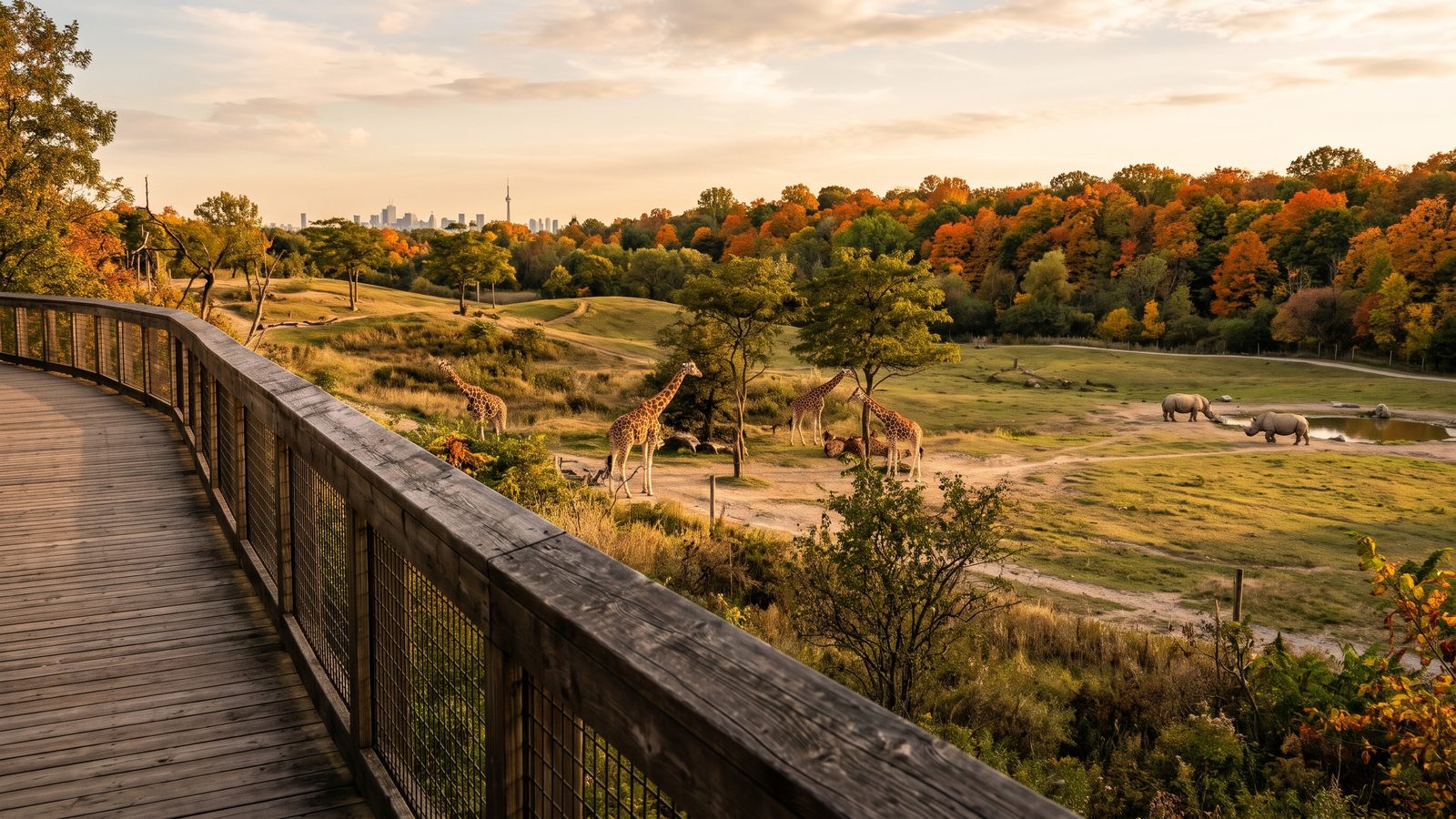
Welcome to the Toronto Zoo, a massive 710-acre global village for wildlife located next to Rouge National Urban Park. Opened in 1974, this world-renowned sanctuary hosts over 5,000 animals representing more than 450 species across seven distinct zoogeographic regions. As you walk through immersive landscapes, you encounter magnificent creatures while discovering the zoo's unwavering commitment to international conservation, scientific research, and protecting endangered species worldwide.
This self-guided audio tour leads you through naturalized habitats, showcasing dynamic animal families and critical breeding initiatives. Step onto the trails to explore rich outdoor pavilions, interactive learning spaces, and groundbreaking conservation efforts that bring you closer to the wild heart of our planet.
Listen to a sample
The opening of this tour, exactly as AllTours narrates it on site.
What you'll hear on this tour
Stop 1. Frontlines of Global Wildlife Conservation
You step into the domain of extraordinary creatures where survival stories unfold around you. Look closely at the critically endangered Sumatran tigers in the Indo-Malaya pavilion, where unique stripe patterns showcase individuals participating in vital Species Survival Plans to prevent extinction. Nearby in the Tundra Trek, you witness powerful polar bears swimming while learning about ongoing climate change research that directly helps wild populations. Watch how puzzle feeders and scent trails keep primates and wolves mentally stimulated through daily enrichment. Every resident here, from poison dart frogs to black-footed ferrets, plays a crucial role in international breeding and reintroduction efforts that return species back into their natural habitats.
Stop 2. Captivating Encounters Across Seven Continents
As you wander through carefully designed habitats, you observe remarkable behaviors up close. You see Sumatran orangutan mothers tenderly cradling their infants high above the ground, demonstrating the success of crucial breeding programs. Further along, majestic polar bears display adaptations to frigid northern climates, serving as powerful symbols of vulnerable polar environments. Across the sweeping plains of the African Savanna, rhinos and giraffes move together in natural social groups, offering you a glimpse into dynamic wild relationships. From agile snow leopards navigating rocky slopes to brightly colored poison dart frogs flashing warning signs, every species provides fascinating insights into the delicate balance of global biodiversity.
Stop 3. Intricate Bonds and Global Species Families
You notice that family connections take center stage throughout these habitats. Watch the Western Lowland Gorilla troop, where a dominant silverback meticulously guards his multi-generational group as playful youngsters learn essential social rules through observation. Nearby, an orangutan mother guides her clinging infant, passing down vital survival skills through gentle instruction. Beyond these immediate physical enclosures, the zoo actively manages genetic family trees across international borders through global Species Survival Plans. When you view newborn snow leopard cubs, you are seeing a critical expansion of a global network designed to maintain genetic diversity, proving that protecting animal families ensures the future resilience of entire species.
Stop 4. Immersive Zoogeographic Ecosystems and Trails
You walk along winding paths engineered to replicate wild habitats from across the globe. In the Canadian Domain, towering pine trees and rugged granite outcroppings mirror the natural Canadian Shield landscape. As you enter the humid Indo-Malaya area, dense bamboo thickets surround you, encouraging animals to forage and climb naturally. Notice how winding streams flow through the African Savanna to attract native birds, while deep Tundra Trek pools give polar bears space for natural swimming behaviors. These expansive outdoor spaces blend seamlessly into the adjacent Rouge National Urban Park, offering you an authentic journey through carefully managed wilderness designed for animal welfare.
Stop 5. Interactive Discovery and Living Classrooms
You discover that every exhibit serves as an interactive learning space designed to spark curiosity and empathy. Hands-on Zoo School workshops allow young visitors to dissect owl pellets or craft enrichment toys, directly connecting them with wildlife educators. As you stop to read the detailed interpretive signage along the trails, you learn not just animal facts, but compelling stories about ecosystem threats and simple actions you can take to make a real difference. Through dedicated youth leadership initiatives and volunteer opportunities, this living classroom transforms casual observation into active conservation advocacy, empowering you to become a knowledgeable steward for the natural world.
Stop 6. Sustainable Design and Native Habitats
You observe how the zoo grounds integrate sustainable environmental practices into every corner of the landscape. Native plant species line the walkways to nourish local pollinators and wild birds, blurring the boundary between animal exhibits and the surrounding ecosystem. Sustainable innovations like rainwater harvesting systems supply water to botanical collections, while careful waste management drastically reduces the park's ecological footprint. As you stroll through these living laboratories, every planted tree and engineered water feature serves a dual purpose: enhancing animal well-being and demonstrating ecological harmony. You experience firsthand how thoughtful conservation design protects local and global biodiversity.
Planning your visit
- Best time to go
- Morning hours year-round, or weekdays during spring and fall for quieter trails and active animals.
- Approximate duration
- About 3 to 4 hours
- Where to start
- Main Entrance Plaza near the Visitor Information Counter.
Access and conditions change seasonally — check the official site before you go.
Frequently asked questions
Is Toronto Zoo worth visiting?
Yes, as one of the world's largest zoos spanning 710 acres, Toronto Zoo offers immersive zoogeographic pavilions, over 5,000 animals, and world-class conservation programs that appeal to all ages.
How long do you need at Toronto Zoo?
You generally need 3 to 5 hours to comfortably walk the main zoogeographic pavilions and outdoor trails, though animal enthusiasts can easily spend a full day exploring.
When did the Toronto Zoo open?
The Toronto Zoo officially opened in 1974, designed with large zoogeographic regions and naturalistic habitats rather than traditional cage enclosures.
Keep exploring
Header image is an AI-generated illustration of Toronto Zoo. AllTours.ai is an AI audio tour guide — point your camera at any landmark and hear its story.