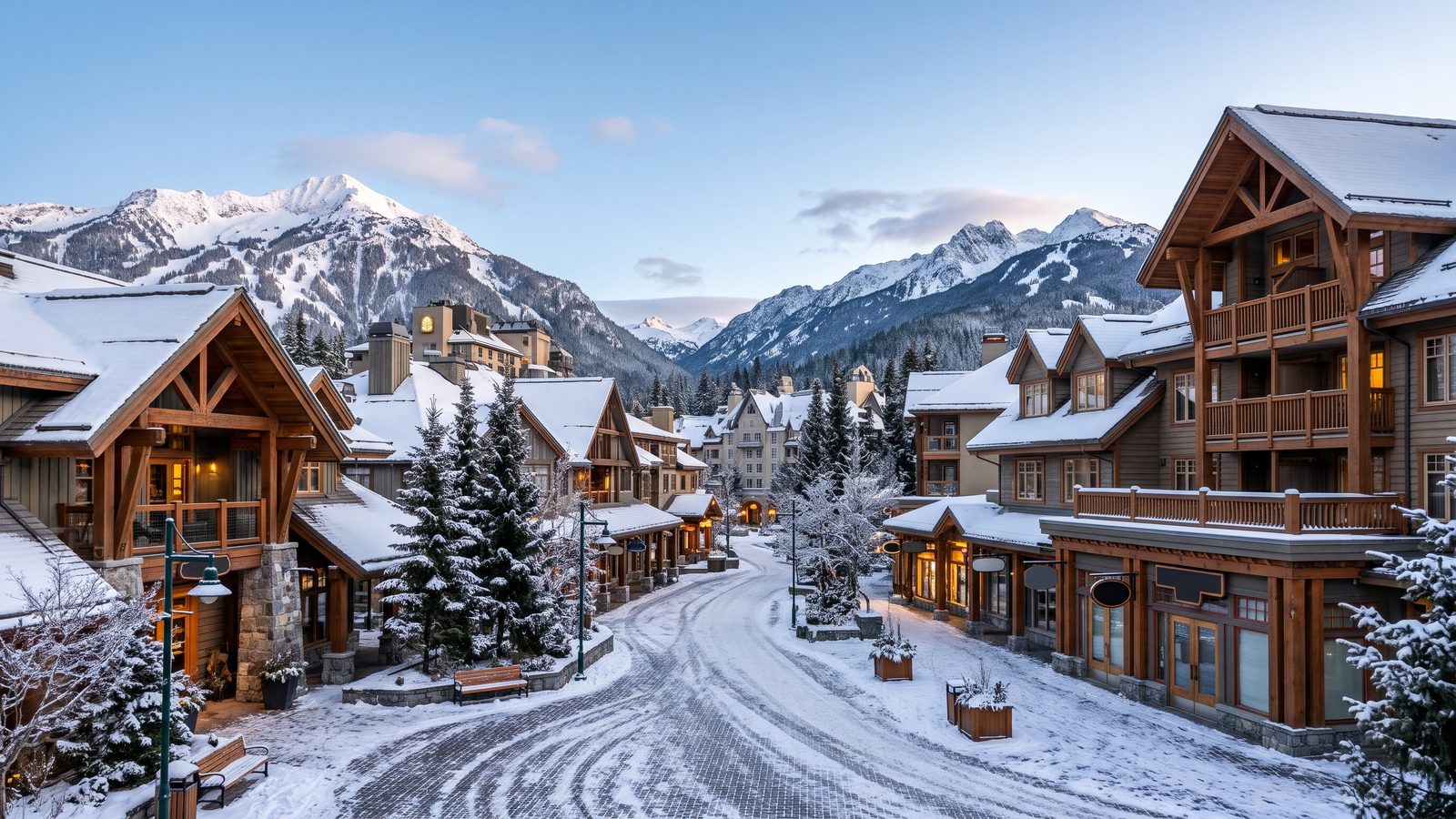
Welcome to Whistler Village, a vibrant pedestrian haven nestled deep within British Columbia's Coast Mountains. Long before ski gondolas spanned these valleys, the Squamish and Lil'wat First Nations cherished these sacred lands for sustenance and connection. Today, world-class alpine architecture and European-style strolls harmoniously meet wild temperate rainforests. As you walk through its lively plazas, you tread upon the history of bold Olympic dreams and legendary mountain wilderness.
This audio tour guides you past cozy fireside lodges, stunning mountain vistas, and thoughtful mountain design. Learn how a remote valley transformed into an international alpine playground while retaining its natural majesty, rich culinary scene, and adventurous mountain spirit.
What you'll hear on this tour
Stop 1. The Twin Titans of the Coast Range
You look up to behold Whistler and Blackcomb mountains, towering sentinels carved by ancient glaciers over millions of years. Before ski lifts spanned these slopes, the Squamish and Lil'wat Nations held these peaks as a sacred spiritual heartland. You stand where London Mountain earned its modern name, renamed Whistler after the piercing alarm calls of native marmots echoing across the rocks. To the side, Blackcomb presents a rugged, glaciated contrast, home to dramatic alpine bowls and the enduring Horstman Glacier. As you gaze at the soaring treelines and exposed peaks, you feel the raw power of the Coast Mountain Range surrounding you.
Stop 2. From Olympic Dream to Alpine Legend
You stand in a world-class village whose modern transformation began in the early 1960s. Here, ambitious Vancouver businessmen envisioned an Olympic winter haven in an untouched wilderness. When the first gondola opened on Whistler Mountain in 1966, it launched a legacy that forever changed Canadian skiing. You trace the evolution as Blackcomb Mountain developed in the late 1970s, doubling the available terrain. Decades of relentless determination culminate right here, where the village proudly co-hosted the 2010 Winter Olympics. As you walk these pathways, you experience the triumphant realization of a visionary alpine dream built upon centuries of indigenous history.
Stop 3. Timber, Stone, and Mountain Context
You step closer to the village chalets to appreciate a masterclass in mountain architecture. Notice how heavy timber frames echo traditional alpine lodges while exposed stone cladding uses local river rock to anchor each building directly into the landscape. You see how structures step back from main pathways, creating cozy public plazas rather than cold corridors. Deep roof overhangs and dramatic gables serve a vital dual purpose, effortlessly directing heavy winter snowfall away from walkways while maintaining rustic aesthetic charm. Every framed window acts like a living postcard, seamlessly blending contemporary design with the surrounding wilderness to create a timeless, welcoming alpine atmosphere.
Stop 4. Glacial Waters and Rainforest Canopies
You breathe in the crisp mountain air, rich with the fresh scent of an old-growth temperate rainforest. Surrounding you are ancient hemlocks and cedars, their branches creating a lush canopy where sunlight plays across the ground. Beyond the trees, your gaze meets dramatic U-shaped valleys carved out by prehistoric glaciers. Nearby, the startling turquoise waters of Green Lake shimmer brightly, colored by fine glacial flour suspended in pure meltwater. Clouds frequently catch on the jagged summits above, constantly shifting light and shadow across the peaks. You stand immersed in a dynamic, living landscape where untamed wilderness and alpine grandeur meet.
Stop 5. A Culinary Expedition Après Ski
You enter the heart of Whistler's famed culinary landscape, where every meal offers its own adventure. Picture yourself settling into a cozy fireside table after exploring the trails, savoring locally sourced venison stew or classic European fondue. You experience vibrant après-ski culture in lively pubs pouring craft British Columbia beers alongside elevated local dishes. High-end establishments feature Pacific Northwest treasures like fresh wild salmon and foraged mushrooms, alongside unique rituals such as ice vodka tastings and champagne sabering. From casual gourmet burger spots to refined alpine dining, you taste how local ingredients and international traditions come together to fuel your mountain journey.
Stop 6. Trails into the Untamed Wild
You look toward the surrounding wilderness, where infinite hiking paths beckon outdoor adventurers. Gondolas whisk you straight into high-altitude terrain, where the famous High Note Trail traverses Whistler Mountain's ridge. As you walk, breathtaking views reveal the vivid blue of Cheakamus Lake and the sharp peak of Black Tusk piercing the sky. You wander through sub-alpine meadows carpeted with colorful lupine and fireweed while marmots call across the rocks. Nearby forest loops lead to the famous Train Wreck Trail's painted boxcars, while multi-day routes venture deep into Garibaldi Provincial Park. With every step, you feel a direct connection to the Coast Mountains' wild heart.
Planning your visit
- Best time to go
- Year-round; mornings offer quiet strolls, while late afternoons bring vibrant après-ski energy.
- Approximate duration
- About 1.5 to 2 hours
- Where to start
- Whistler Village Stroll near the Gateway Loop and Gondola Transit Plaza.
Access and conditions change seasonally — check the official site before you go.
Frequently asked questions
Is Whistler Village worth visiting?
Yes, Whistler Village is well worth visiting for its pedestrian-only strolls, world-class Coast Mountain scenery, unique timber architecture, exceptional dining, and rich alpine heritage.
How long do you need at Whistler Village?
Plan for 1.5 to 3 hours to complete a village walking tour, explore local shops, and enjoy dining, or spend a full day if adding mountain gondola rides and hiking.
What is the history of Whistler Village?
Long cherished by the Squamish and Lil'wat First Nations, the area was known as London Mountain before being renamed Whistler in the 1960s after native marmots. Ski pioneers carved runs to pursue an Olympic dream, culminating in co-hosting the 2010 Winter Olympics.
Keep exploring
Header image is an AI-generated illustration of Whistler Village. AllTours.ai is an AI audio tour guide — point your camera at any landmark and hear its story.