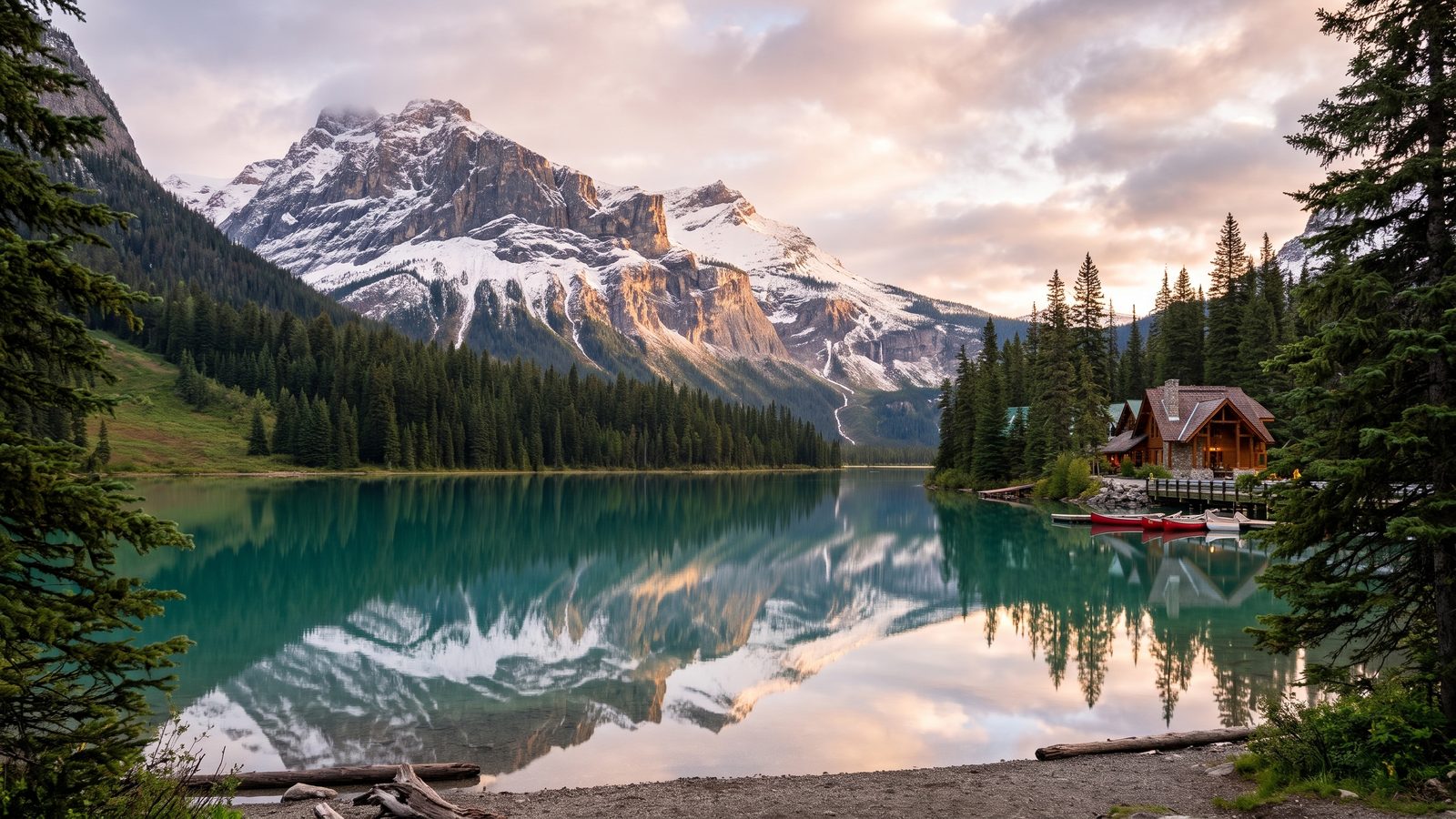
Welcome to Yoho National Park, where soaring granite peaks, roaring waterfalls, and serene turquoise lakes capture the raw power of the Canadian Rockies. Named after a Cree and Stoney expression of awe, this magnificent park surrounds you with dramatic glacial valleys and historic human achievements. As you drive along the Trans-Canada Highway near Field, British Columbia, prepare to experience pristine wilderness carved by ancient glaciers and transformed by pioneering engineering.
This self-guided audio tour reveals the deep natural and cultural stories of Yoho. From the ingenious Spiral Tunnels cut directly into living rock to the misty heights of Takakkaw Falls, you will explore ancient pine forests, resilient alpine ecosystems, and rich railway history at your own relaxed pace.
What you'll hear on this tour
Stop 1. Spiral Tunnels and Mountain Parkitecture
You stand before the Spiral Tunnels, one of the world's most impressive feats of railway engineering. Built in 1909 to replace a perilous mountain slope, these massive corkscrew tunnels cut directly into the rock face. As you watch a transcontinental train enter a portal, you see its front emerge higher up the mountain while the rear is still entering below. Turning your gaze toward historic structures like Emerald Lake Lodge, you notice classic 'parkitecture' in action. Hand-hewn timbers and local stone blend seamlessly into the surrounding wilderness, while scattered warden cabins showcase robust, functional craftsmanship designed to survive harsh alpine winters.
Stop 2. Capturing the Mountain Light
You step into the footsteps of early Canadian Pacific Railway photographers who lugged heavy glass plates across these valleys. As dawn breaks over Emerald Lake, early blue-hour light paints the mountain peaks, offering a pristine mirror reflection on the still water. Standing near Takakkaw Falls, you raise a wide-angle lens to capture the full, massive drop of water cascading down sheer rock. You shift your focus downward to find vibrant alpine wildflowers dotting the summer slopes, perfect for macro shots. Yoho rewards your patience; as dramatic clouds break over towering limestone cliffs, you capture moments of ethereal wilderness light.
Stop 3. Glacial Carvings and Waterfall Mists
Look across the breathtaking landscape to see how ancient glacial retreats carved these sheer rock faces, leaving subtle striations etched into the cliffs. Deep emerald forests blanket the lower valleys, creating a striking visual contrast with the grey rock and white ice of the high peaks. Cascading waterfalls descend impossibly steep precipices, casting fine mists that catch the sunlight to form brilliant, fleeting rainbows. Crisp mountain air carries the scent of damp earth and pine as you observe the textured scree slopes below. Above it all, the sky appears a deeper, more vibrant blue when framed by these monumental Rocky Mountain vistas.
Stop 4. Life Along the Alpine Slopes
Feel the crisp, high-altitude mountain air as you explore the delicate ecosystems thriving on these rugged slopes. Vibrant alpine wildflowers cling stubbornly to exposed rock, adapted to survive short growing seasons and biting winds. Listen carefully for the high-pitched call of a pika darting between scree rocks, a sign of a healthy alpine ecosystem. Scanning the soft soil along the forest edge, you spot fresh tracks from elk and deer navigating their ancient wilderness home. This dynamic landscape showcases a constant interplay between raw geological power and the extraordinary resilience of native wildlife living high in the Canadian Rockies.
Stop 5. Ancient Trails and Steel Rails
You walk through a land whose very name originates from an Indigenous expression of astonishment. Long before European explorers arrived, First Nations communities like the Stoney Nakoda navigated these rugged valleys along ancient game trails, reading subtle weather signs and moving with seasonal rhythms. In the late 19th century, the construction of the Canadian Pacific Railway carved a dramatic path through this wilderness. You trace the shift from traditional Indigenous routes to an era of steel rails, early shelters, and burgeoning mountain tourism that forever transformed human access to these extraordinary Rockies valleys.
Stop 6. Log Cabins of the Frontier
Look closely at the historic wooden cabins resting among the trees, standing as quiet reminders of Yoho's early frontier history. You notice hand-hewn logs carefully fitted together with protective chinking, built by prospectors dreaming of gold and trappers working deep within the mountain forests. These simple shelters provided crucial protection against severe mountain weather, reflecting the immense resourcefulness and physical labor of early pioneers. As you examine their rugged craftsmanship, you appreciate how these remote outposts served as human lifelines long before paved roads, manicured trails, or modern visitor amenities altered this wild landscape.
Planning your visit
- Best time to go
- June through September for accessible trails, open mountain passes, and peak waterfall flow.
- Approximate duration
- about 3 to 5 hours
- Where to start
- Field Visitor Centre or the Spiral Tunnels Viewpoint along Highway 1 in Field, BC.
Access and conditions change seasonally — check the official site before you go.
Frequently asked questions
Is Yoho National Park worth visiting?
Yes, Yoho National Park is world-renowned for its stunning turquoise lakes like Emerald Lake, towering waterfalls such as Takakkaw Falls, and incredible engineering heritage including the Spiral Tunnels.
How long do you need at Yoho National Park?
Most visitors spend half a day to a full day exploring Yoho's main highlights along Highway 1, though avid hikers and photographers can easily spend two or three days exploring the backcountry.
What is the history behind Yoho National Park?
Originally inhabited and navigated by Indigenous peoples such as the Stoney Nakoda, the area was named after an expression of awe. The arrival of the Canadian Pacific Railway in the late 19th century brought transcontinental transit, early tourism, and the eventual creation of the national park.
Keep exploring
Header image is an AI-generated illustration of Yoho National Park. AllTours.ai is an AI audio tour guide — point your camera at any landmark and hear its story.