September 17, 2026 · 4 min read
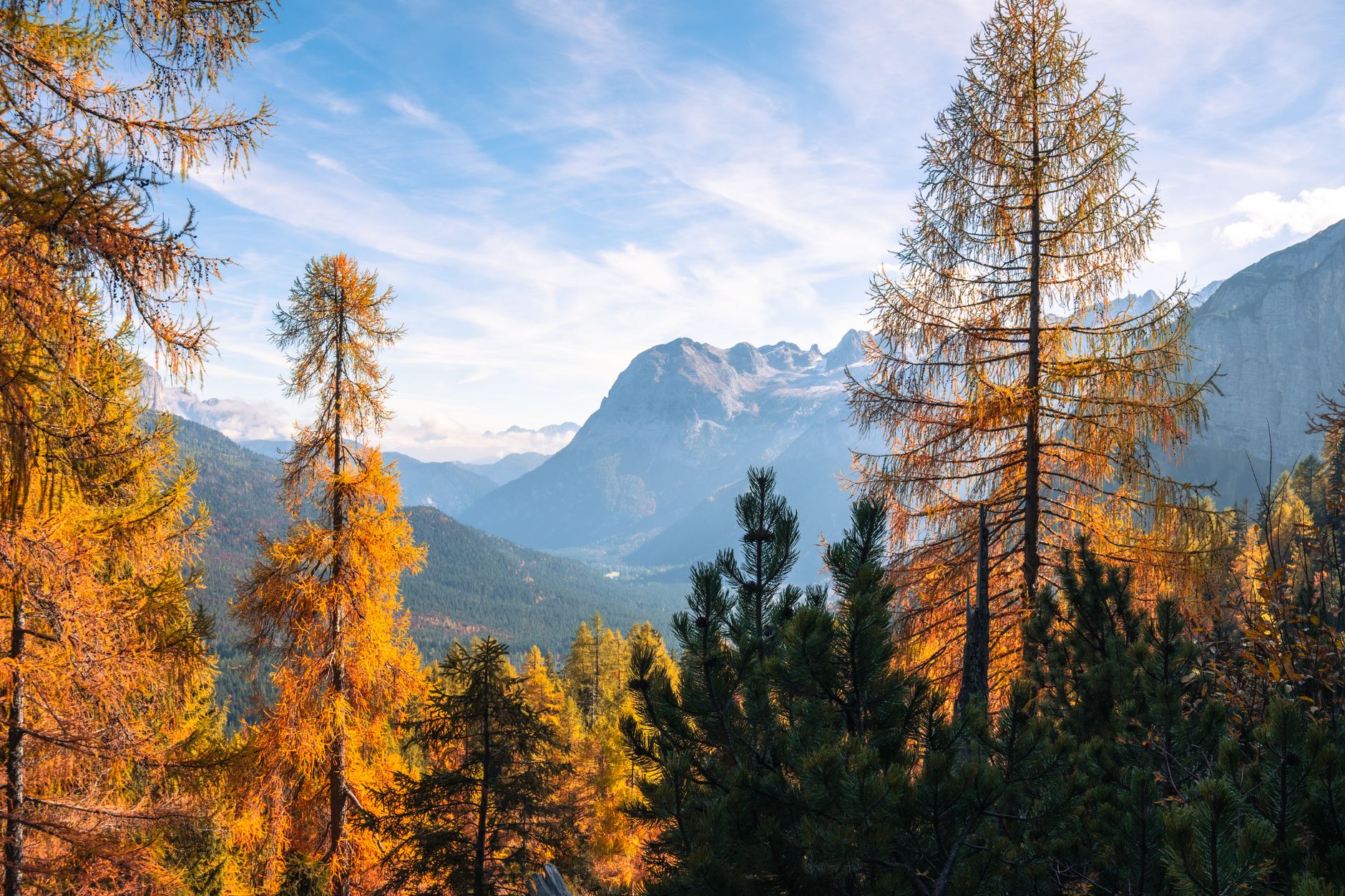
As summer's warmth fades, the Italian Dolomites undergo a spectacular transformation. The iconic grey spires, already magnificent, become even more dramatic when framed by forests ablaze with fiery reds, brilliant oranges, and shimmering golds. This is when the larch trees, unique among conifers, shed their needles in a breathtaking display, making autumn a truly special time for hiking.
Beyond the well-trodden paths, a world of lesser-known trails and hidden viewpoints awaits. We've curated a list of unforgettable autumn foliage hikes in the Dolomites, each offering not just stunning visual feasts but also a surprising story woven into the very fabric of the landscape. Get ready to discover the secret history, unique geology, and rich culture that make these trails truly come alive.
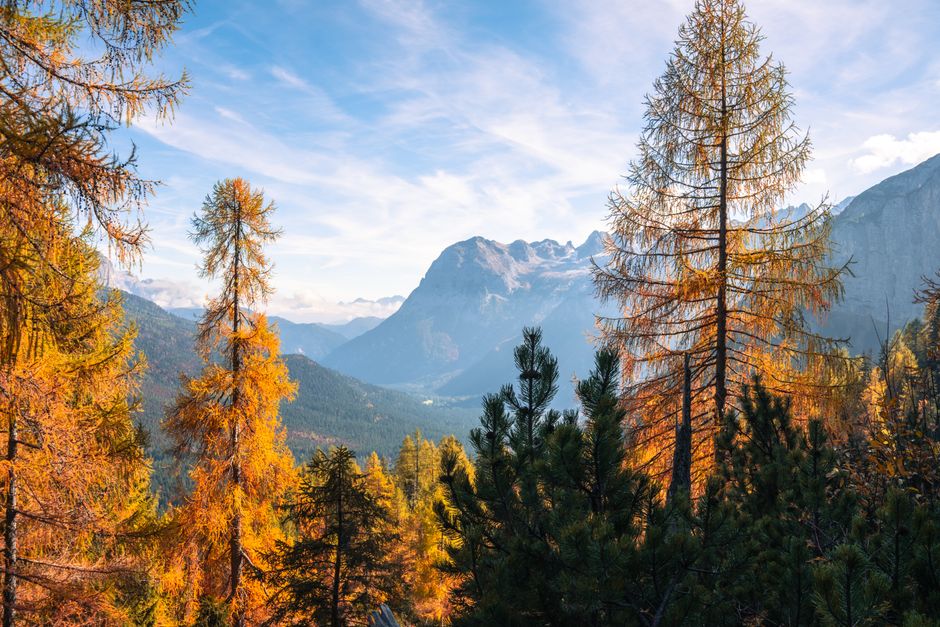
1. The Dolomite Fjord's Golden Embrace
Val Venegia, Pale di San Martino, Italy
Val Venegia's unique, fjord-like valley was once a vast tropical sea, trapping ancient marine life in its towering peaks.
Often called 'The Dolomites' Fjord,' Val Venegia, nestled within the Pale di San Martino massif, reveals layers of ancient seabed. Walk through its vibrant larch forests in autumn, and you're treading on what was once a warm, shallow sea. The striking geological formations, like the iconic Cimon della Pala, are evidence of millions of years of tectonic uplift and erosion, now framed by brilliant golden foliage.
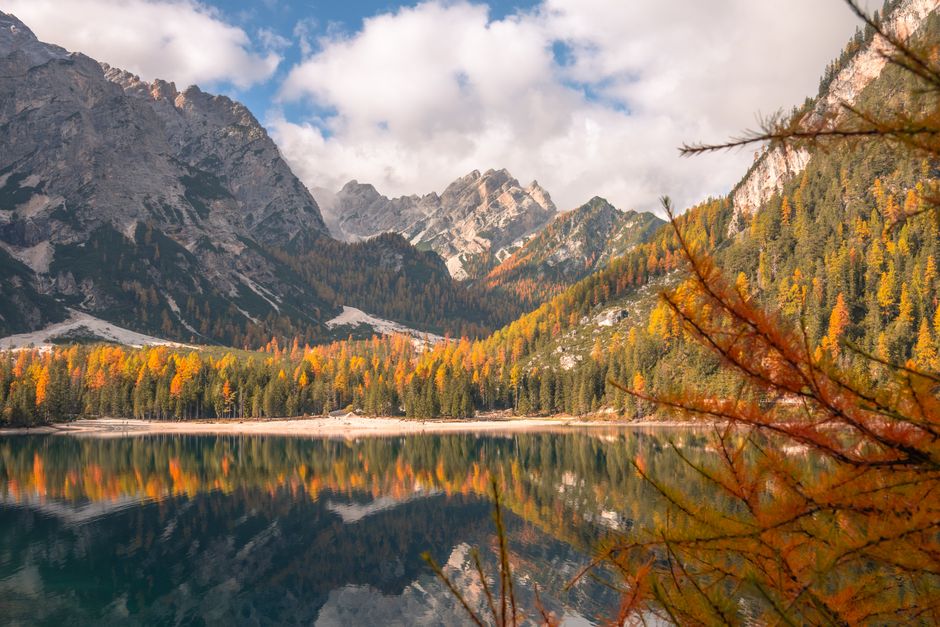
2. The Giantess's Teardrop: Lago Federa
Lago Federa, Croda da Lago, Italy
Lago Federa, nestled beneath Croda da Lago, is said to be the teardrop of a giantess mourning her lost love.
This pristine alpine lake, reflecting golden larches in autumn, is part of a broader legend where the giants of the Dolomites shaped the landscape with their emotions. The Croda da Lago massif itself is a geological marvel, a remnant of ancient coral reefs. The hike offers panoramic views of the Cortina basin, transformed by the vibrant fall colors of surrounding forests, making the mythical tale almost believable.
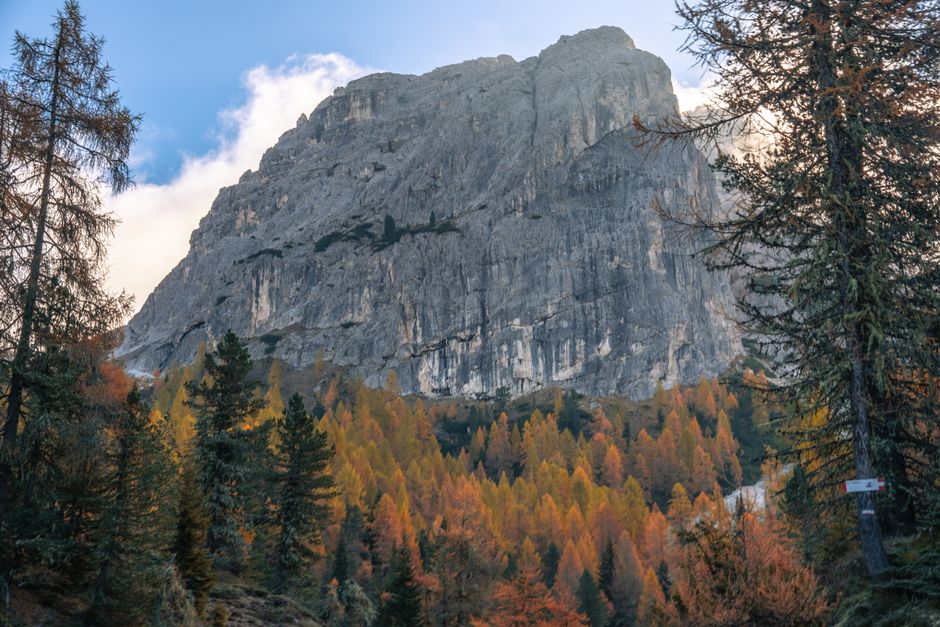
3. The Geological Fault Line of Passo delle Erbe
Passo delle Erbe / Würzjoch, Puez-Geisler Nature Park, Italy
Passo delle Erbe sits atop a geological fault line, clearly separating two distinct rock types that define the Dolomites.
This scenic pass, often overlooked, offers expansive vistas of the Puez-Geisler Group. It marks a clear geological boundary: to the north, ancient volcanic rock, to the south, the iconic sedimentary dolomite. In autumn, the high-altitude meadows are dotted with golden larches, providing a brilliant contrast against the stark grey peaks. The air here carries the crisp scent of pine and damp earth, a true sensory experience.
4. Ancient Trade Routes of Prags Valley
Pragser Tal / Braies Valley, Italy
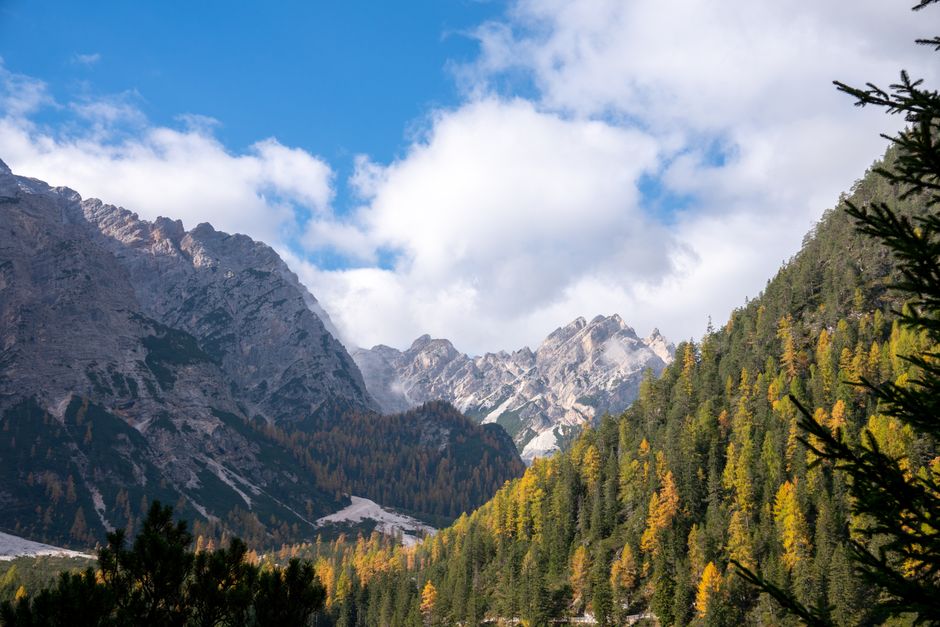
The Prags Valley was once a strategic route for ancient traders and Roman legions, connecting northern and southern Europe.
While Lago di Braies draws crowds, the surrounding Prags Valley offers quieter trails through larch and spruce forests ablaze with autumn colors. The valley's historical significance lies in its role as a vital passage through the Alps, remnants of which can still be found. Hike towards Prato Piazza, a high alpine plateau, for breathtaking panoramas of the Hohe Gaisl and Dürrenstein, all framed by golden hues.
5. WWI's Golden Plateau: Plätzwiese
Plätzwiese / Prato Piazza, Fanes-Sennes-Braies Nature Park, Italy
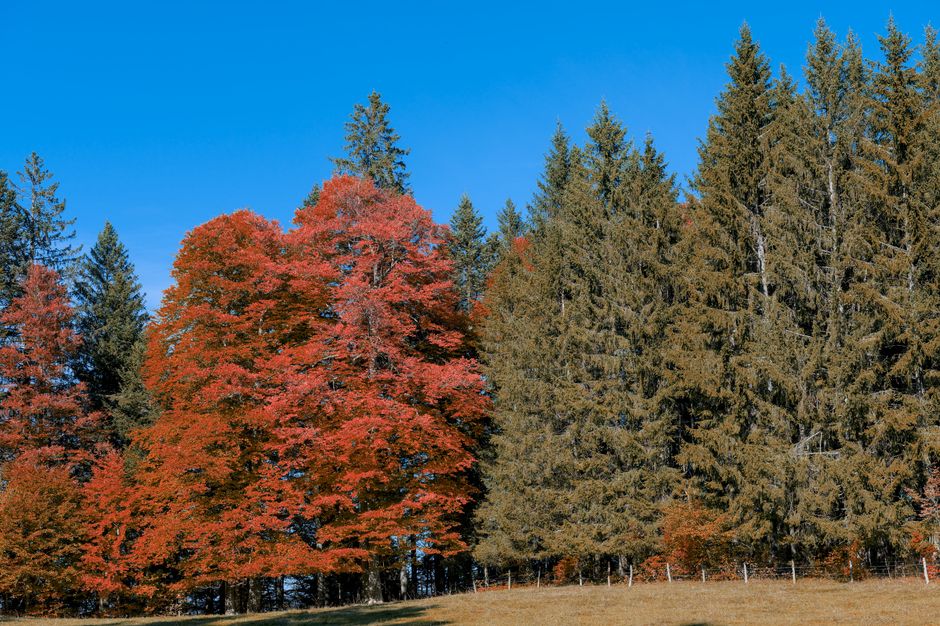
The vast Plätzwiese plateau was a strategic battleground during WWI, its tranquility now belying a tumultuous past.
This expansive high-alpine meadow, accessible via a historic military road, transforms into a golden paradise in autumn. It served as a crucial defensive position during the Great War, with remnants of fortifications still visible. Today, hikers can enjoy relatively easy walks across the plateau, surrounded by the towering peaks of Dürrenstein and Hohe Gaisl, their slopes dusted with the rich ochres of larch trees.
6. Val Fiscalina's Glacial Carving
Val Fiscalina, Sesto Dolomites, Italy
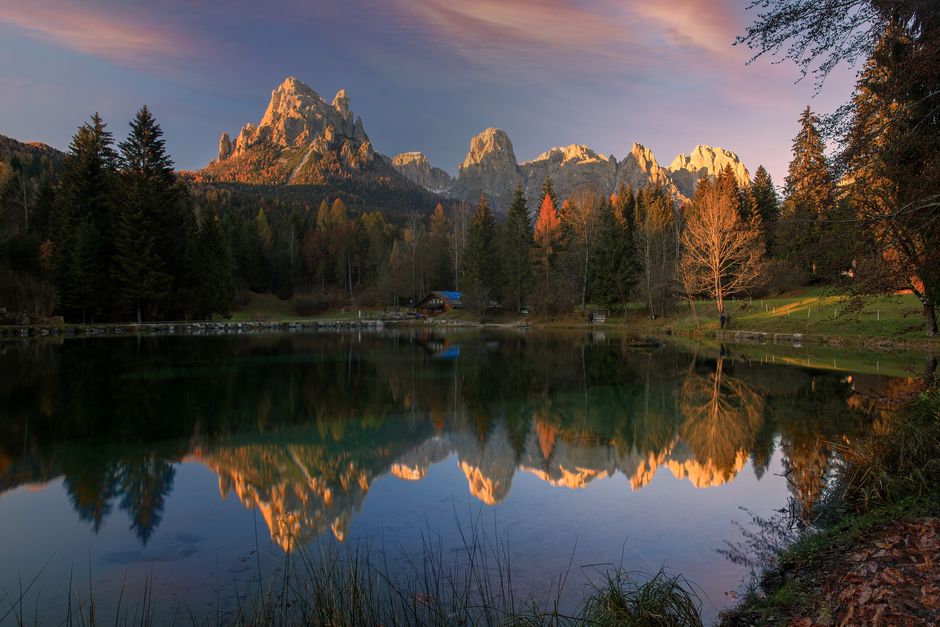
Val Fiscalina's unique, deep U-shape is a textbook example of glacial erosion, carved by immense ice sheets.
Known as the 'most beautiful valley in the world' by some, Val Fiscalina offers a gentler introduction to the Sesto Dolomites. Its distinctive U-shaped profile is a testament to the powerful glaciers that once scoured this landscape. In autumn, the valley floor and lower slopes explode with the golden hues of larch and deciduous trees, creating a stunning foreground to the dramatic spires of the Tre Cime di Lavaredo and Cima Una.
7. The Milky Turquoise of Lago di Sorapiss
Lago di Sorapiss, near Cortina d'Ampezzo, Italy
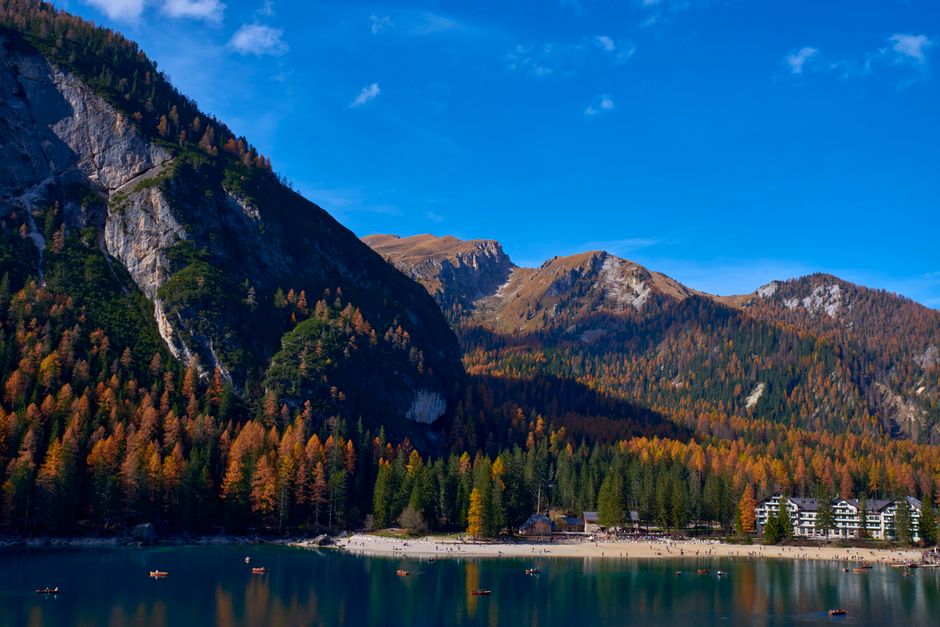
The milky turquoise color of Lago di Sorapiss comes from 'glacial flour,' fine rock particles suspended in the water.
This stunning glacial lake is renowned for its otherworldly, opaque turquoise waters, a direct result of the finely ground rock particles carried down from the surrounding mountains. The challenging hike to reach it, especially in autumn, passes through ancient forests of larch and pine, offering glimpses of vibrant fall colors before revealing the lake's unique hue against the backdrop of the towering Sorapiss massif. It's a reward for the adventurous.
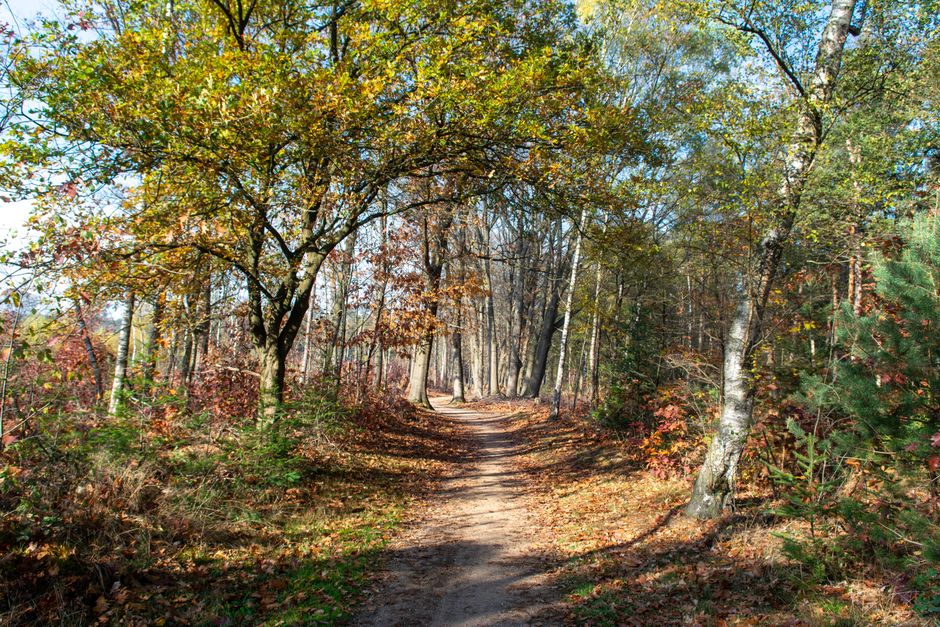
8. The Coral Needles of Val di Funes
Adolf Munkel Trail, Val di Funes, Italy
The Geisler peaks, visible from the Adolf Munkel Trail, are renowned for their 'Odle' (needles) shape, formed by differential erosion of ancient seabed.
While popular, the Adolf Munkel Trail offers unparalleled views of the iconic Geisler Group (Odle), whose jagged 'needles' are a geological masterpiece. These dramatic spires were once a vast coral reef, uplifted and then sculpted by millions of years of erosion. In autumn, the lower slopes of Val di Funes burst with golden larches and red blueberry bushes, creating a picturesque foreground to the towering grey peaks.
Frequently asked questions
When is the best time for autumn foliage in the Dolomites?
The peak season for autumn colors in the Dolomites typically ranges from mid-October to early November. This period sees the larch trees, which dominate many high-altitude forests, turn a brilliant golden-yellow, creating a stunning contrast with the grey rock faces of the mountains.
Are the autumn foliage hikes in the Dolomites suitable for all fitness levels?
Yes, the Dolomites offer a wide range of trails, from gentle valley walks suitable for families to more strenuous high-alpine routes. Many of the most picturesque autumn views can be accessed via well-maintained paths with moderate elevation gain, while others require more preparation and experience.
What gear should I bring for autumn hiking in the Dolomites?
Layers are essential, as temperatures can vary significantly. Pack waterproof and windproof outerwear, sturdy hiking boots, a hat, gloves, and plenty of water and snacks. Trekking poles can also be very helpful, especially on steeper or uneven terrain.
How can AllTours.ai enhance my autumn hiking experience in the Dolomites?
AllTours.ai transforms your hike into an immersive learning journey. Simply point your phone camera at a mountain, a rock formation, or even a specific tree, and the app will instantly narrate its unique history, geological formation, or cultural significance in your preferred language, revealing the hidden stories of the landscape around you.
Related guides
Photography via Pexels. AllTours.ai is an AI audio tour guide — point your camera at any landscape and hear its story.