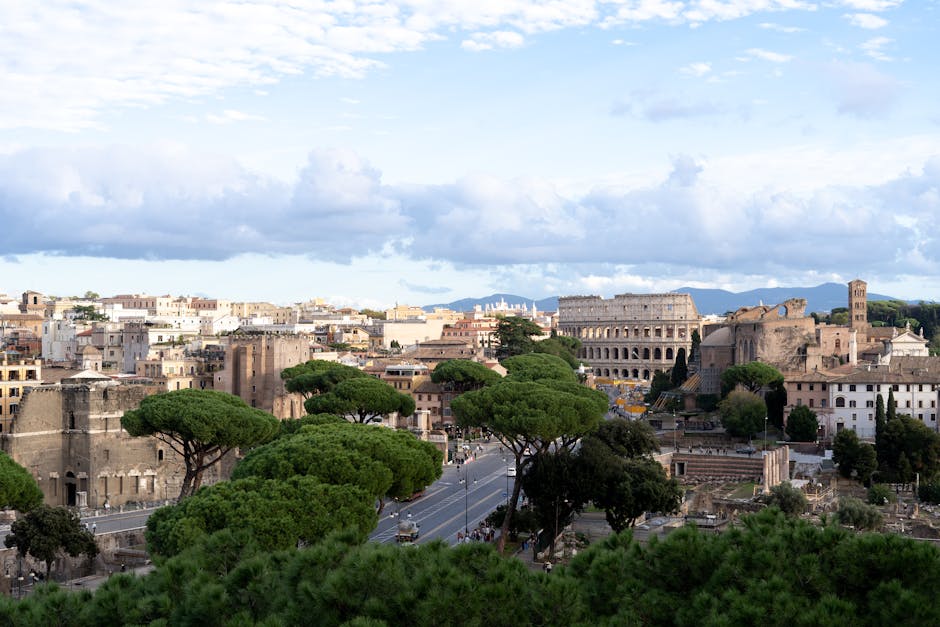
Welcome to the Circus Maximus, Rome's ancient powerhouse of entertainment and political intrigue. Once a colossal arena, this vast, open space hosted the most spectacular chariot races and public games, drawing crowds of up to 150,000 roaring spectators. Prepare to step back in time and imagine the thunder of hooves and the cheers of the Roman populace.
With AllTours.ai, you'll explore the echoes of this grand stadium, understanding its scale and significance. From its humble beginnings to its imperial zenith, discover how the Circus Maximus was more than just a race track – it was a stage where emperors sought popular favor, and fortunes were won and lost. Your camera becomes your guide to uncover the layers of history embedded in this iconic Roman landmark.
What you'll hear on this tour
Stop 1. The Central Spina
Imagine the Spina, the long central divider that ran down the middle of the track. Though little remains today, it was once adorned with elaborate monuments, statues of gods, and lap counters – often egg-shaped or dolphin-shaped bronze markers. Chariots raced seven laps around this divider, a grueling distance. The Spina wasn't just a physical barrier; it was a canvas for imperial propaganda, showcasing Rome's power and piety to the masses gathered here. It dictated the flow of the race and was a focal point for the crowd's gaze and the charioteers' strategy.
Stop 2. Imperial Box View
Look towards the Palatine Hill, towering above the Circus. From here, you can envision the imperial boxes, where emperors and their retinues watched the races in unparalleled luxury. This prime vantage point offered not just entertainment but also a stage for political performance. The emperor's presence was a statement of power and connection to the people. Their reactions to the races, their favored teams, and their public gestures here significantly influenced public opinion and political standing. It was a place where imperial authority was both displayed and tested.
Stop 3. The Starting Gates
At the curved end of the Circus, imagine the 'carceres' or starting gates. These twelve individual stalls, arranged in an arc, ensured a fair start for all chariots. Before the race, the tension would have been palpable as horses pawed the ground and charioteers gripped their reins, awaiting the signal. When the white cloth (mappa) was dropped, the gates would spring open simultaneously, unleashing a thunderous roar of hooves and cheers. This precise engineering was crucial for the spectacle, ensuring a dramatic and competitive opening to every race.
Stop 4. The Metae (Turning Posts)
Picture the metae, the conical turning posts at each end of the spina. These were the most dangerous and thrilling points on the track. Charioteers had to navigate these tight turns at full speed, often scraping the posts, risking spectacular crashes. A successful turn could mean victory, a misjudgment, instant defeat and potential injury. The crowd roared loudest at these moments, witnessing the charioteers' skill and daring. These turns were not just physical markers but dramatic focal points where races were often won or lost in a split second.
Stop 5. Natural Valley Origins
Consider the very ground beneath your feet. The Circus Maximus was built in a natural valley between the Palatine and Aventine hills. Before any grand structures, this low-lying area was already a traditional site for public games and festivals in early Rome. The natural contours of the land made it ideal for viewing, allowing early Romans to gather on the slopes to watch events. This natural amphitheater evolved over centuries, from simple wooden stands to the monumental stone structure, always retaining its core purpose as Rome's premier venue for grand public spectacle.
Planning your visit
- Best time to go
- Early morning or late afternoon, especially during spring or autumn, to avoid the midday heat and crowds.
- Approximate duration
- about 60-90 minutes
- Where to start
- The northern end of the Circus Maximus, closest to the Palatine Hill, where the ground begins to gently slope into the vast open field.
Access and conditions change seasonally — check the official site before you go.
Frequently asked questions
What can I see at Circus Maximus today?
Today, the Circus Maximus is primarily a vast, open public park. While the monumental structures are gone, its immense scale and the outlines of the track are still clearly visible, allowing visitors to easily imagine its ancient grandeur. You can walk the full length of the ancient arena.
Is there an entrance fee for Circus Maximus?
No, there is no entrance fee to walk around the Circus Maximus itself, as it is an open public space. However, nearby attractions like the Palatine Hill or Roman Forum do require tickets. Always check official sources for the latest access information.
How long does it take to walk around Circus Maximus?
A leisurely walk around the perimeter of the ancient track can take about 30-45 minutes. Our self-guided tour, which includes stopping and exploring specific points of interest, is designed to take approximately 60-90 minutes, allowing for a deeper historical immersion.
Keep exploring
Photography via Pexels. AllTours.ai is an AI audio tour guide — point your camera at any landmark and hear its story.