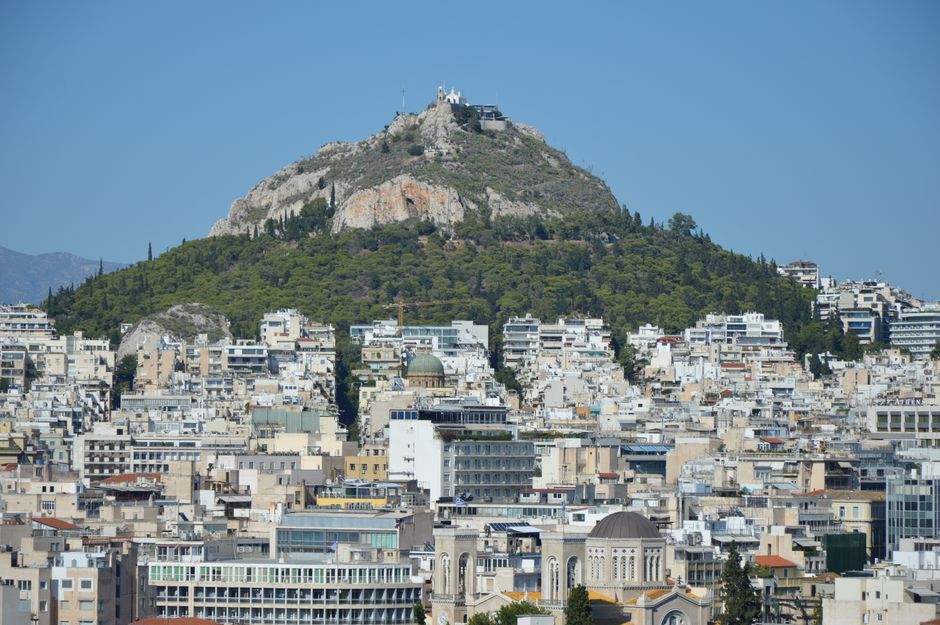
Welcome to Pnyx Hill, a site often overlooked but profoundly significant in the story of human governance. Just a short walk from the iconic Acropolis, this rocky outcrop in Athens served as the official meeting place for the Athenian democratic assembly, the Ekklesia. Here, thousands of citizens gathered to actively participate in shaping their society, laying the groundwork for direct democracy as we know it today.
This self-guided audio tour invites you to step back in time and walk the very ground where history was made. Imagine the vibrant debates, the passionate speeches, and the collective decisions that echoed across this open-air platform for centuries. Discover the tangible links to an era when every male citizen had a direct voice in the future of Athens.
What you'll hear on this tour
Stop 1. The Ekklesia's Gathering Place
Stand upon the vast, open-air platform where the Athenian Ekklesia, the democratic assembly, once convened. From the 6th century BC onwards, up to 6,000 male citizens would gather here, not in a grand building, but under the open sky. Imagine the vibrant scene: the chatter, the arguments, and the collective energy as fundamental laws were debated, officials were elected, and the city's future was decided by direct vote. This simple, unadorned space truly embodies the spirit of ancient Athenian direct democracy, a stark contrast to modern parliamentary chambers.
Stop 2. The Orator's Stone Rostrum
At the heart of the assembly area, you'll find the stone Bema, or speaker's rostrum. This was the stage for some of the greatest orators of ancient Greece, including figures like Pericles, Demosthenes, and Aeschines. From this elevated platform, they would address the thousands assembled, their voices carrying across the hill. The power of persuasion, logic, and rhetoric was paramount here, shaping public opinion and influencing crucial votes. Picture the intensity of these speeches, where the fate of Athens often hung on a speaker's ability to move the crowd.
Stop 3. Ancient Seating & Boundaries
While no formal seating arrangements like stadium benches remain, archaeological evidence suggests citizens likely sat on mats or directly on the sloped rock face facing the Bema. The Pnyx wasn't a grand, constructed theater but a natural amphitheater adapted for democratic use. Look for the faint traces of boundary markers or small rock-cut sections that helped define the assembly area. These simple features underscore the practical, community-driven approach to governance, where the landscape itself was integrated into the civic process.
Stop 4. Democracy's Grand Backdrop
From Pnyx Hill, turn your gaze towards the breathtaking panorama of Athens. To your east, the majestic Acropolis stands proudly, a symbol of Athenian power, religion, and artistic achievement. Below it, you can imagine the ancient Agora, the bustling marketplace and civic center. This view is crucial: the democratic debates on Pnyx were not isolated but intrinsically linked to the religious life on the Acropolis and the daily commerce and legal proceedings of the Agora. It highlights how integral politics were to every facet of Athenian life.
Stop 5. Zeus Hypsistos Sanctuary
Near the summit of Pnyx Hill, you'll find remnants of the Sanctuary of Zeus Hypsistos, or 'Zeus the Highest.' While modest compared to other temples, its presence here is significant. Before important assembly meetings, prayers and sacrifices were often offered to ensure divine favor for the proceedings. This reminds us that even in a highly rational democratic system, ancient Athenians deeply integrated religious beliefs into their civic life. The gods were invoked to bless their debates and guide their decisions, underscoring the holistic worldview of the time.
Planning your visit
- Best time to go
- Early morning or late afternoon to avoid the heat and crowds, especially in spring or autumn.
- Approximate duration
- about 60-90 minutes
- Where to start
- The main entrance to Pnyx Hill, typically found on the path leading up from Apostolou Pavlou Street, near the Areopagus Hill. Look for signs pointing towards the 'Pnyx'.
Access and conditions change seasonally — check the official site before you go.
Frequently asked questions
Is there an entrance fee to Pnyx Hill?
No, Pnyx Hill is an open archaeological site and there is no entrance fee. You are free to explore its historical grounds at your leisure, offering a truly accessible glimpse into ancient Athenian democracy.
What is the terrain like on Pnyx Hill, and is it accessible for everyone?
The terrain on Pnyx Hill is largely natural and uneven, with rocky paths and slopes. While it's a relatively easy walk, visitors should wear comfortable shoes. It may be challenging for those with limited mobility due to the natural, unpaved surfaces.
What other historical sites are close to Pnyx Hill?
Pnyx Hill is ideally situated near several other major Athenian landmarks. The Acropolis, with the Parthenon, and the Ancient Agora are just a short walk away. The Areopagus Hill, another significant ancient meeting place, is also very close by.
Keep exploring
Photography via Pexels. AllTours.ai is an AI audio tour guide — point your camera at any landmark and hear its story.